The Story: Boat ownership shouldn't feel like another job to manage
Case Study
Owning a boat involves much more than enjoying time on the water. Regular maintenance, unexpected repairs, finding reliable craftsmen, comparing service offers, tracking ongoing work, and managing payments can quickly become fragmented across phone calls, messages, spreadsheets, and multiple service providers.
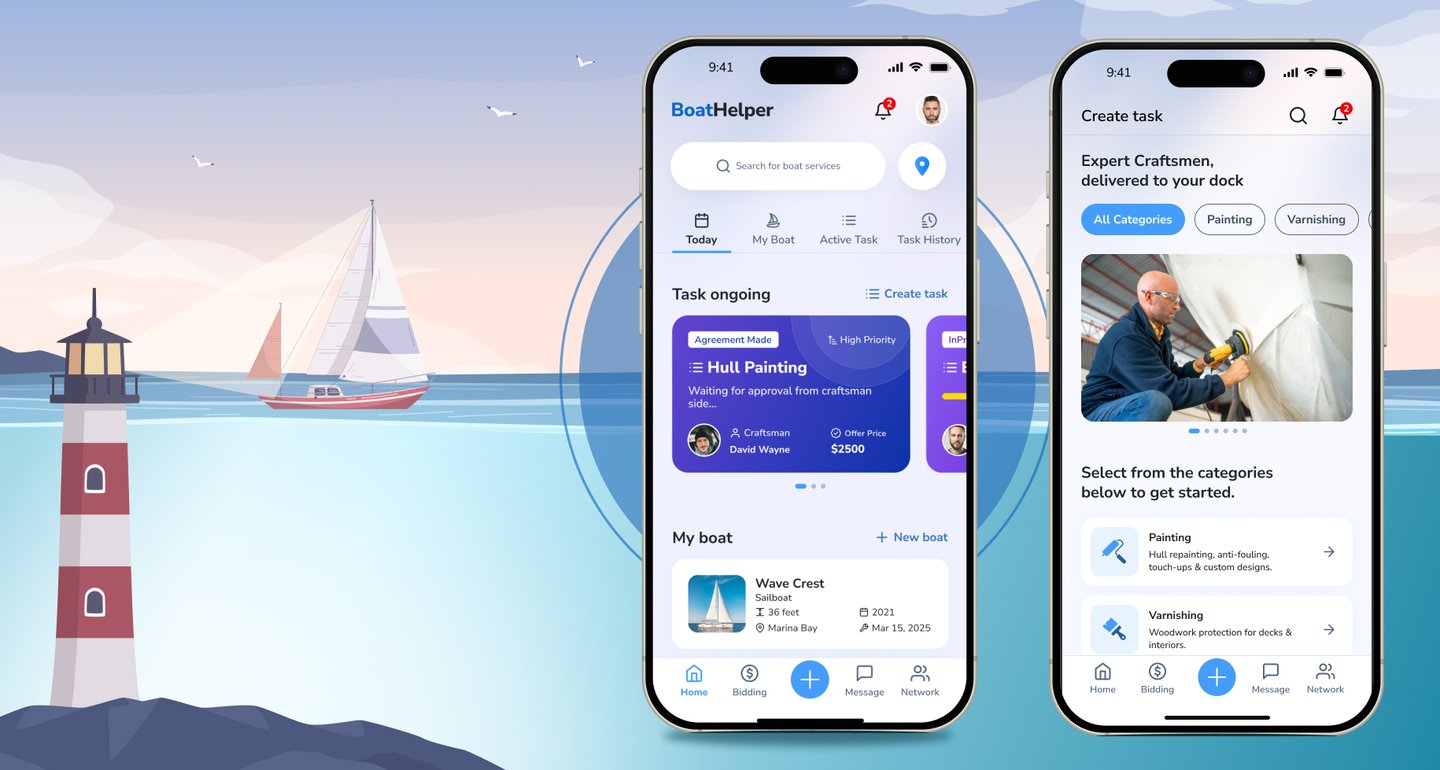
Connecting Boat Owners with Marine Services
BOAT HELPER
It is a boat management and maintenance tracking application designed to help boat owners efficiently manage their boats in one centralised platform.
Maintenance Management | Expense Tracking | Multi-Boat Management | Financial Insights & Statistics | Document & Record Storage
Year:
2025
Industry:
Marine
Project Duration:
6 months
Product Designed:
From scratch level
My Responsibilities:
UX research | User flows | Wireframes | Interaction design | Visual design | Collaboration with product managers & engineers
Platform:
Mobile
Role:
Individual Contributor
PROBLEM STATEMENT
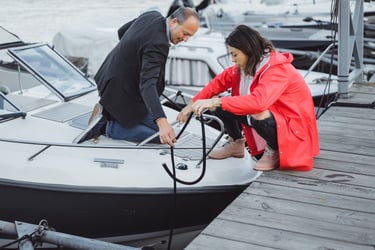
Boat owners often struggle to find reliable marine service professionals for maintenance and repair work. The current process is mostly offline, unstructured, and time consuming, involving phone calls, unclear pricing, delayed responses, and lack of trust in workmanship quality. There is no transparent way to compare offers, track job progress, verify completed work, or maintain service history.
SOLUTION
BoatHelper aims to solve this by providing a single digital platform where owners can discover verified craftsmen, receive competitive bids, track work progress, make secure payments, and maintain service records with confidence.

CHALLANGES
Building trust between unknown boat owners and craftsmen
Explaining complex repair scope clearly in the app
Preventing price and quality disputes
Showing work progress without physical visits
Simplifying decision-making among multiple bids
Ensuring safe payment for both parties
Encouraging repeat usage beyond one-time service
Balancing needs of both owners and craftsmen
BUSINESS REQUIREMENTS
Build a trusted marine service marketplace
Create a reliable platform connecting boat owners with verified craftsmen.Increase successful job completion rate
Reduce cancellations, disputes, and miscommunication through structured workflows.Drive transaction revenue
Earn commission from completed services and in-app payments.Improve user retention
Encourage repeat bookings using service history, favorites, and network features.Ensure service quality
Use ratings, reviews, and proof-based completion to maintain high standards.Expand professional network supply
Onboard more marine craftsmen to improve service availability and coverage.Enable long-term platform engagement
Provide maintenance records and insights so users rely on BoatHelper for ongoing boat ownership management.
MOTIVATION FOR THE DESIGN
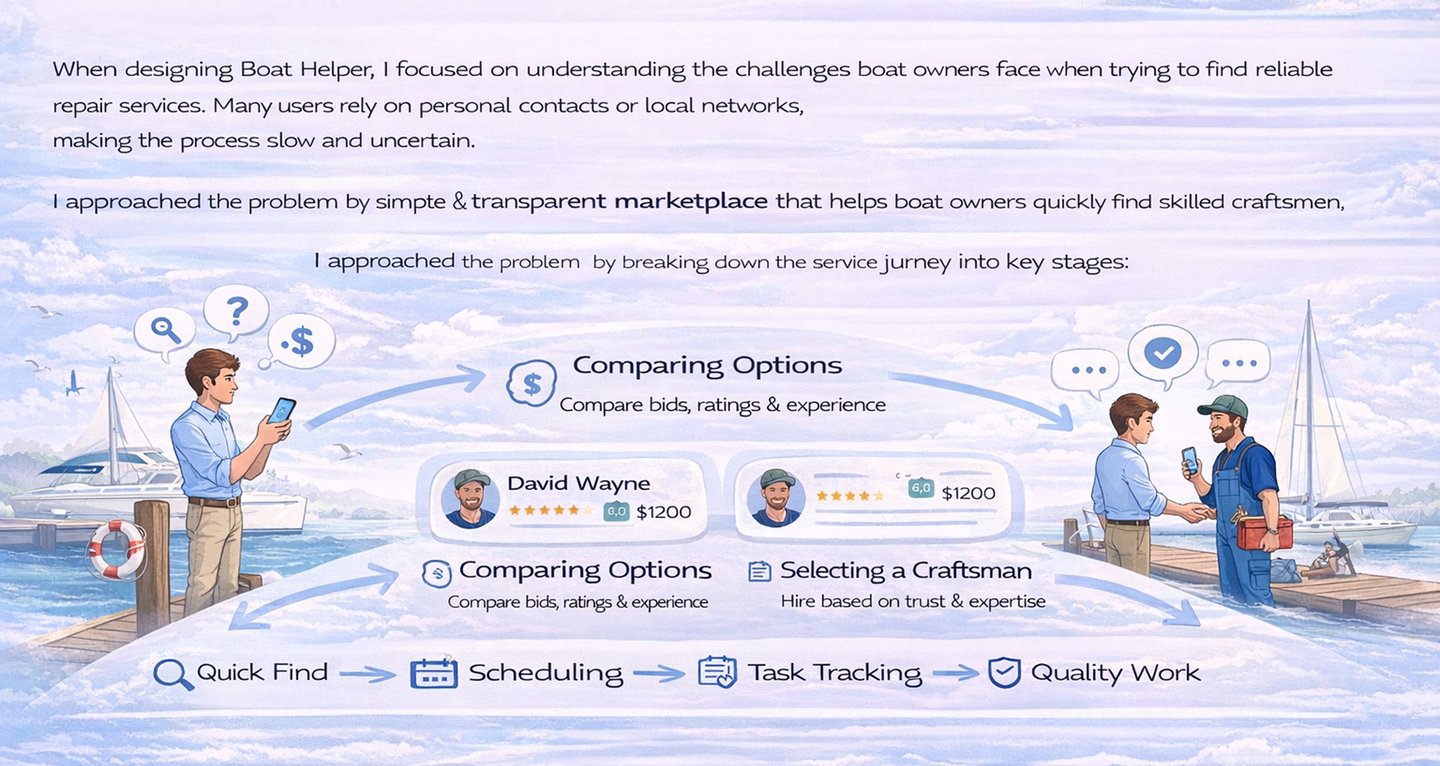
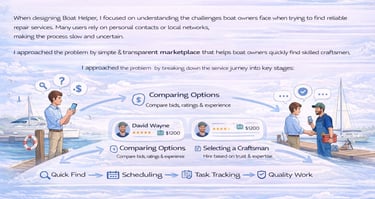
The motivation behind Boat Helper was to solve the fragmented and inefficient process of finding reliable boat maintenance and repair services. Boat owners often struggle to identify trusted craftsmen, compare pricing, and manage service requests, which leads to delays, uncertainty, and poor service experiences.
The goal was to design a seamless, transparent, and trustworthy platform that connects boat owners with skilled service providers through a structured task-posting and bidding system. By simplifying service discovery, enabling price comparison, and centralising communication, the design aims to reduce friction, save time, and build confidence in decision-making.
Ultimately, the motivation was to create a user-centric marketplace experience that improves efficiency for boat owners while also empowering craftsmen with better visibility and job opportunities.


HOW I THINK ?
UX RESEARCH
Understand how boat owners currently manage maintenance services and identify pain points in finding, trusting, coordinating, and paying marine craftsmen.
User Interviews (Boat owners & craftsmen)
Contextual Inquiry at marina/dock workflow
Competitor analysis (service marketplaces)
Journey mapping of repair process
Feedback from marine service professionals
Research Goal:


Key Findings:
1. Discovery Problems: Boat owners mostly rely on marina contacts, WhatsApp groups, and word-of-mouth. Finding the right specialist (engine, hull, electrical) takes time and multiple calls.
2. Trust Issues: Owners hesitate to hire unknown craftsmen due to risk of poor workmanship, overcharging, or unfinished work. Craftsmen fear non-payment.
3. Scope Miscommunication: Repair requirements are hard to explain in text or calls. Lack of documentation leads to pricing disputes.
4. No Work Visibility: Owners cannot visit docks regularly. They want progress updates, photos, and confirmation of completion.
5. Difficult Price Comparison: Multiple quotations come informally, making comparison confusing and unstructured.
6. Payment Friction: Cash or transfer payments create risk for both sides and no service record.
7. No Service History: Maintenance history is not stored anywhere, causing repeated explanations for future repairs.
User Needs Identified:
A trusted verified network of marine specialists
Structured job posting to explain repair scope clearly
Transparent bidding & comparison
Work progress visibility
Secure payment with proof of completion
Service history for future reference
Ability to rehire reliable craftsmen
Design Opportunities:
Two-sided trust system (ratings, reviews, completion proof)
Guided task creation flow
Bid comparison UI
Photo-based progress tracking
Escrow-style payment flow
Boat maintenance record system
Network-based repeat hiring
Research Insight (Core)
Boat maintenance is not a booking problem — it is a trust, coordination, and documentation problem.
BoatHelper should behave like a service management platform, not just a marketplace.
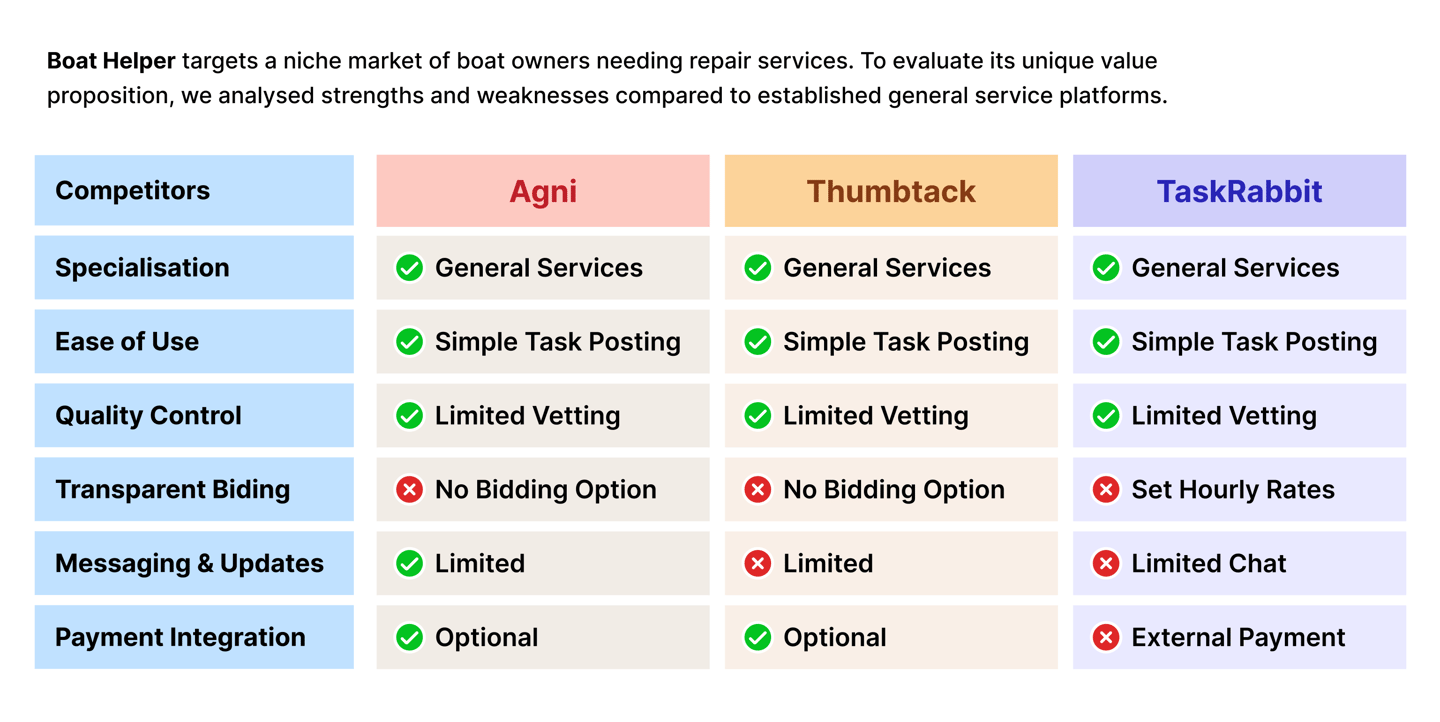
COMPETITOR ANALYSIS
Explaining how features are connected in Boat Helper
USER PERSONA
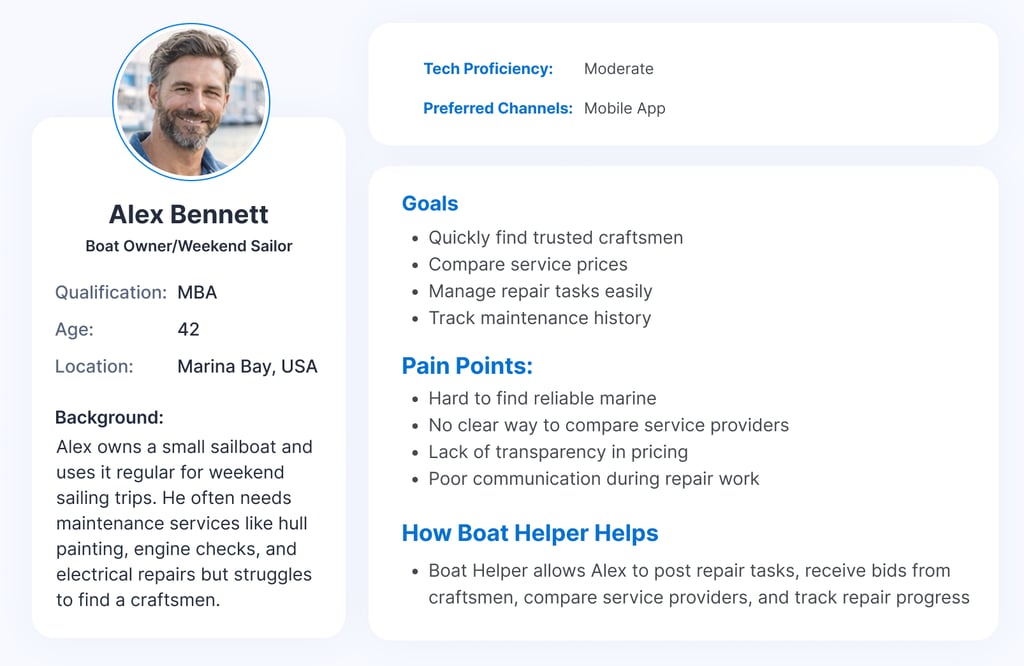
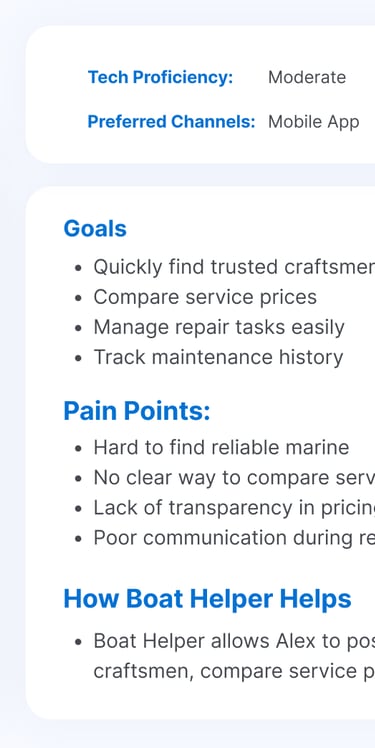
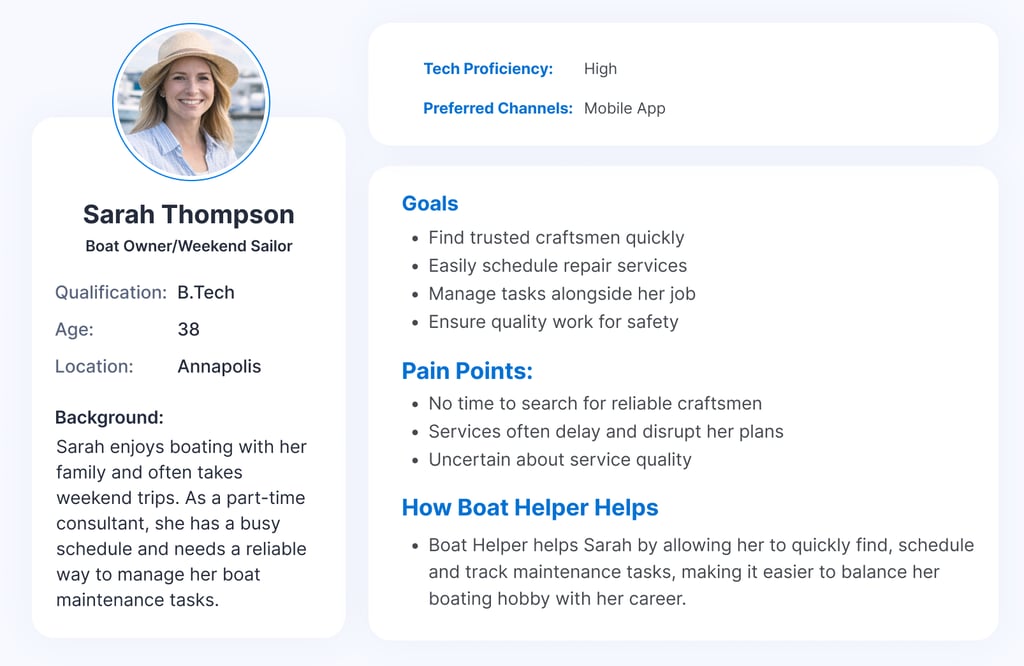
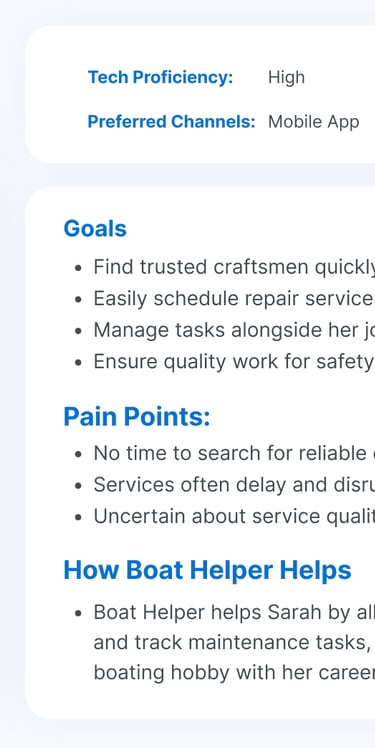
To better understand the needs of boat owners and craftsmen, I developed personas that capture their goals, pain points, and service expectations.
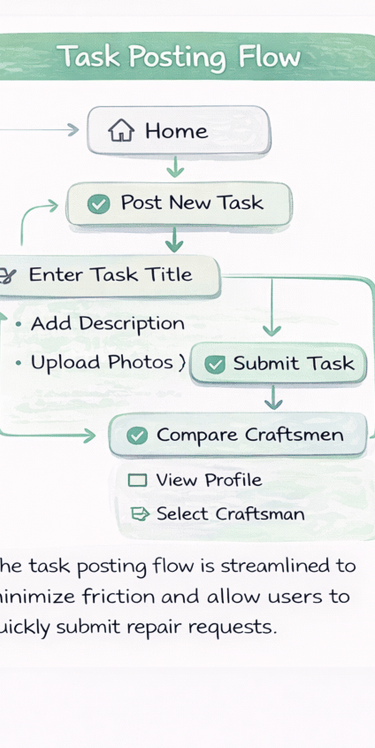
NAVIGATION FLOWS
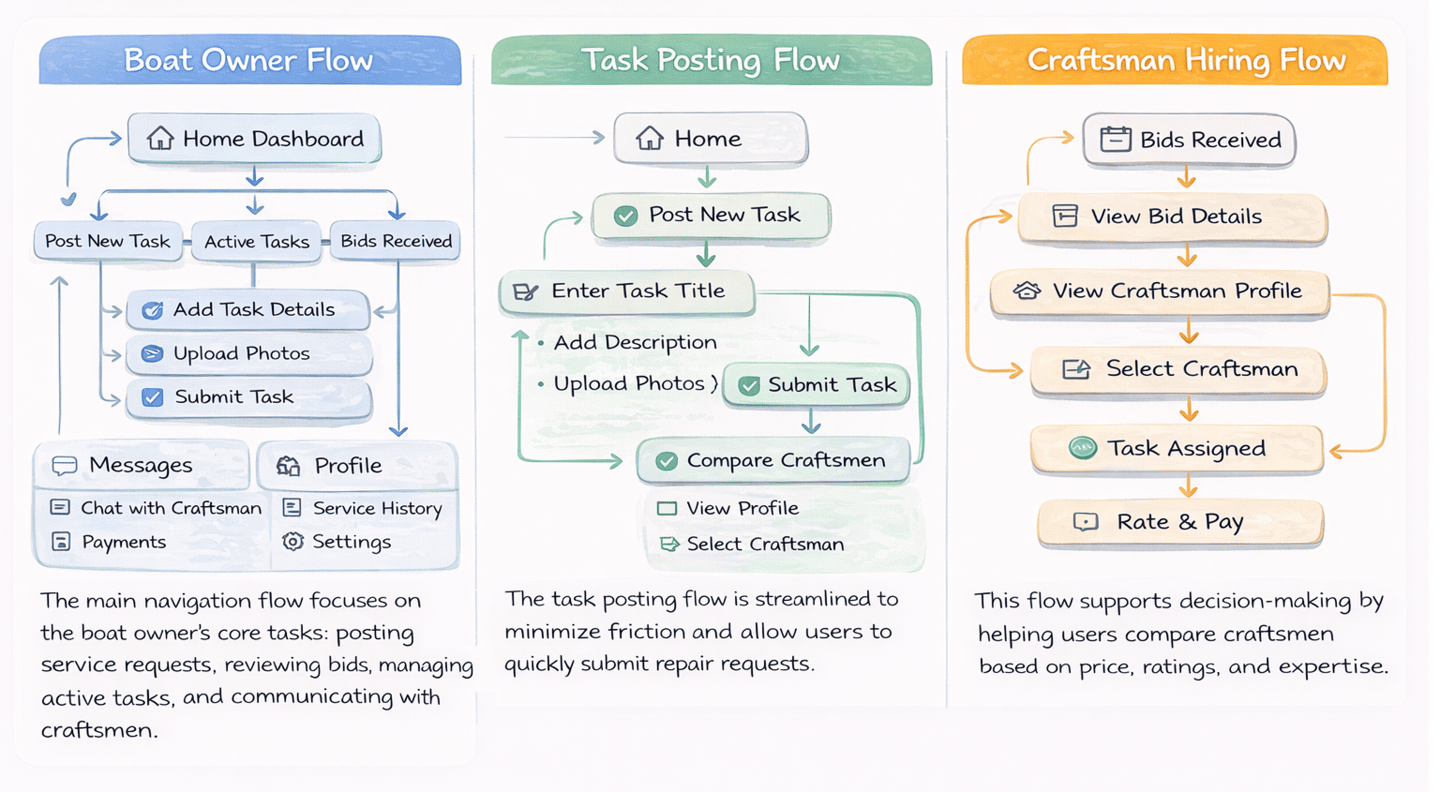
Explaining how features are connected in Boat Helper
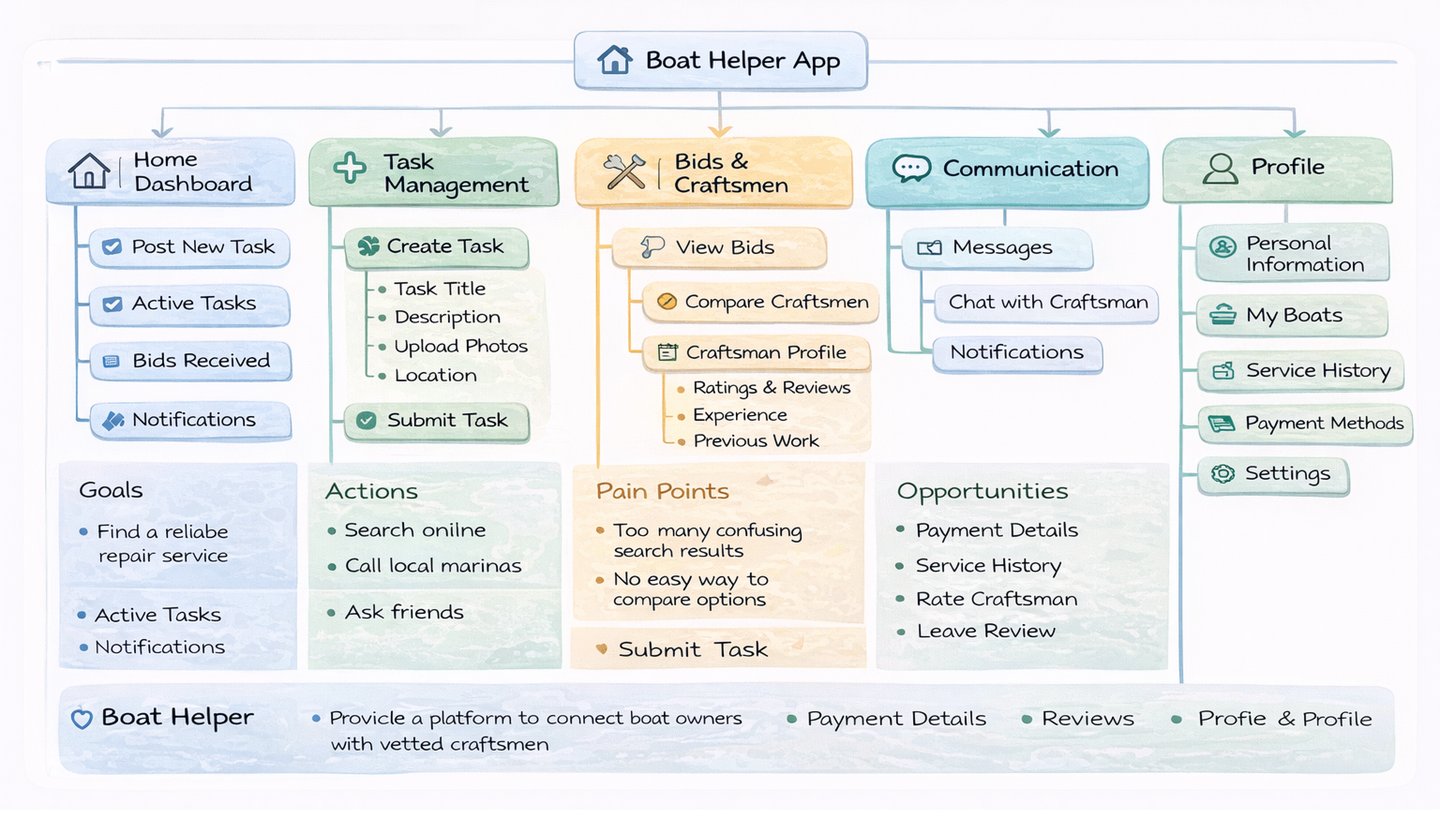
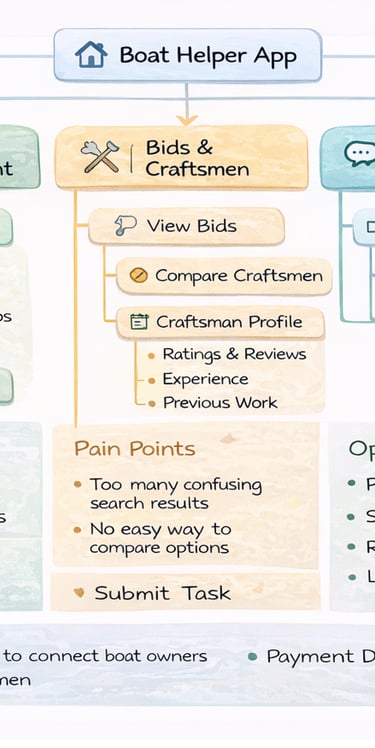
INFORMATION ARCHITECTURE
Explaining how features are connected in Boat Helper
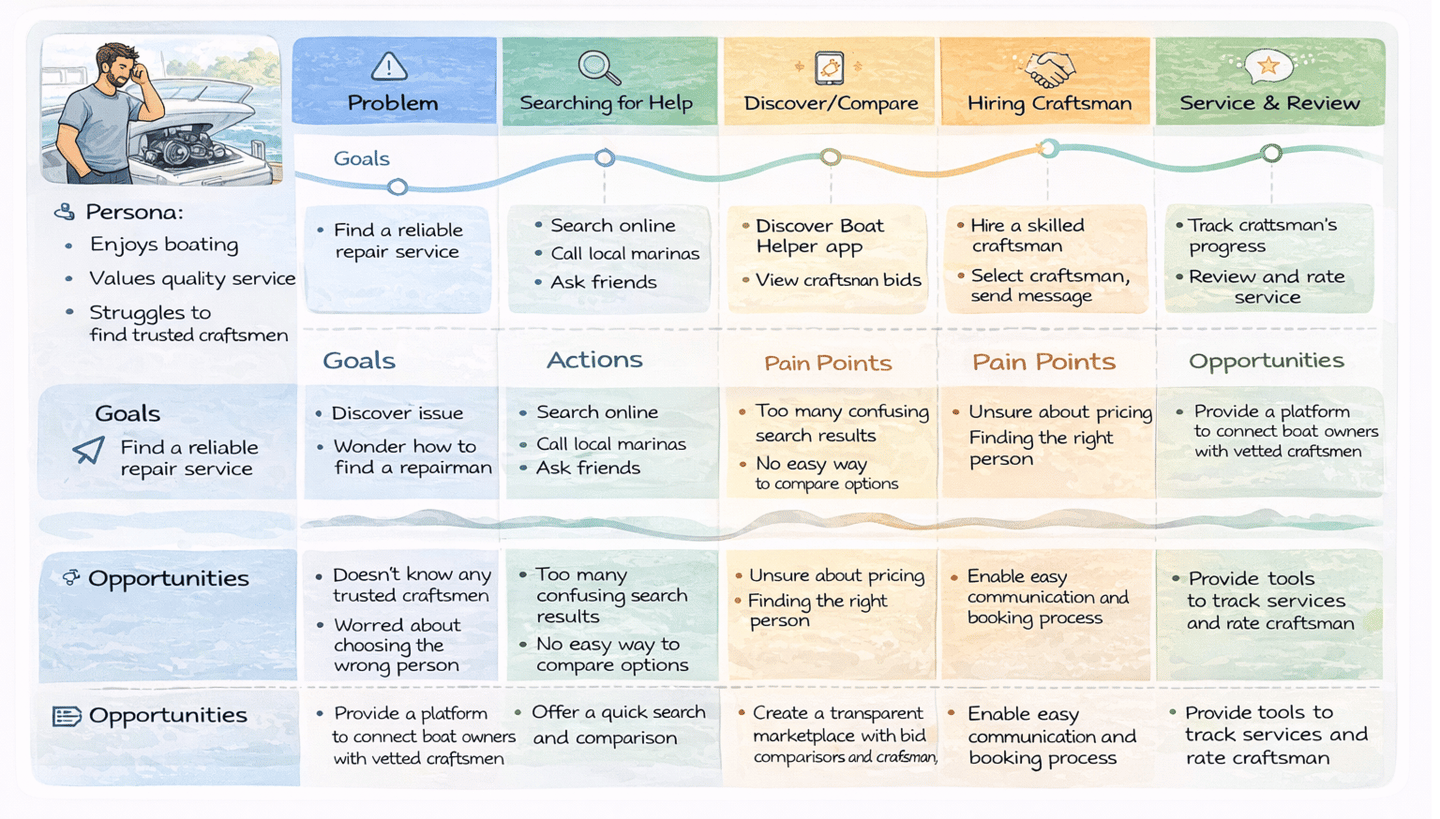
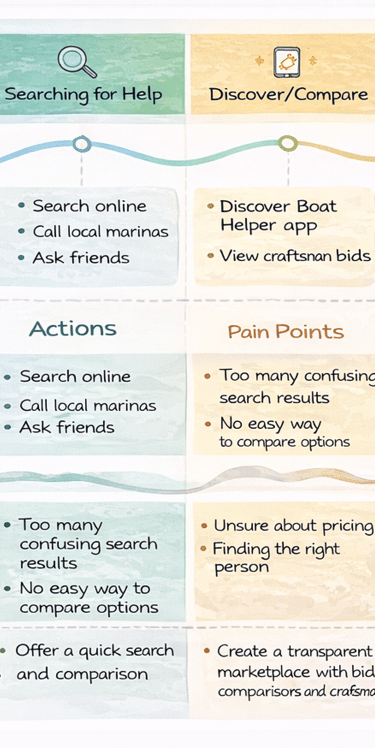
JOURNEY MAPPING
Explaining how features are connected in Boat Helper
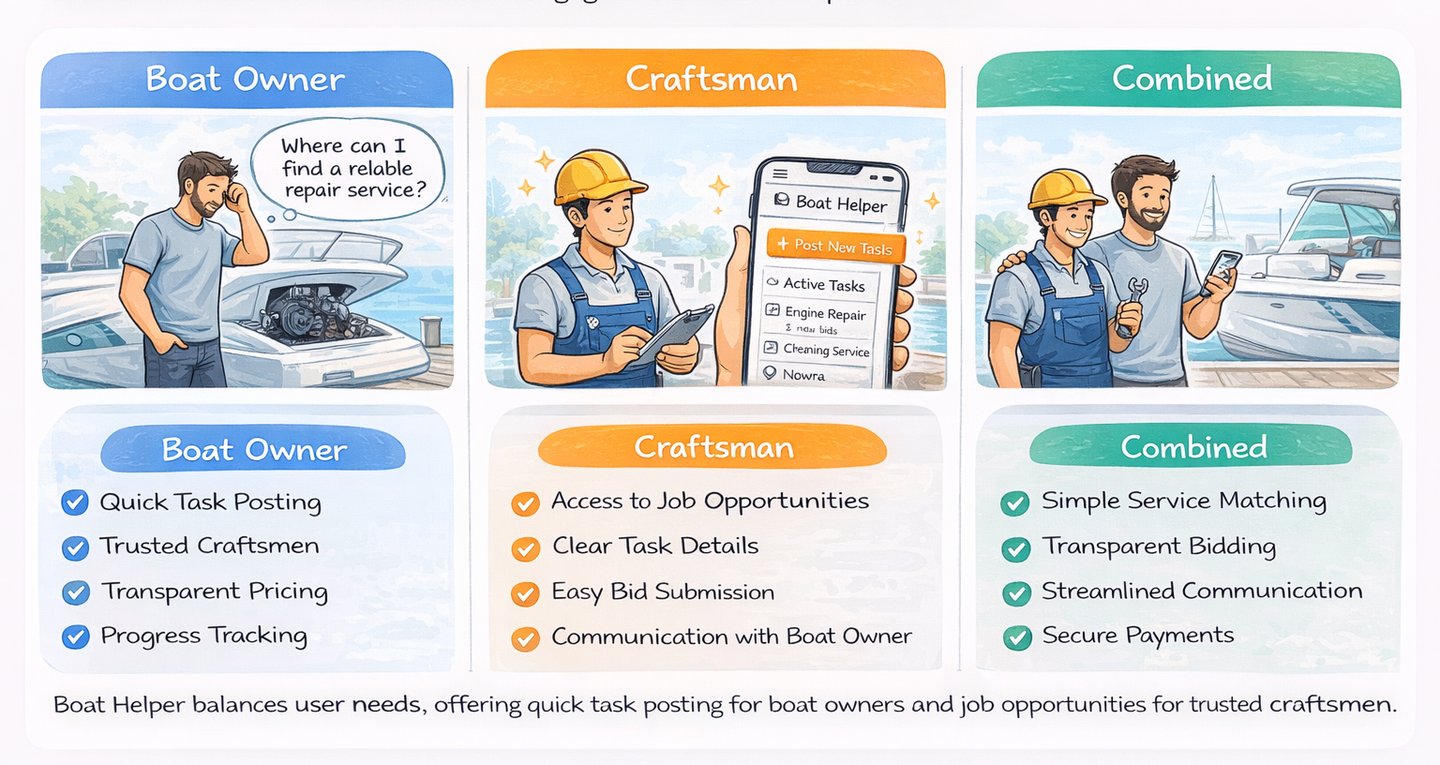
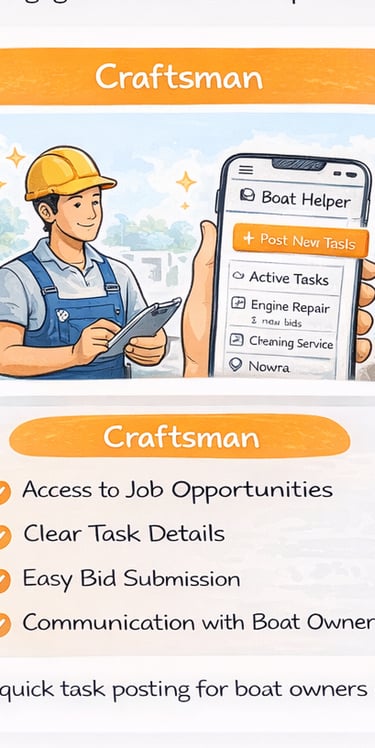
USER SCENARIOS
Explaining how features are connected in Boat Helper
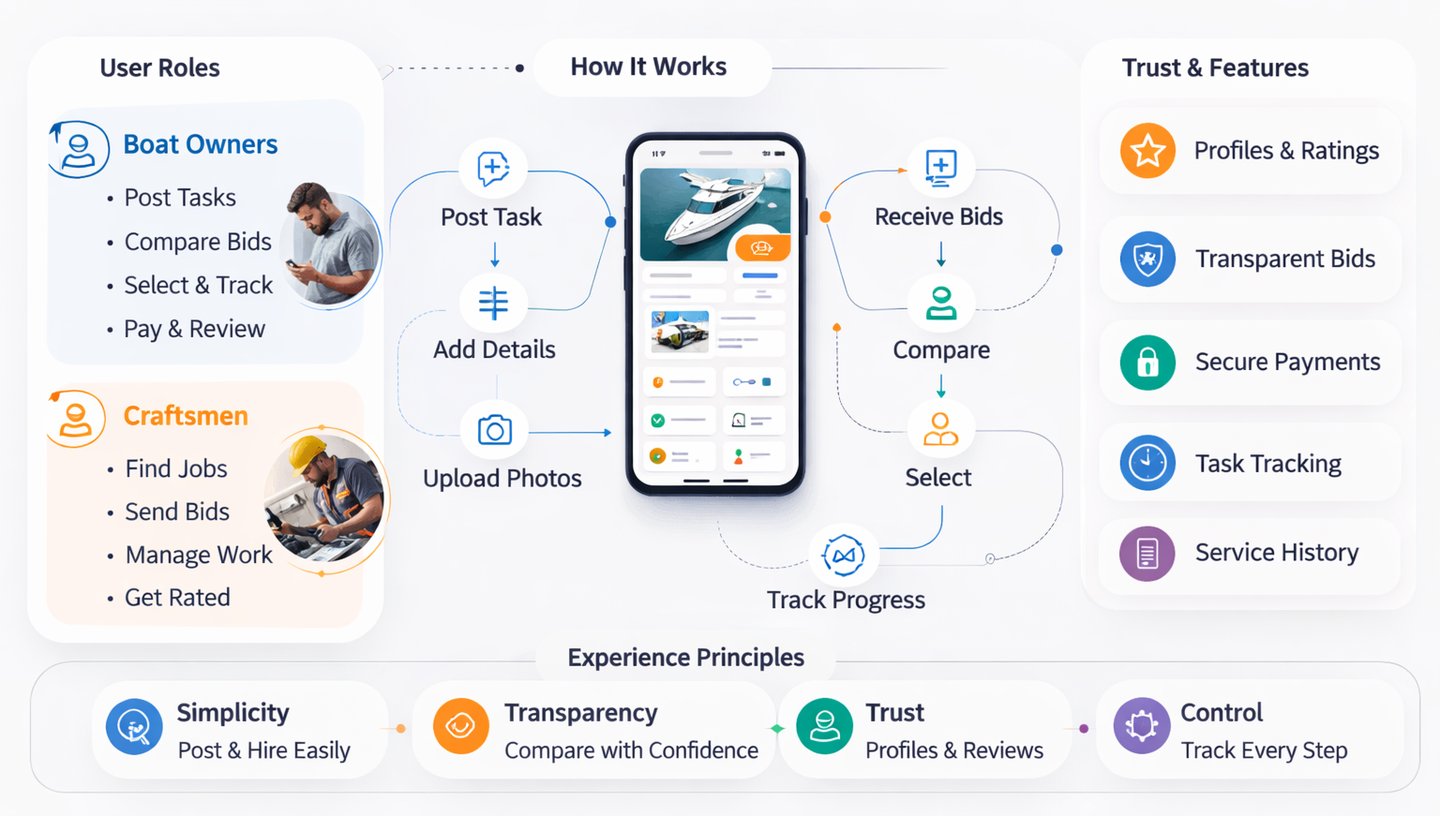
CONCEPT MODULES
Explaining how features are connected in Boat Helper
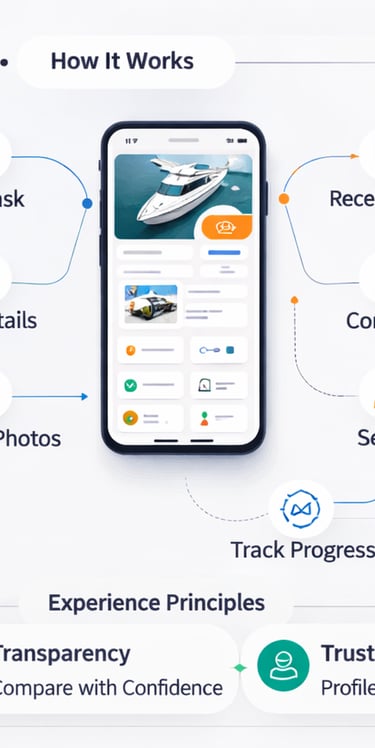
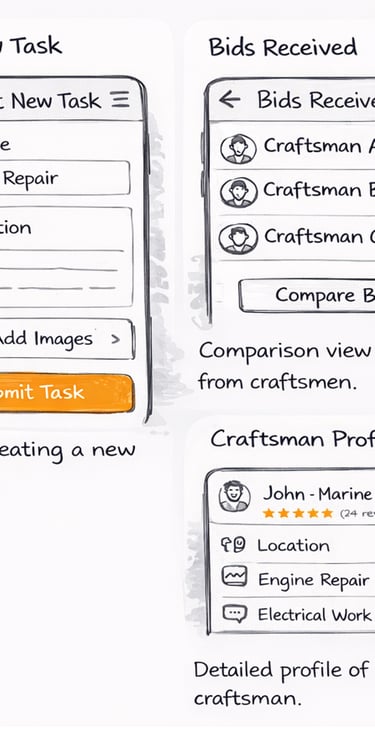
EARLY SKETCHES & IDEATION
Explaining how features are connected in Boat Helper
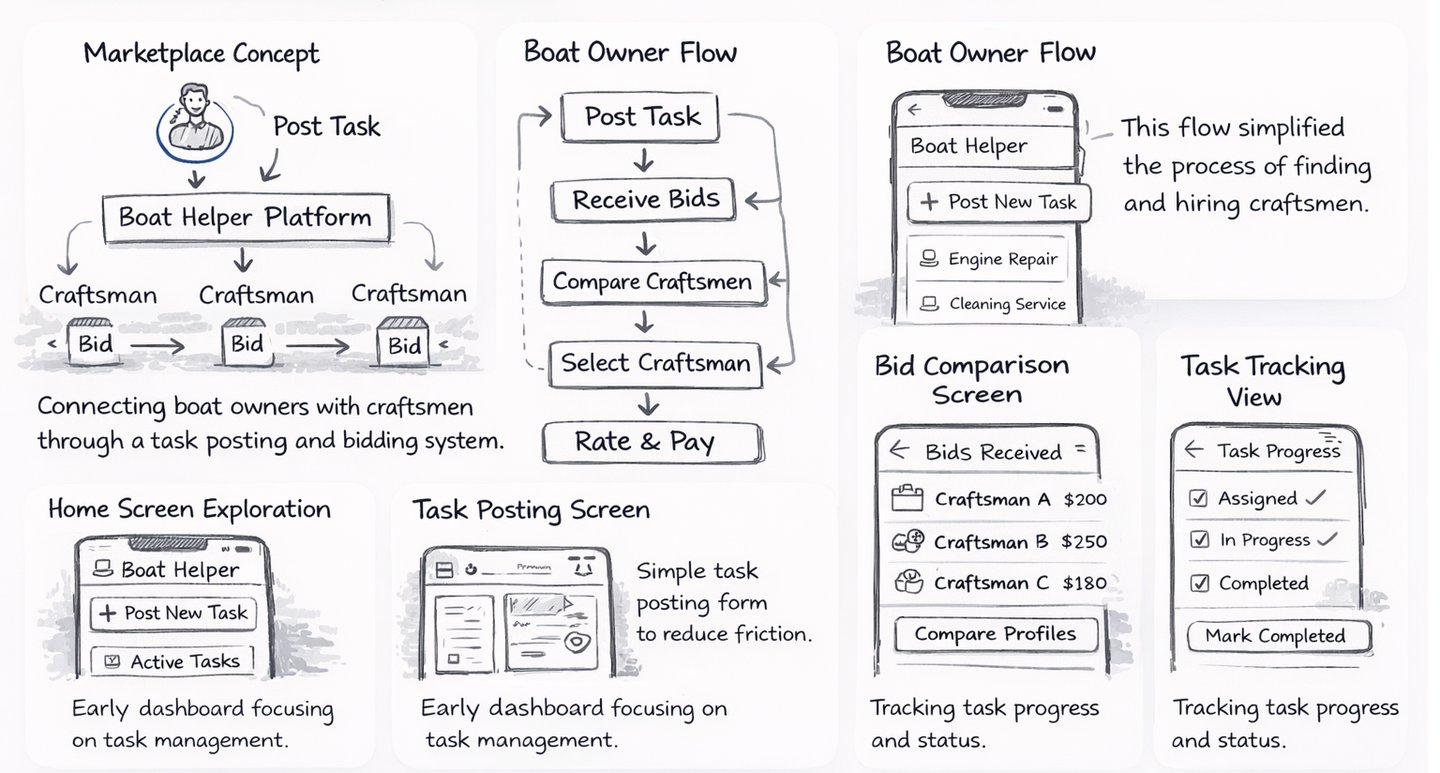
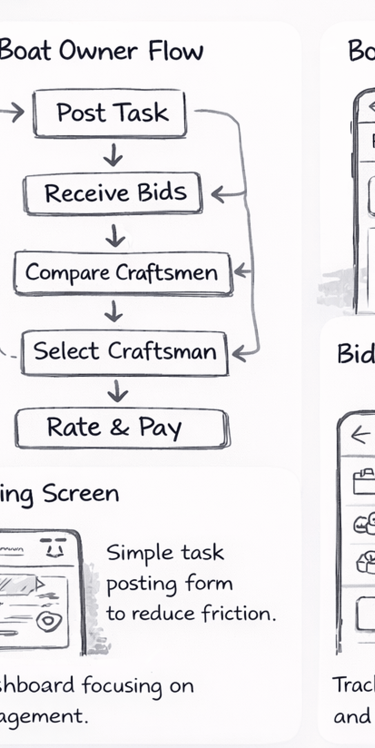
LOW FIDELITY WIREFRAMES
Explaining how features are connected in Boat Helper
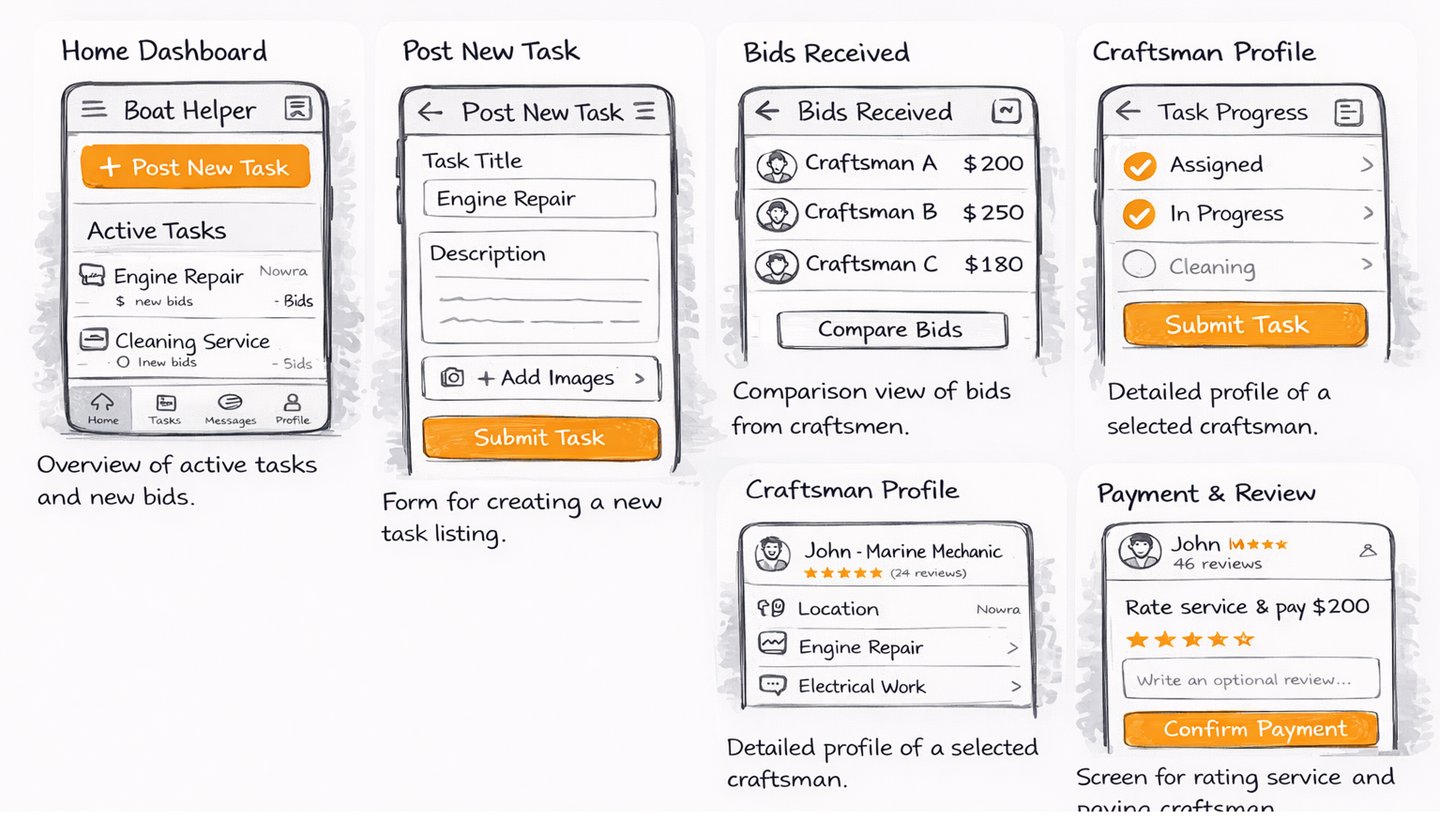
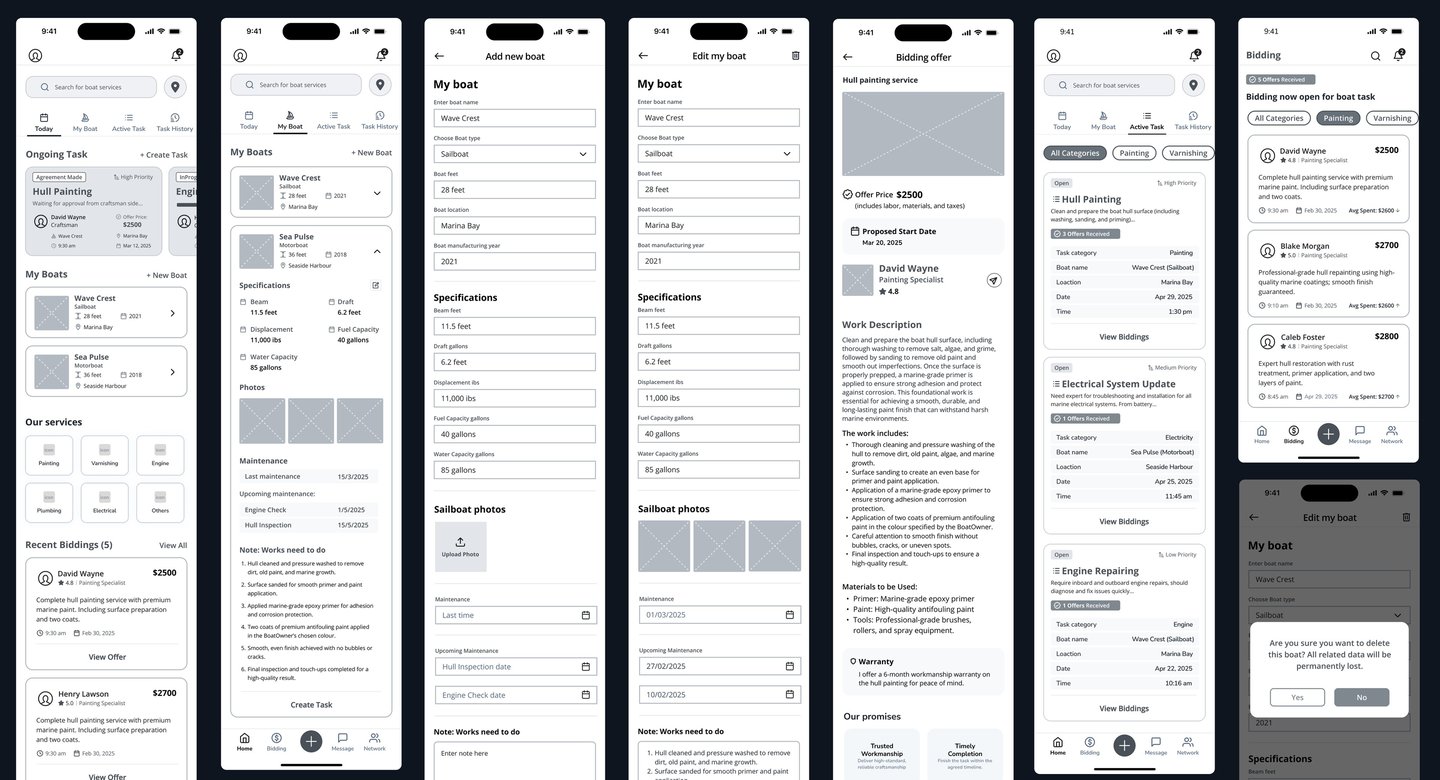
MID-FIDELITY WIREFRAMES
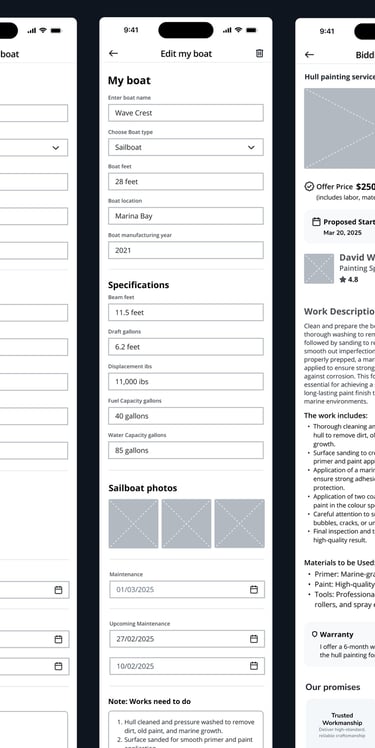
Mid-fidelity wireframes were created to define the core user workflows and interactions before moving into high-fidelity visual design. These wireframes helped validate the navigation structure, information hierarchy, and task flows for boat owners managing repair services.
A final UX prototype is a near-final version of a digital product or interface that is ready to be handed off to the development team. It is an interactive model that simulates the user experience and is used to validate the design concept before the final product is released.
HIGH-FIDELITY
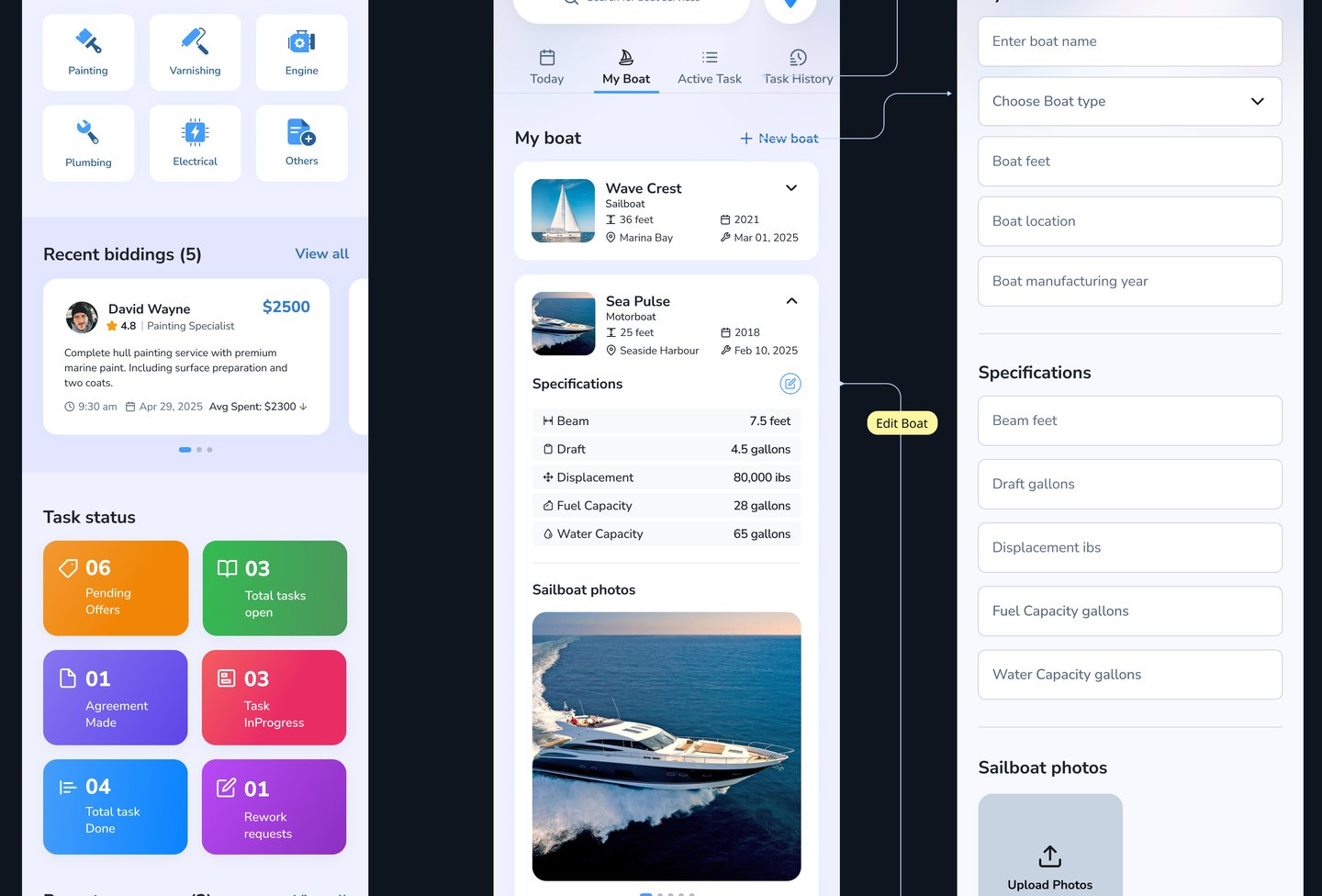
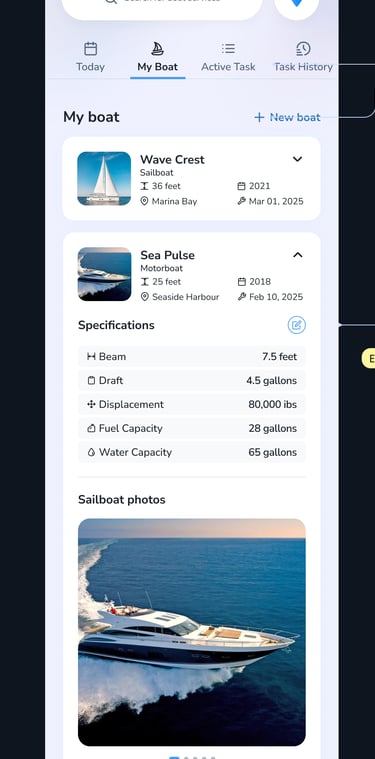
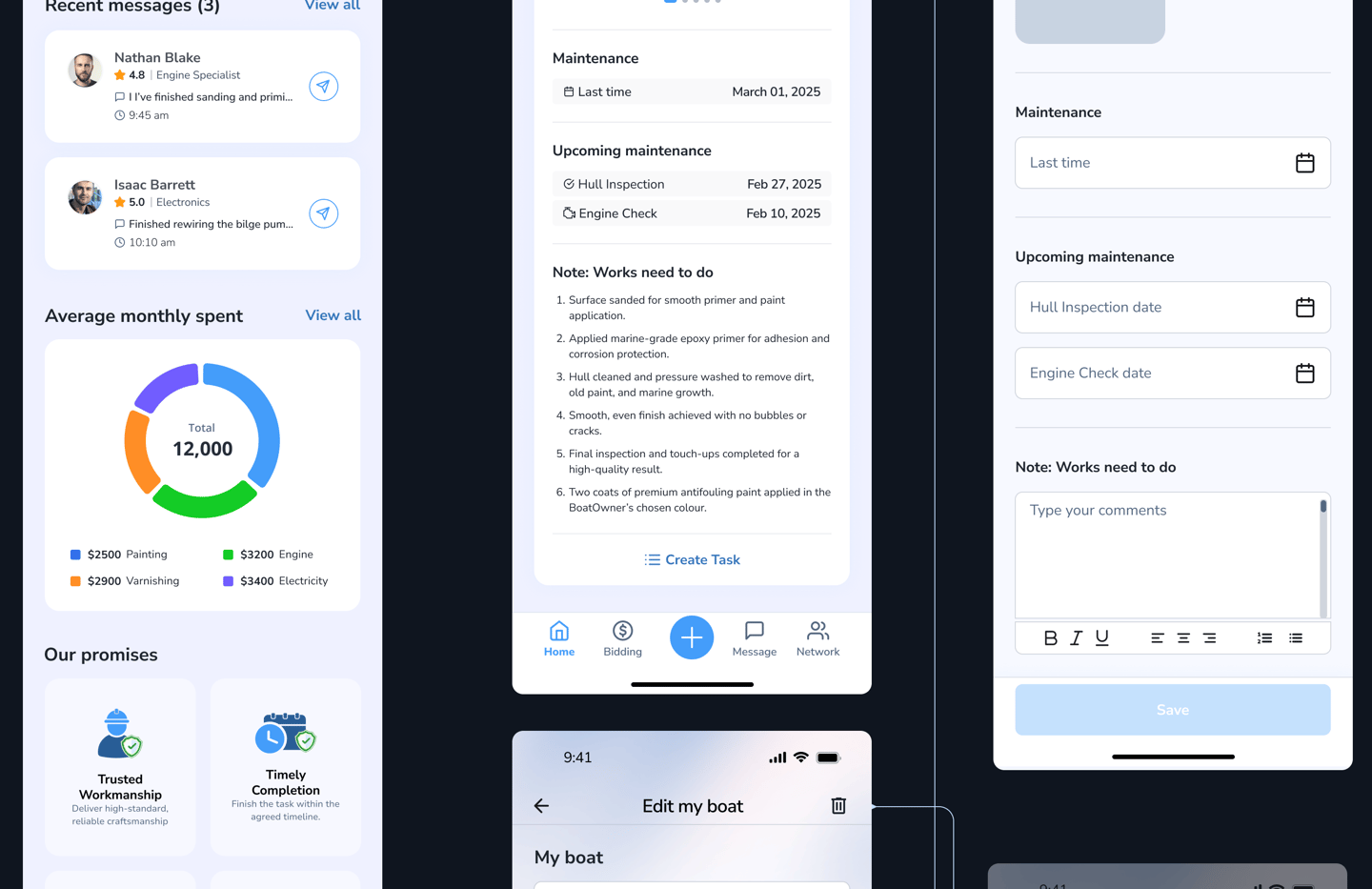
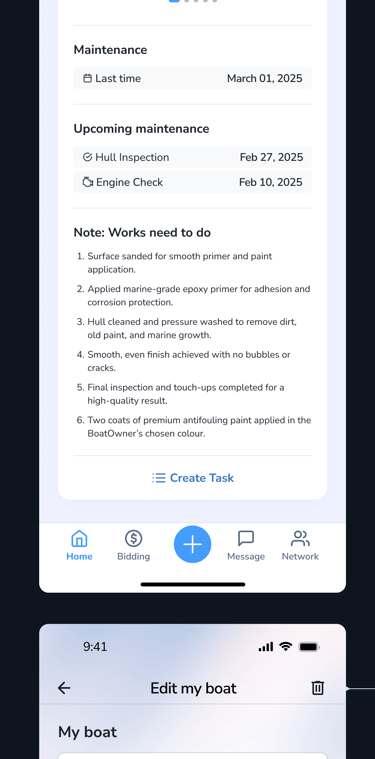
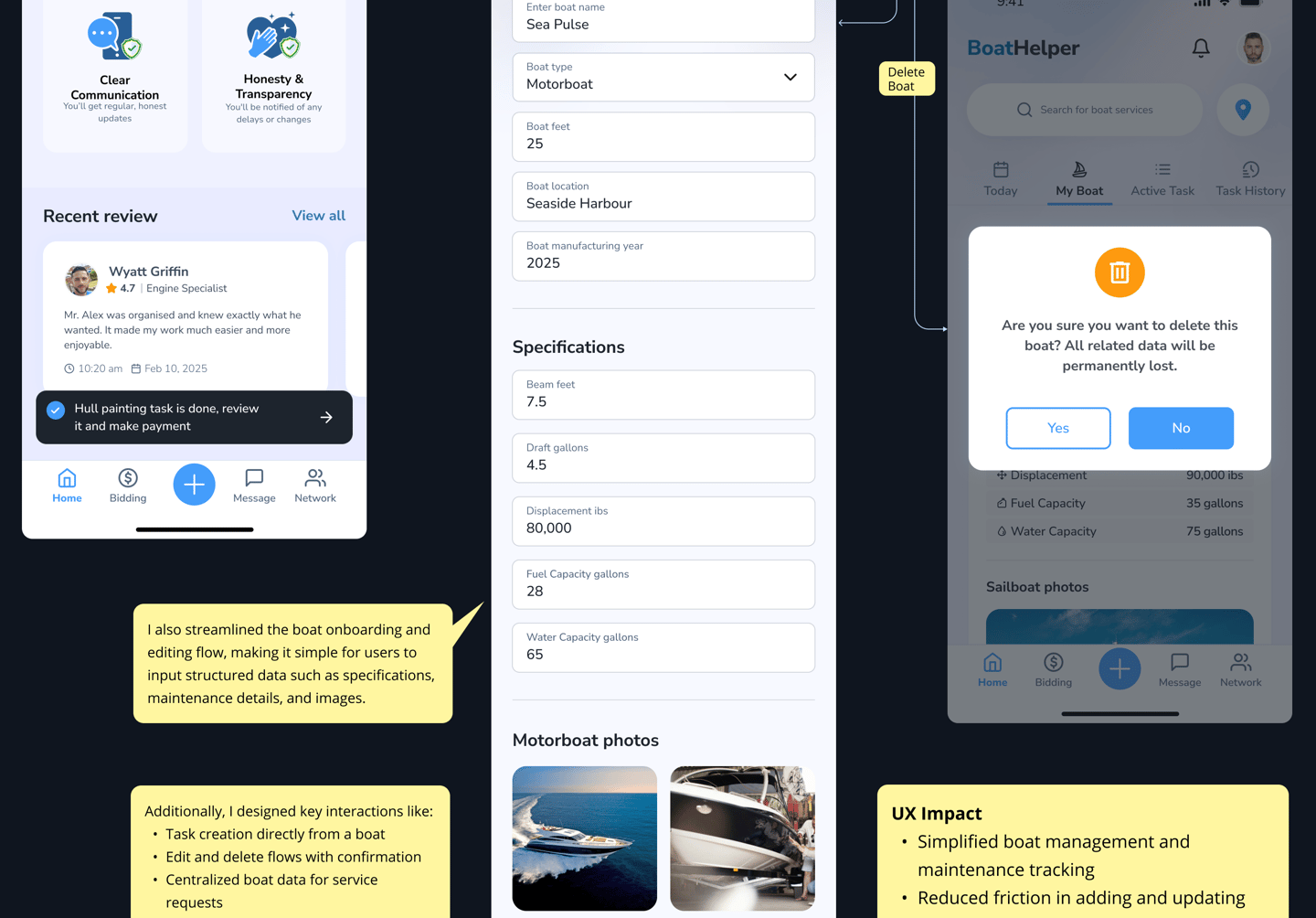
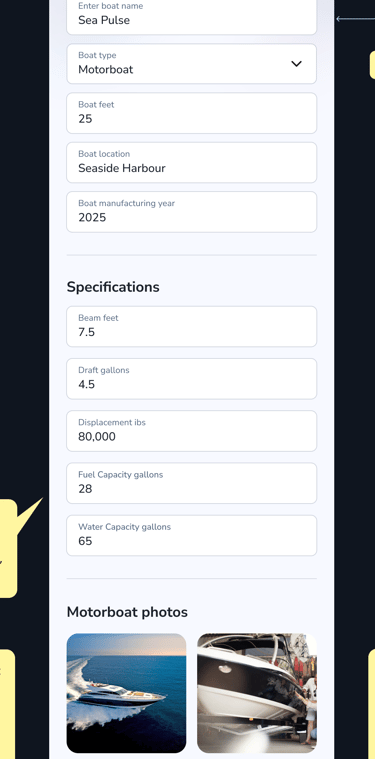
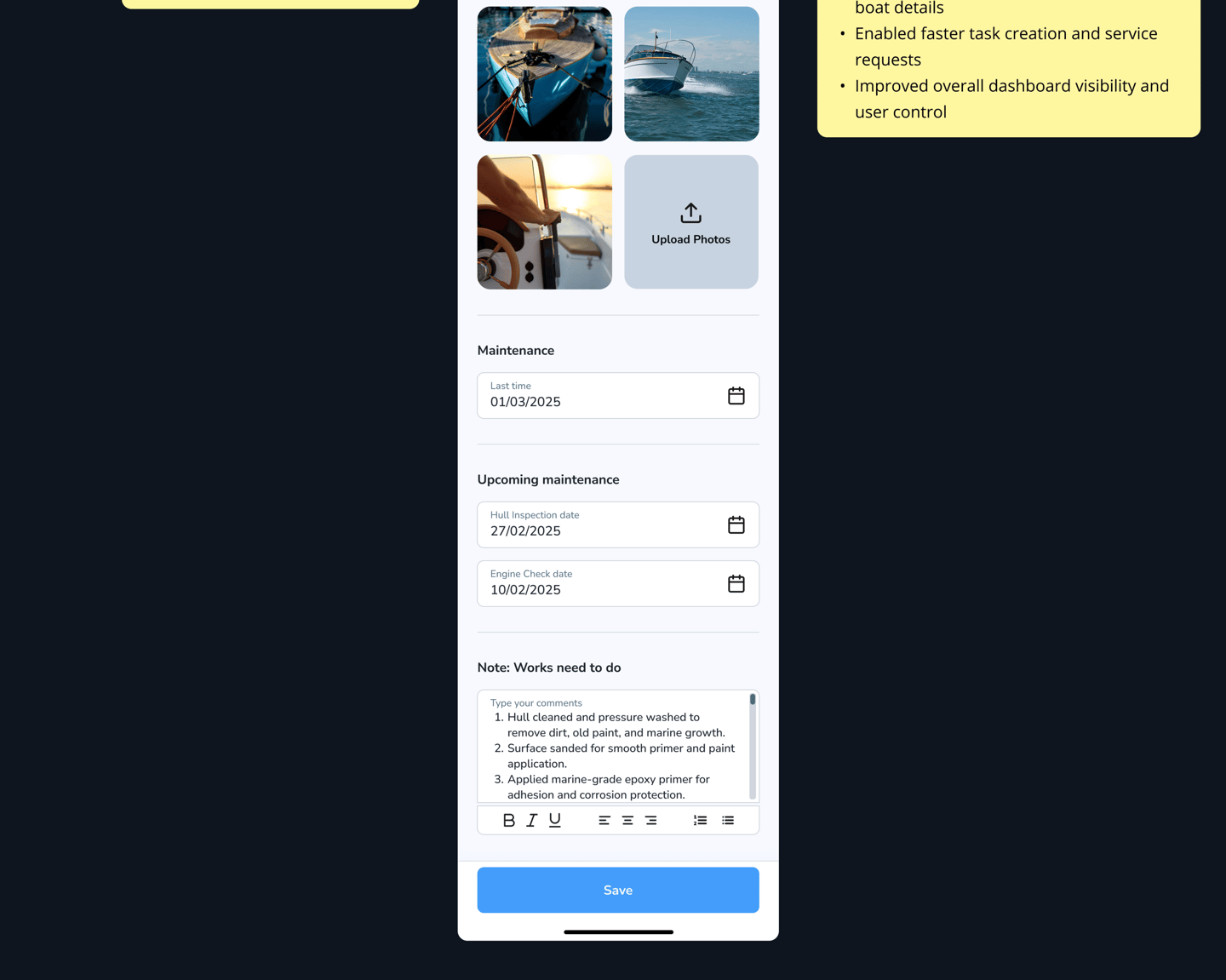
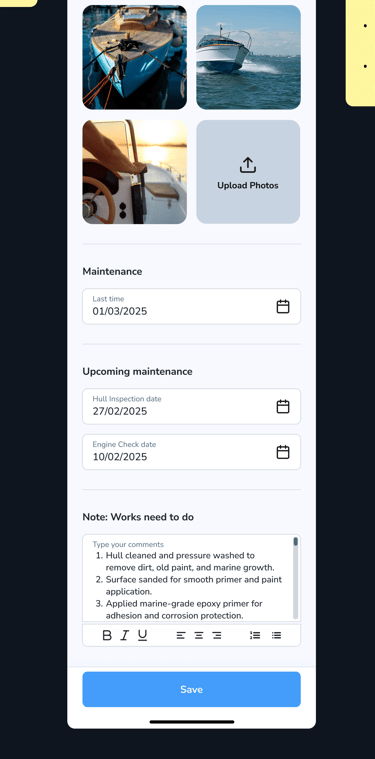
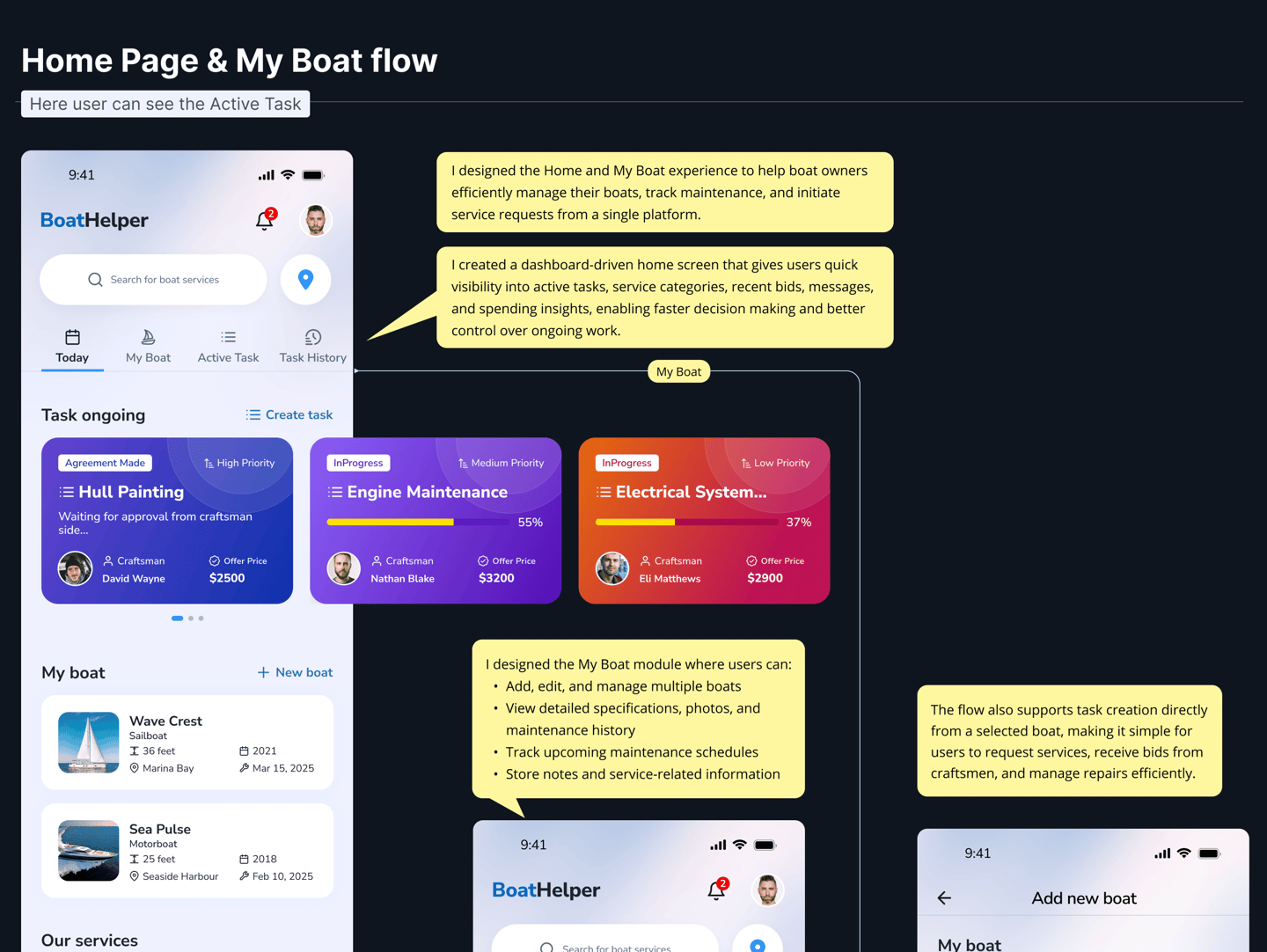
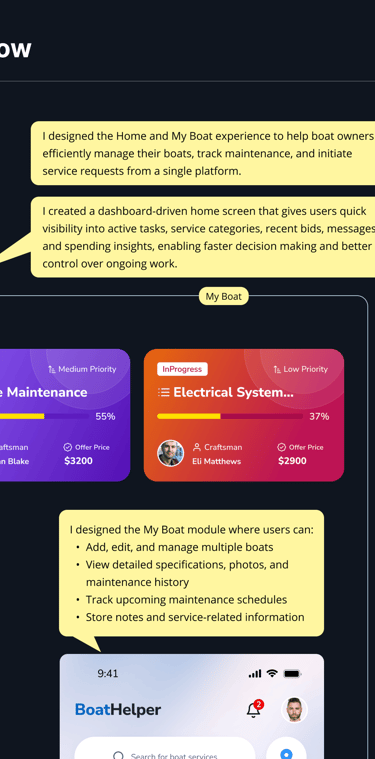
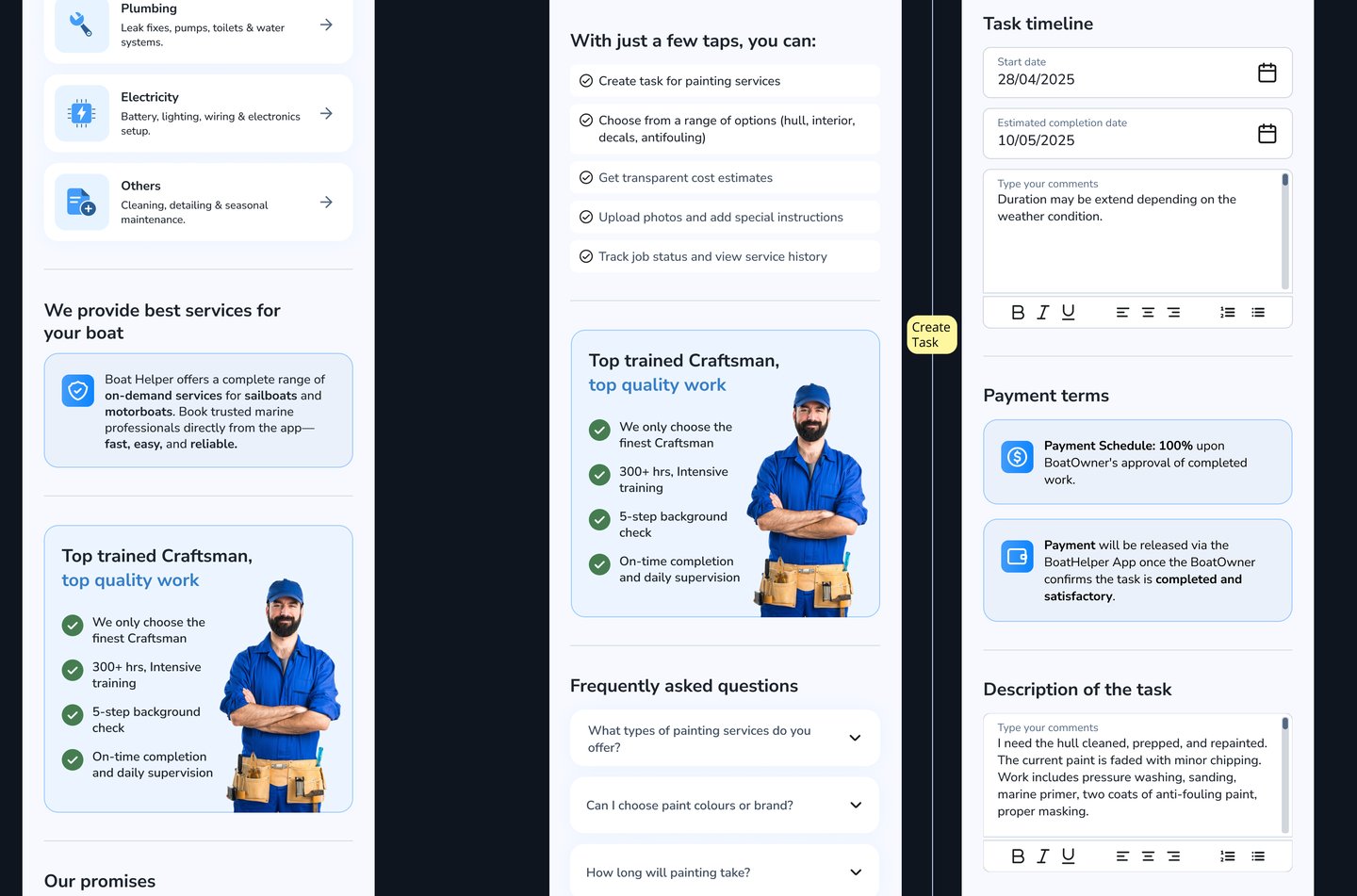
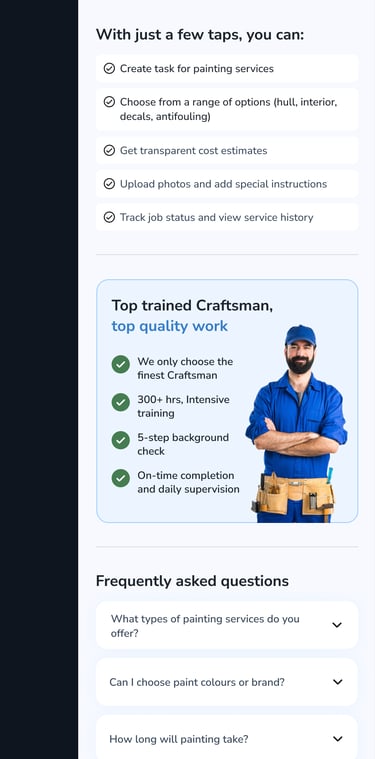
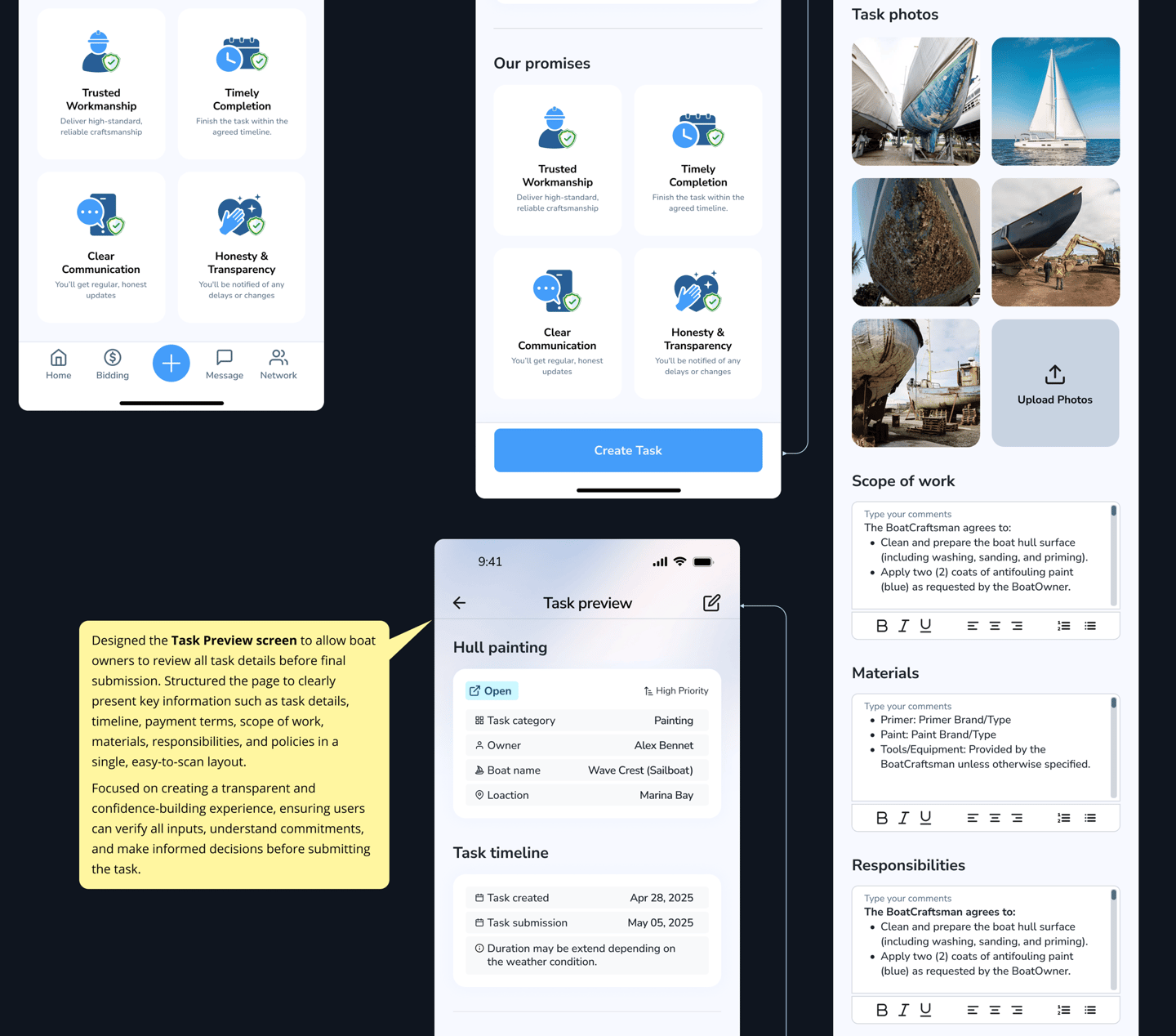
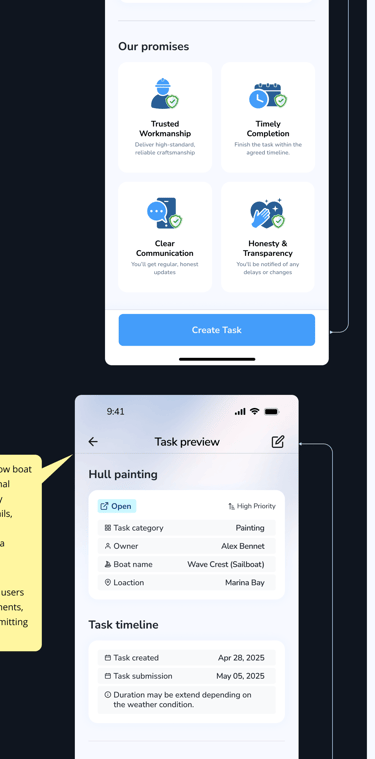
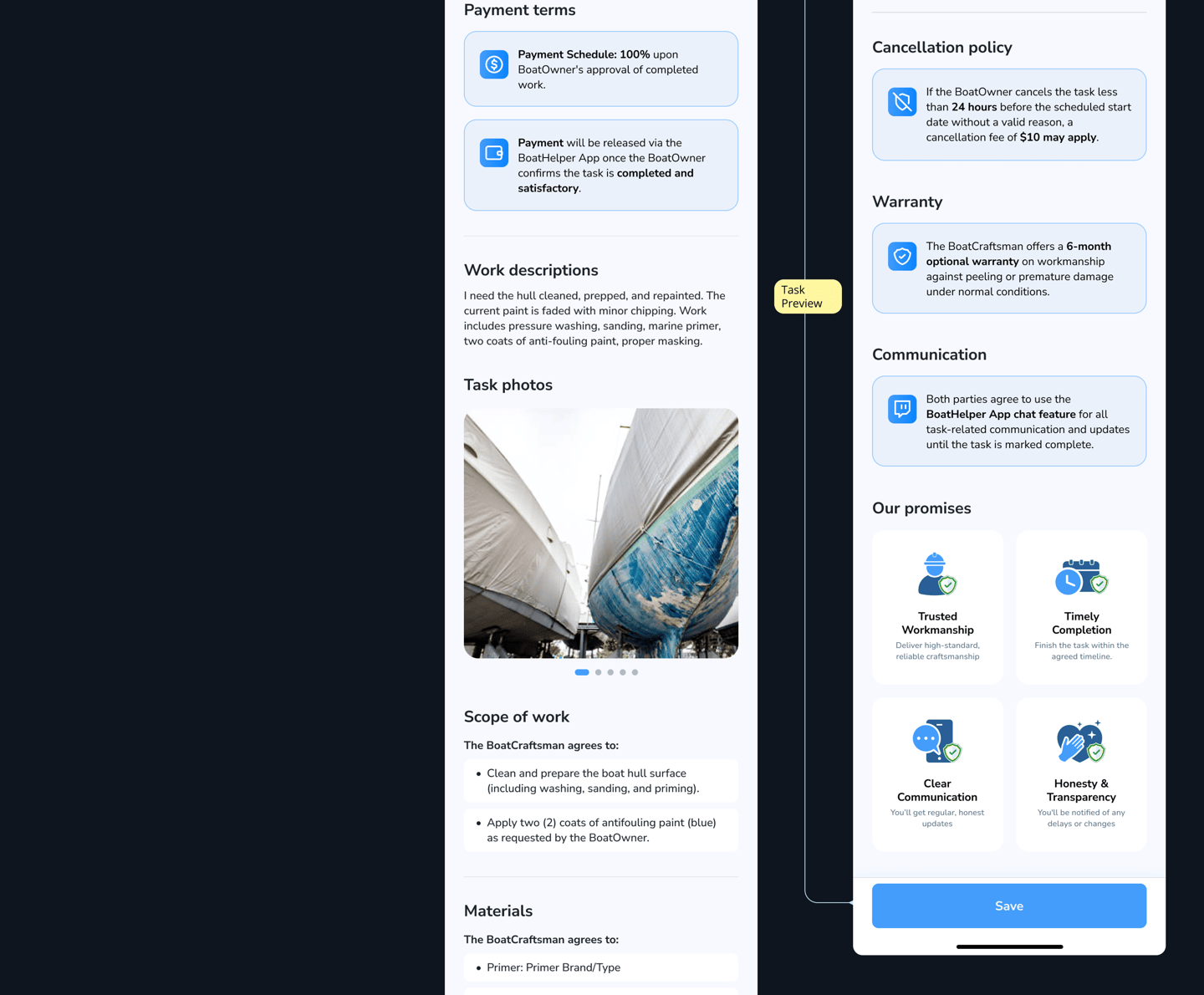
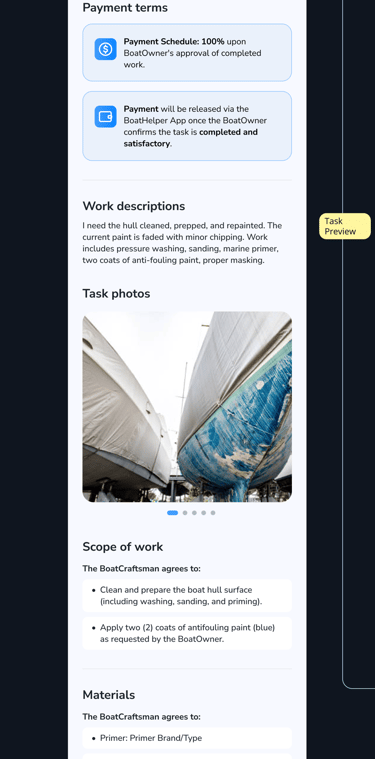
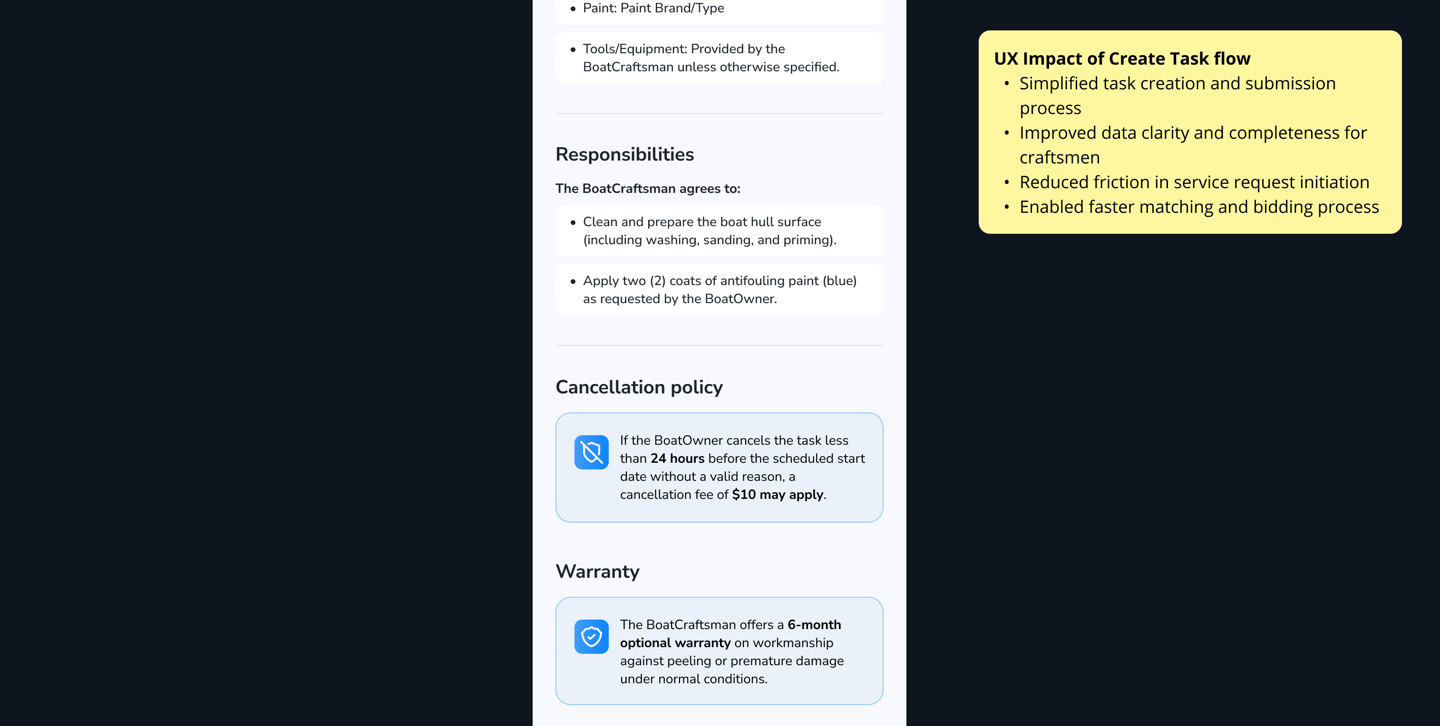
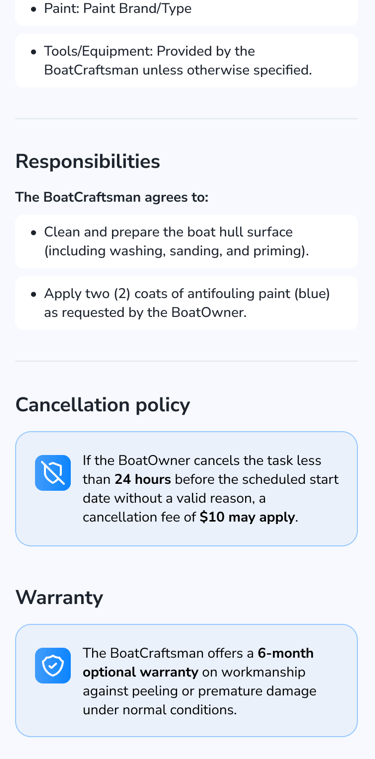
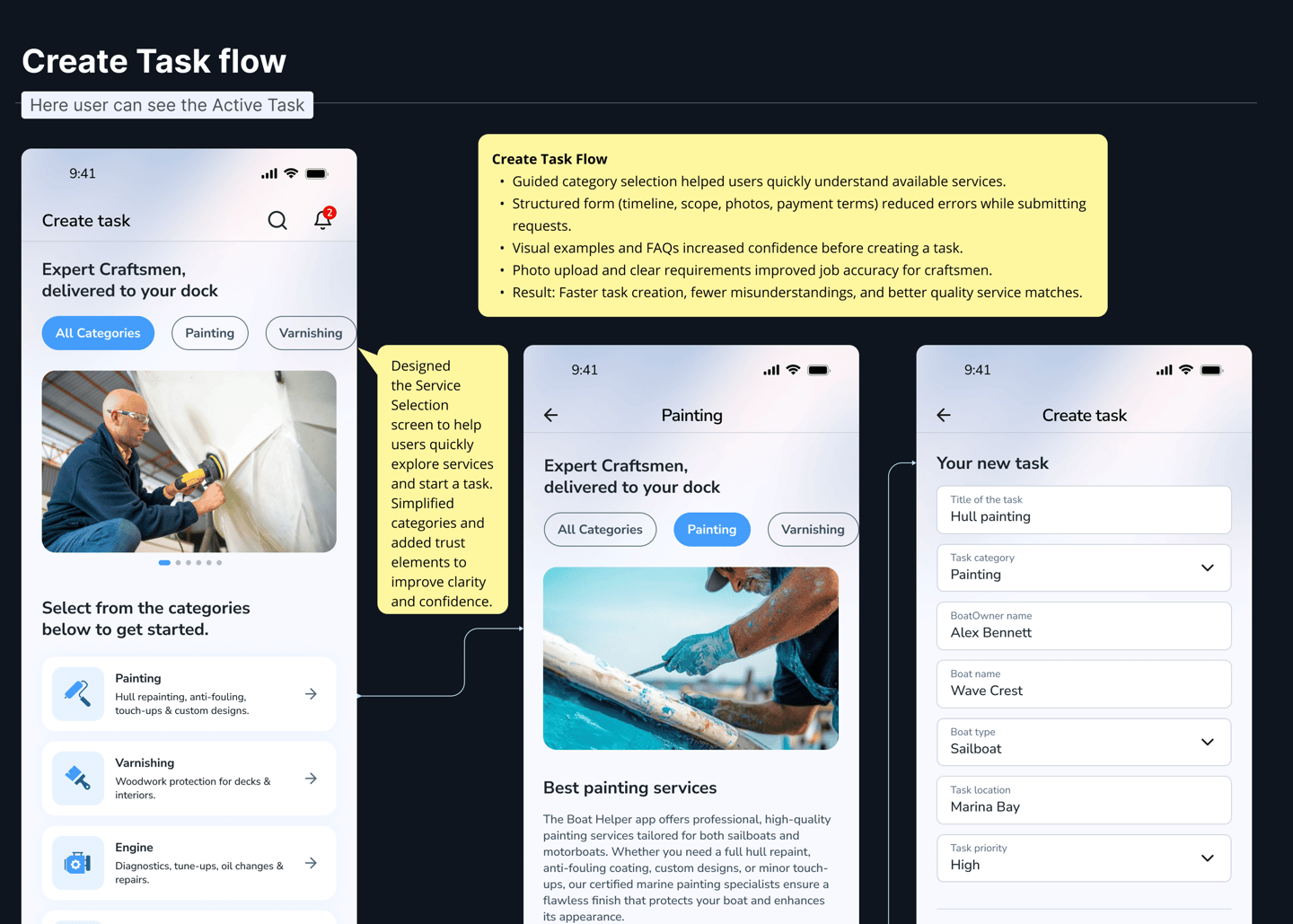
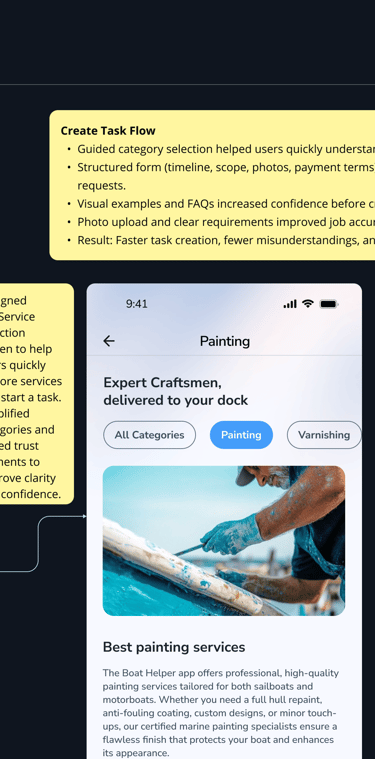
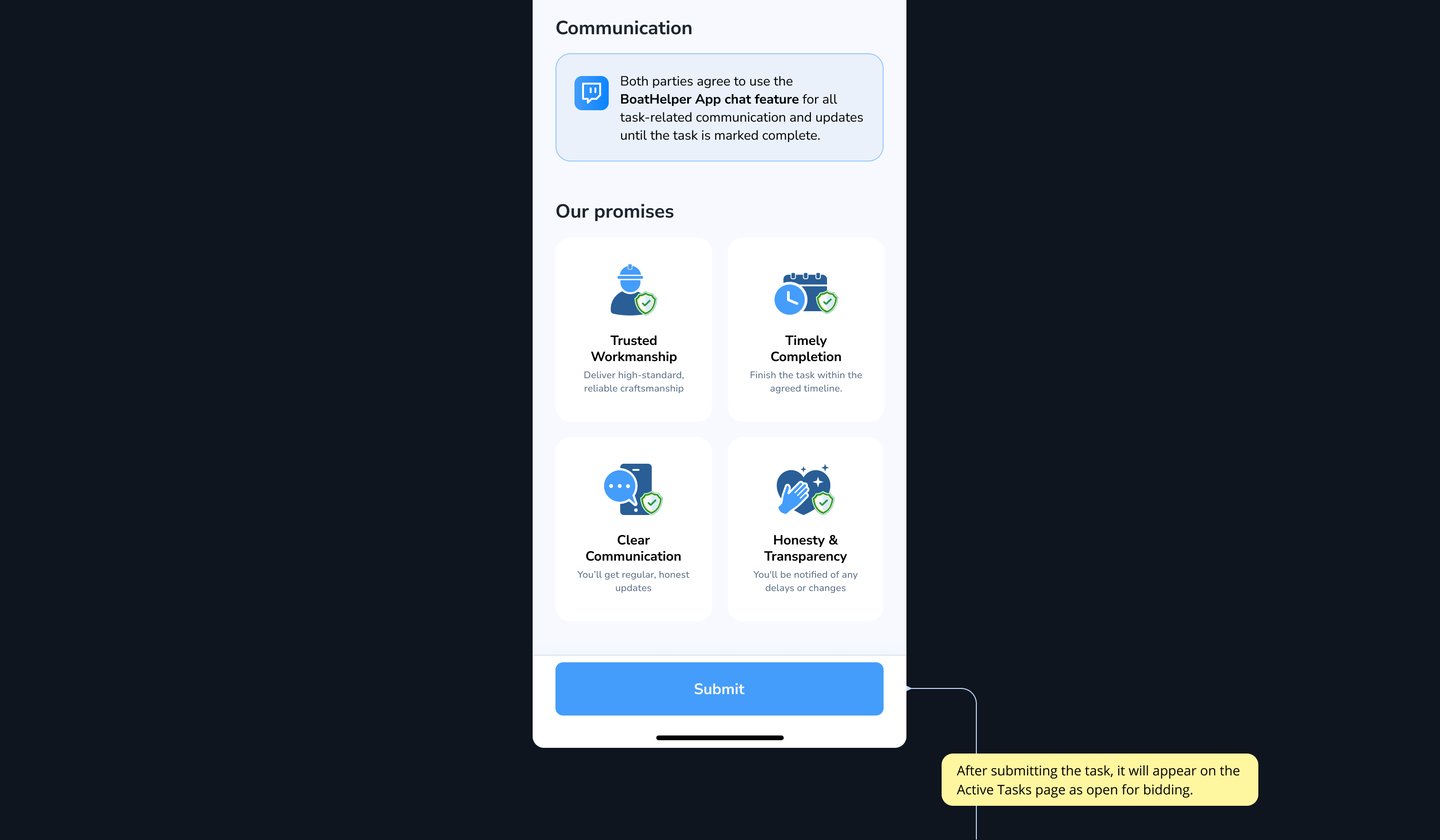
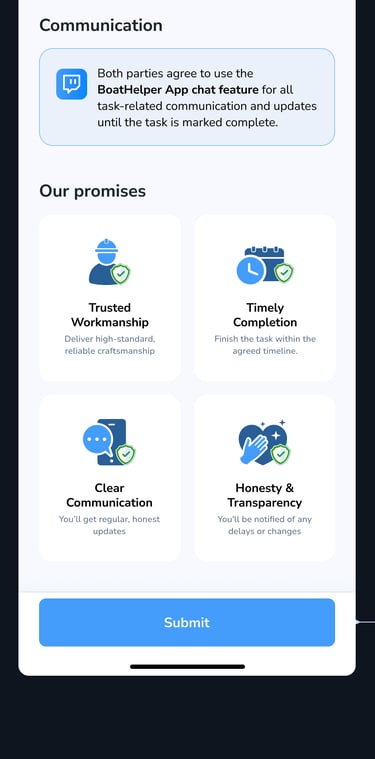
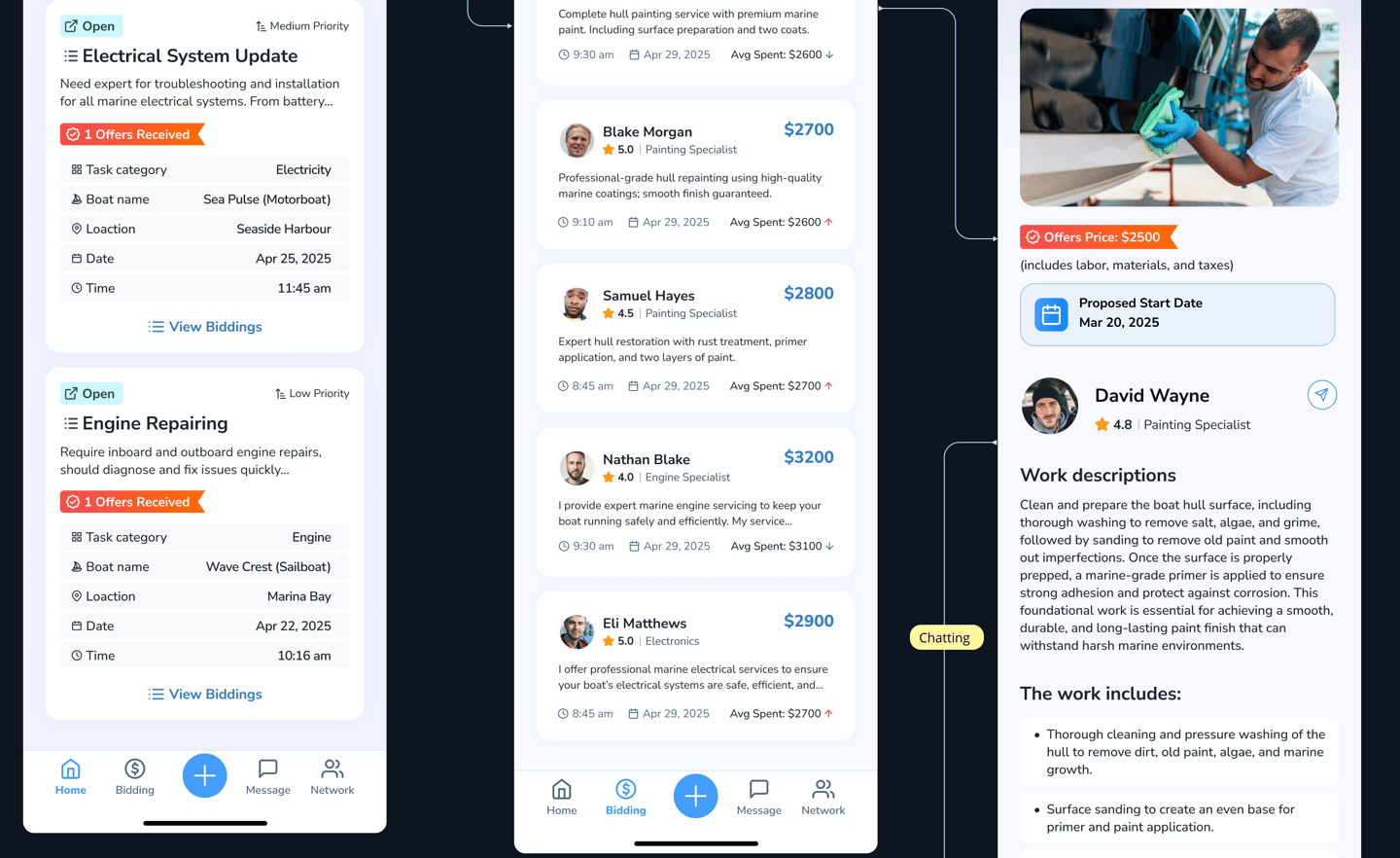
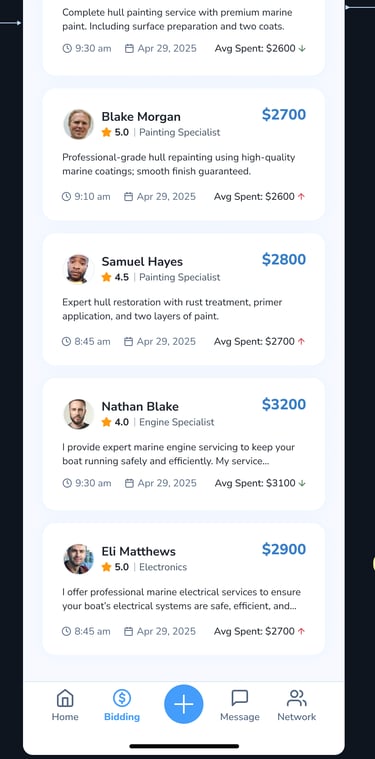
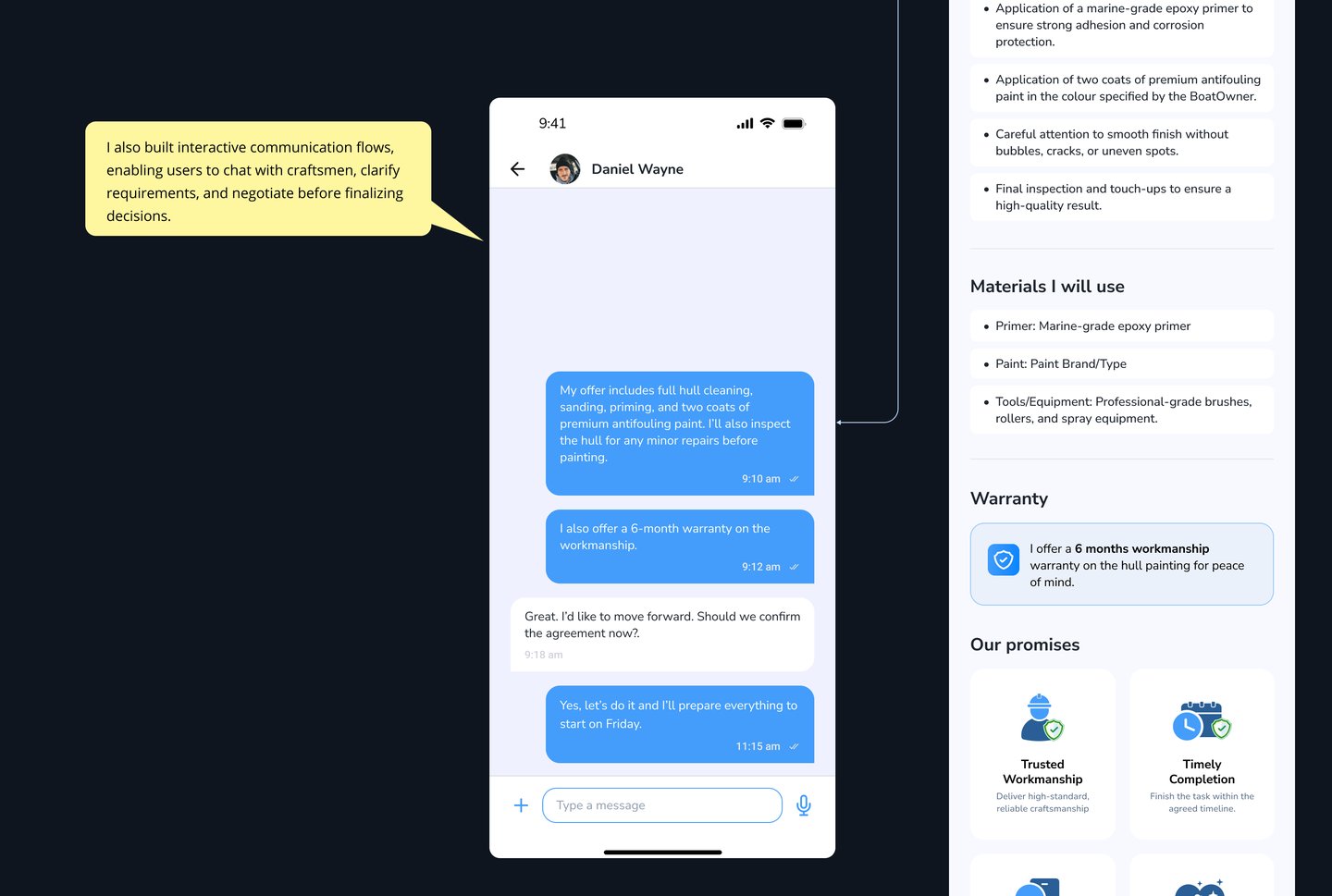
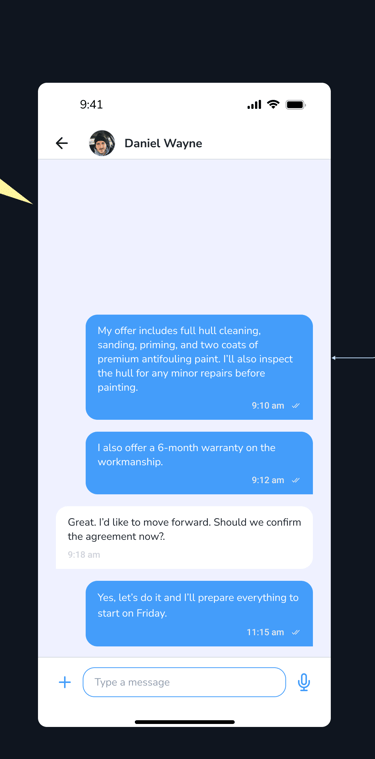
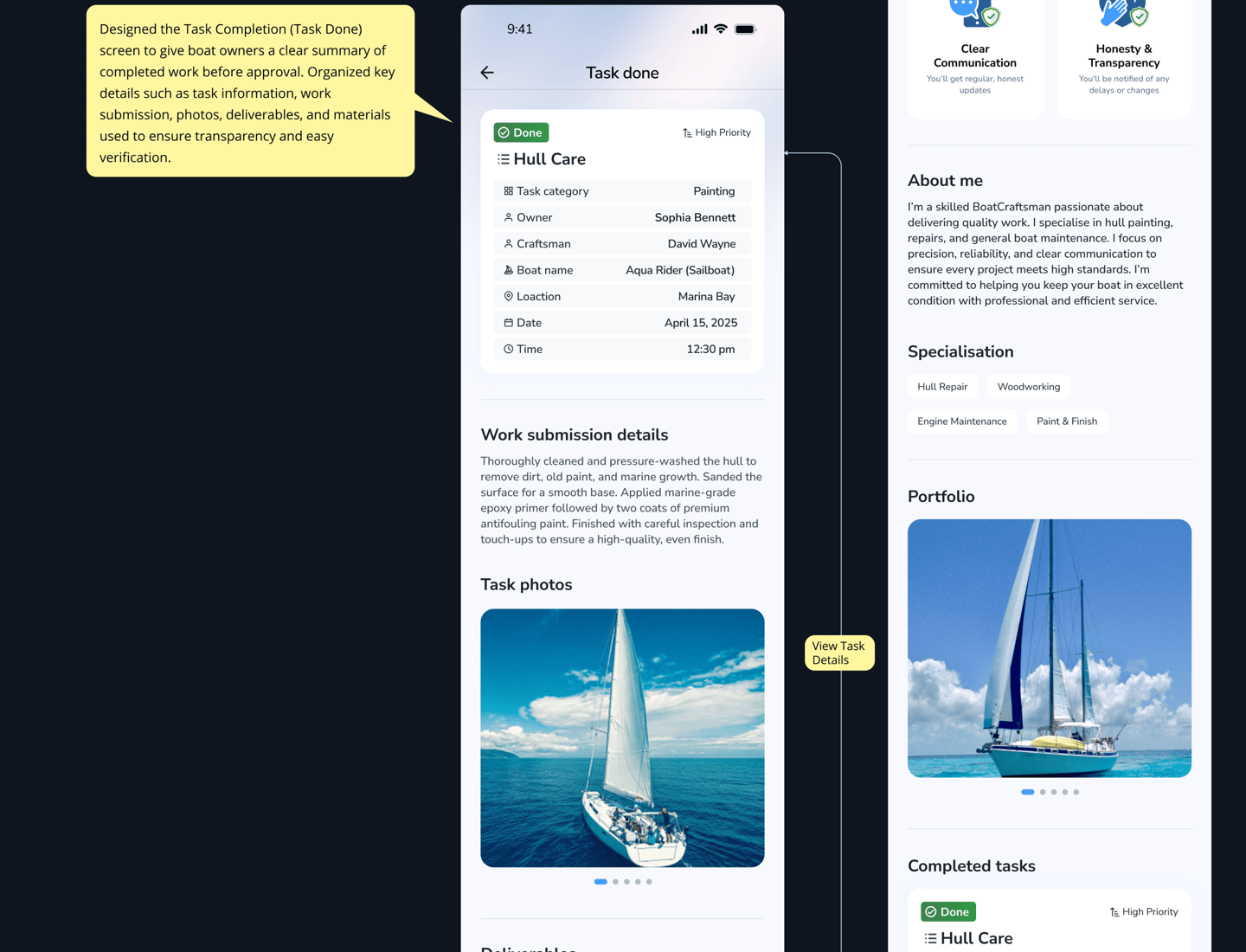
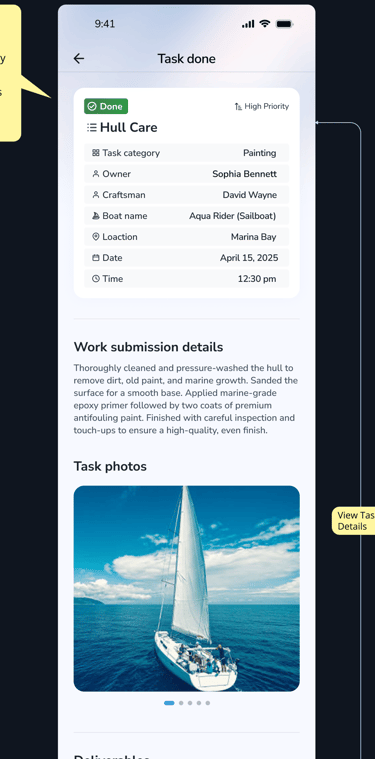
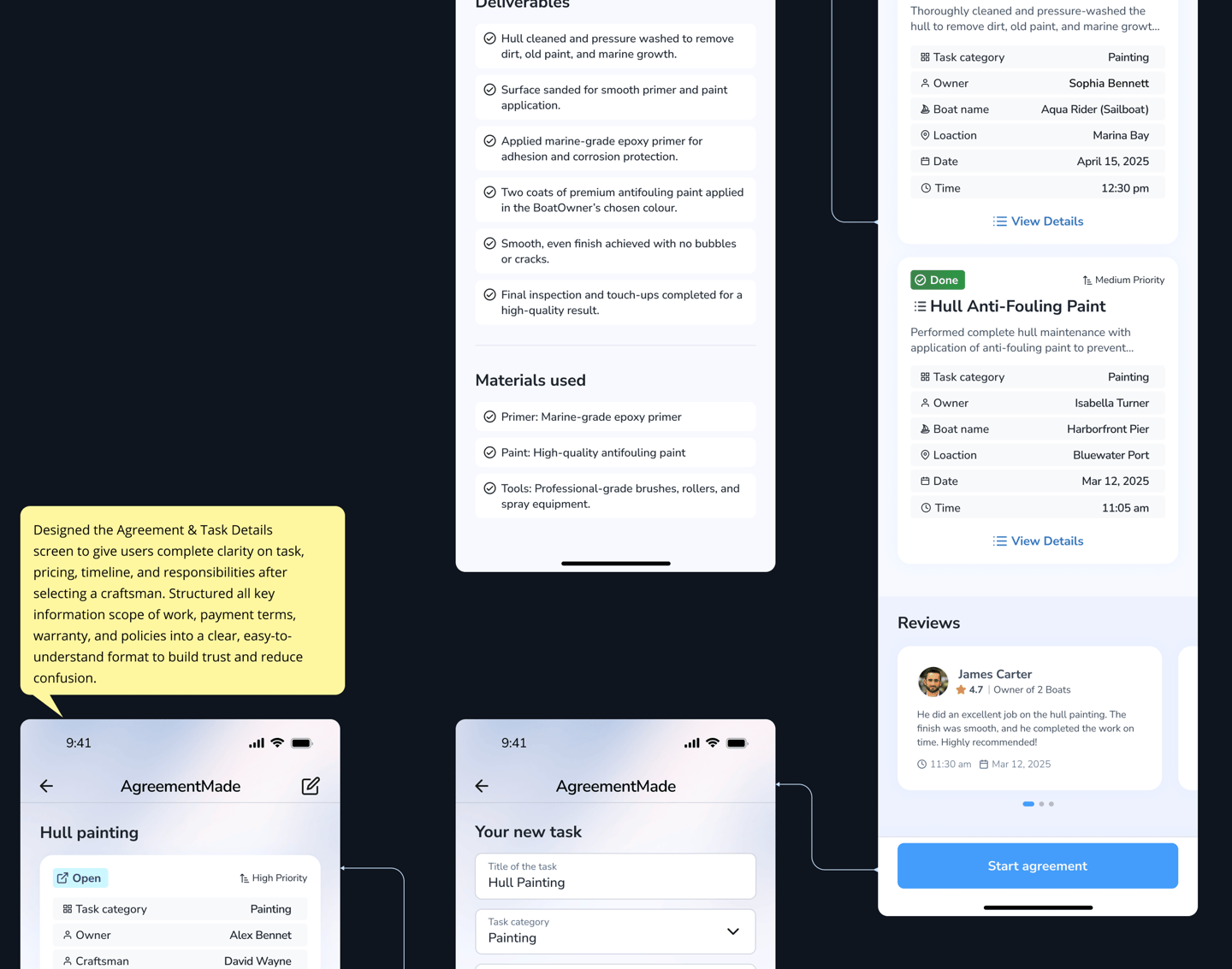
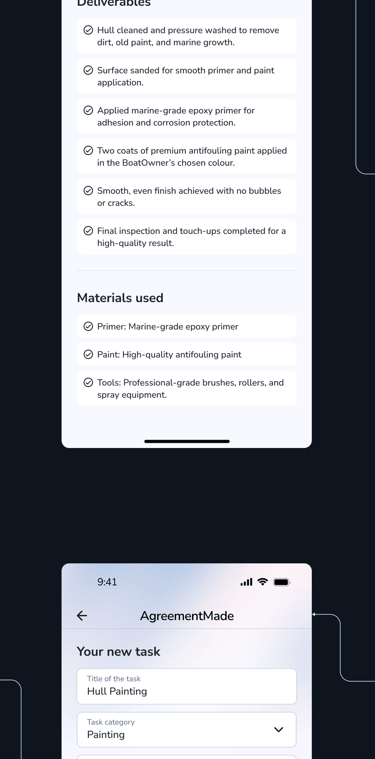
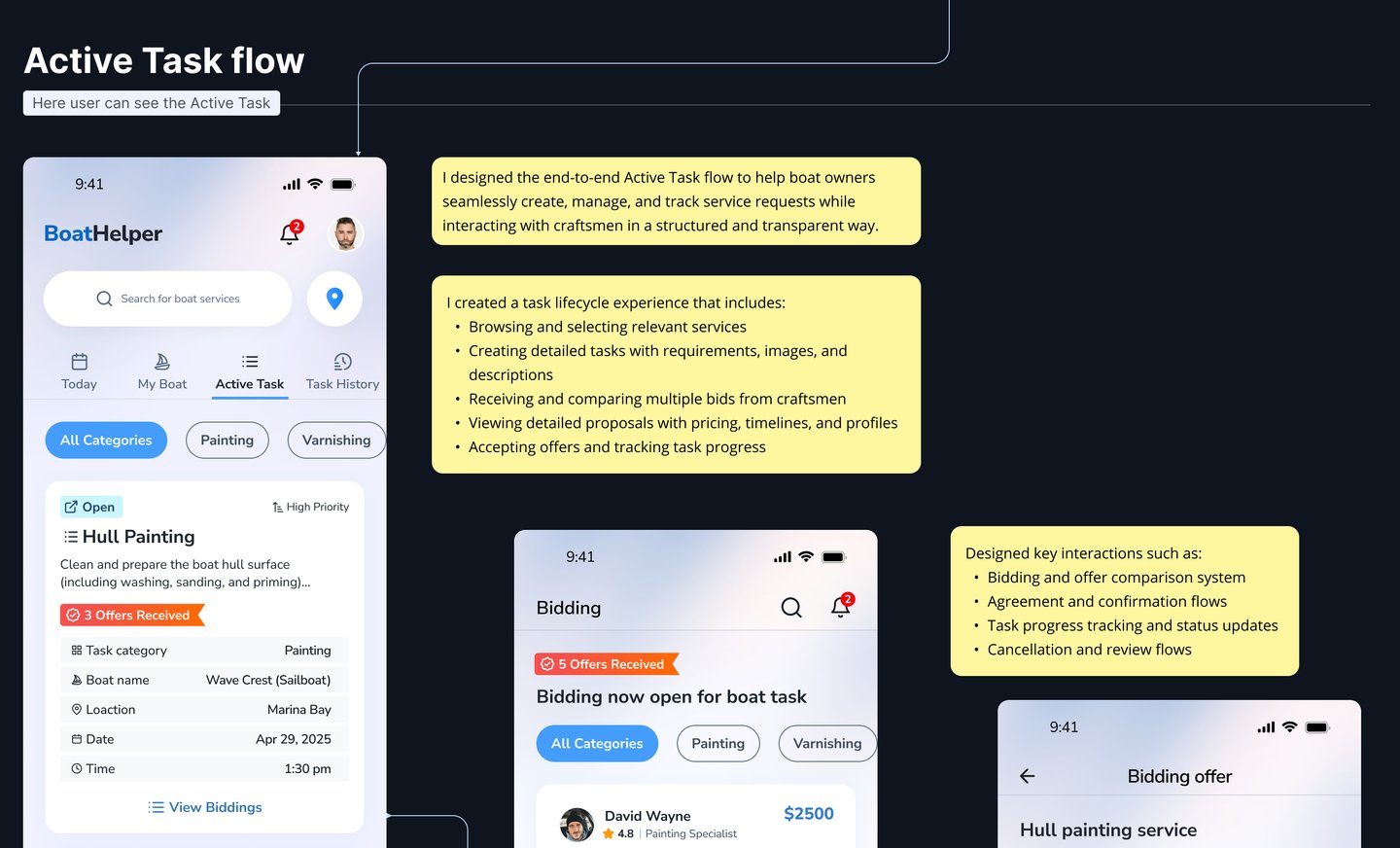
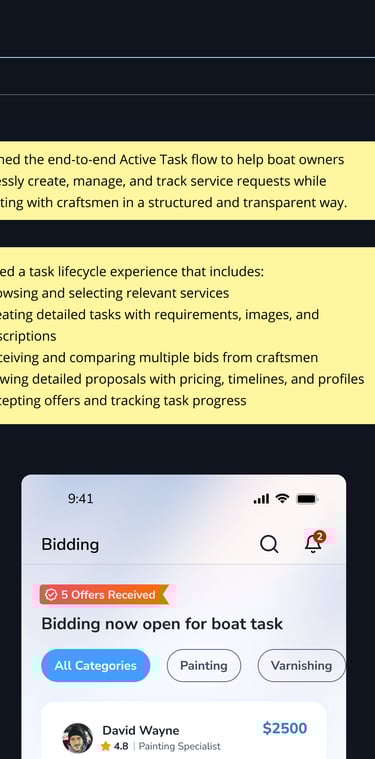
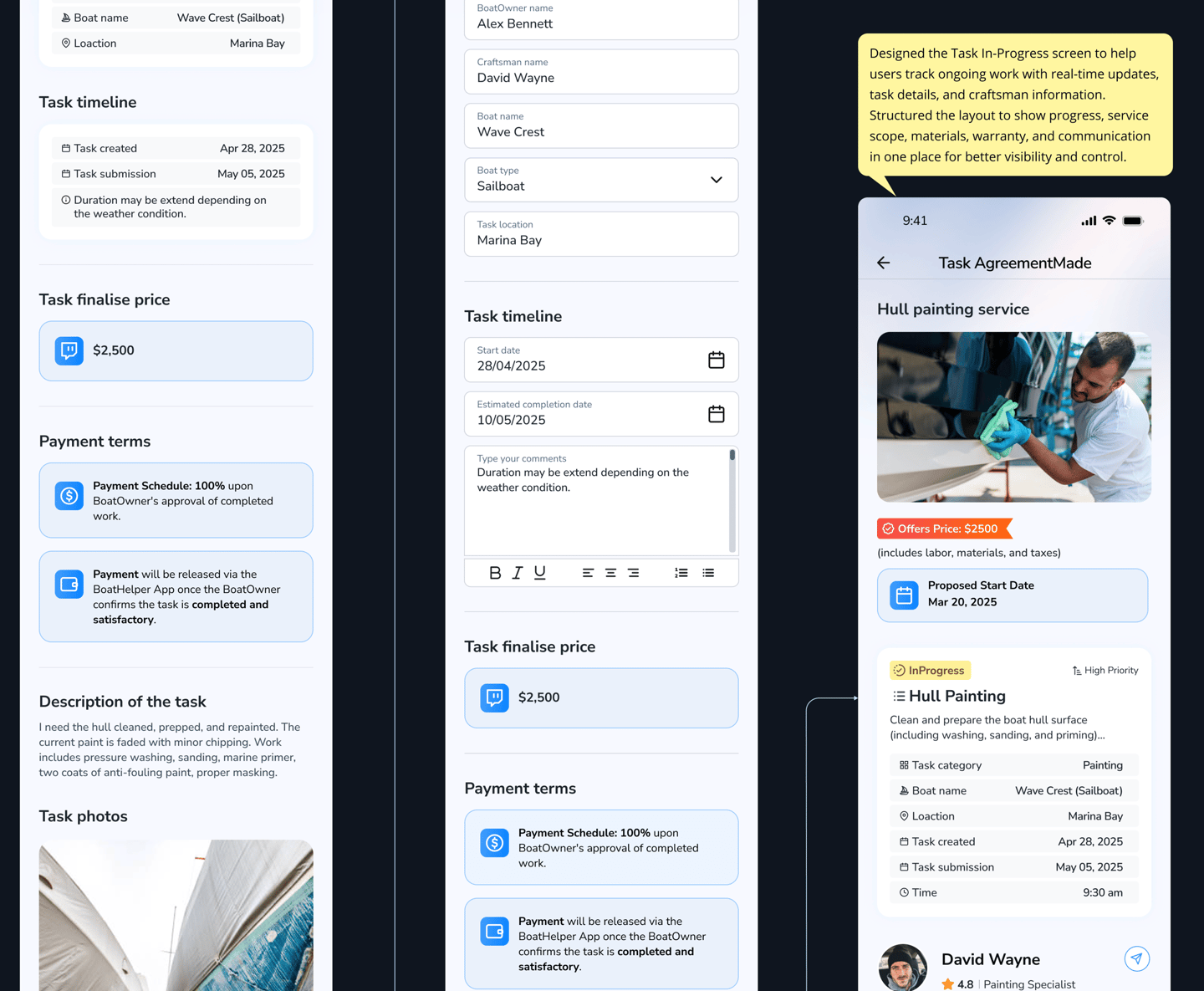
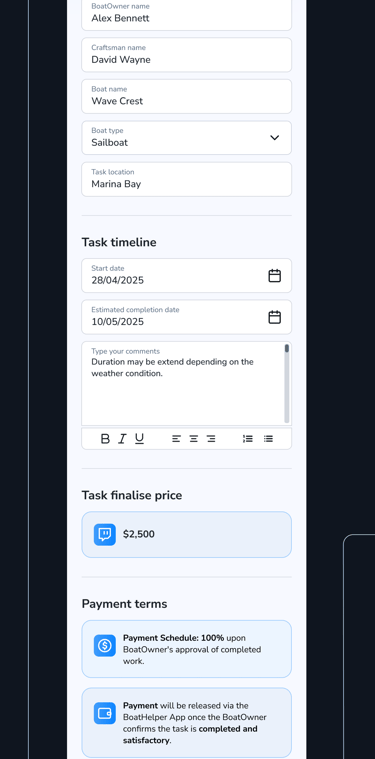
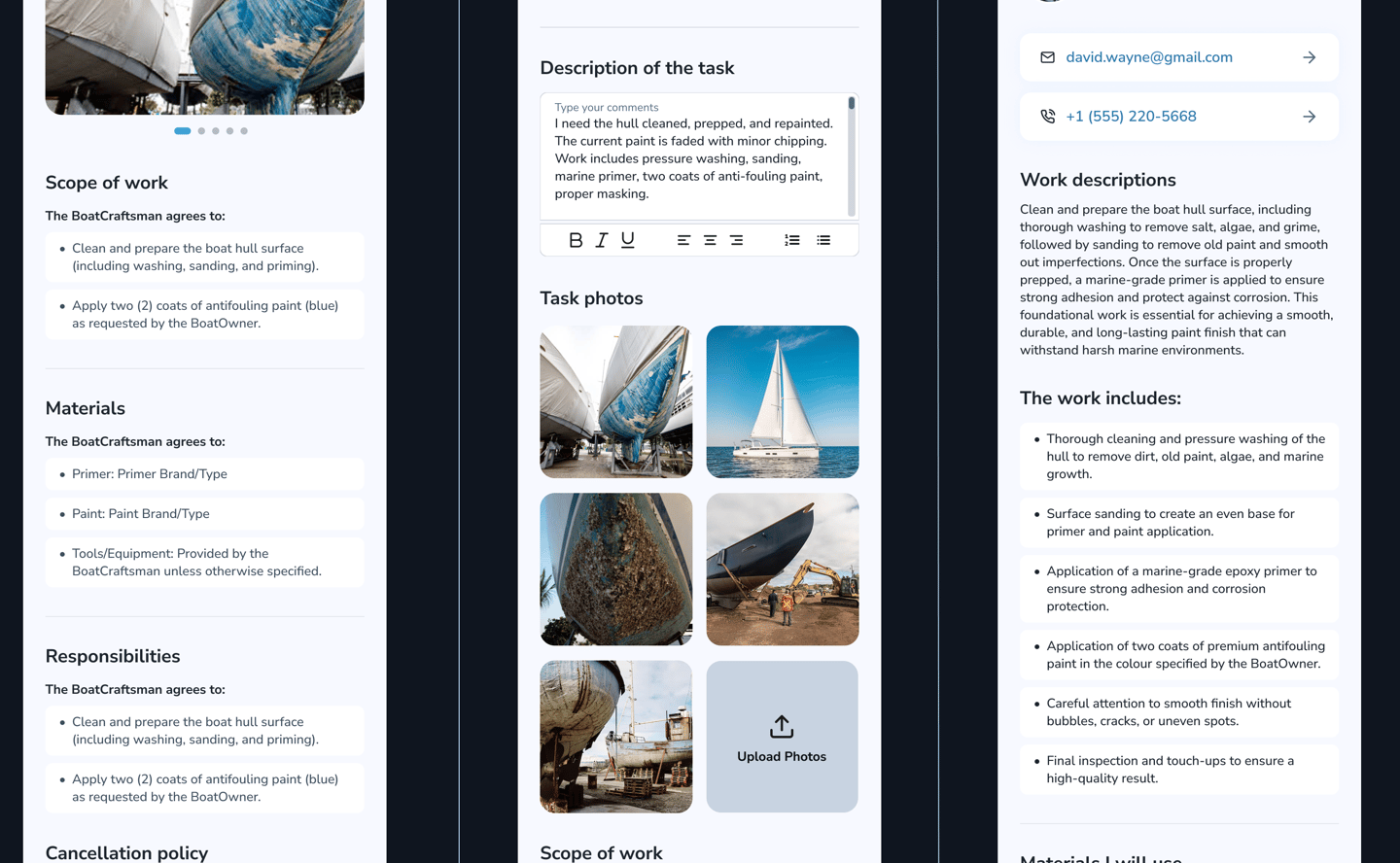
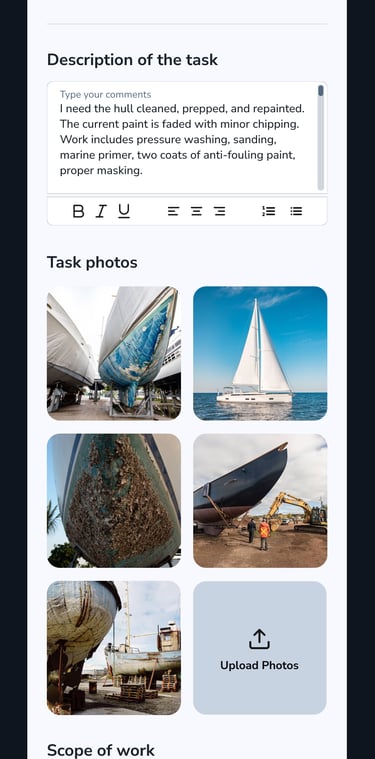
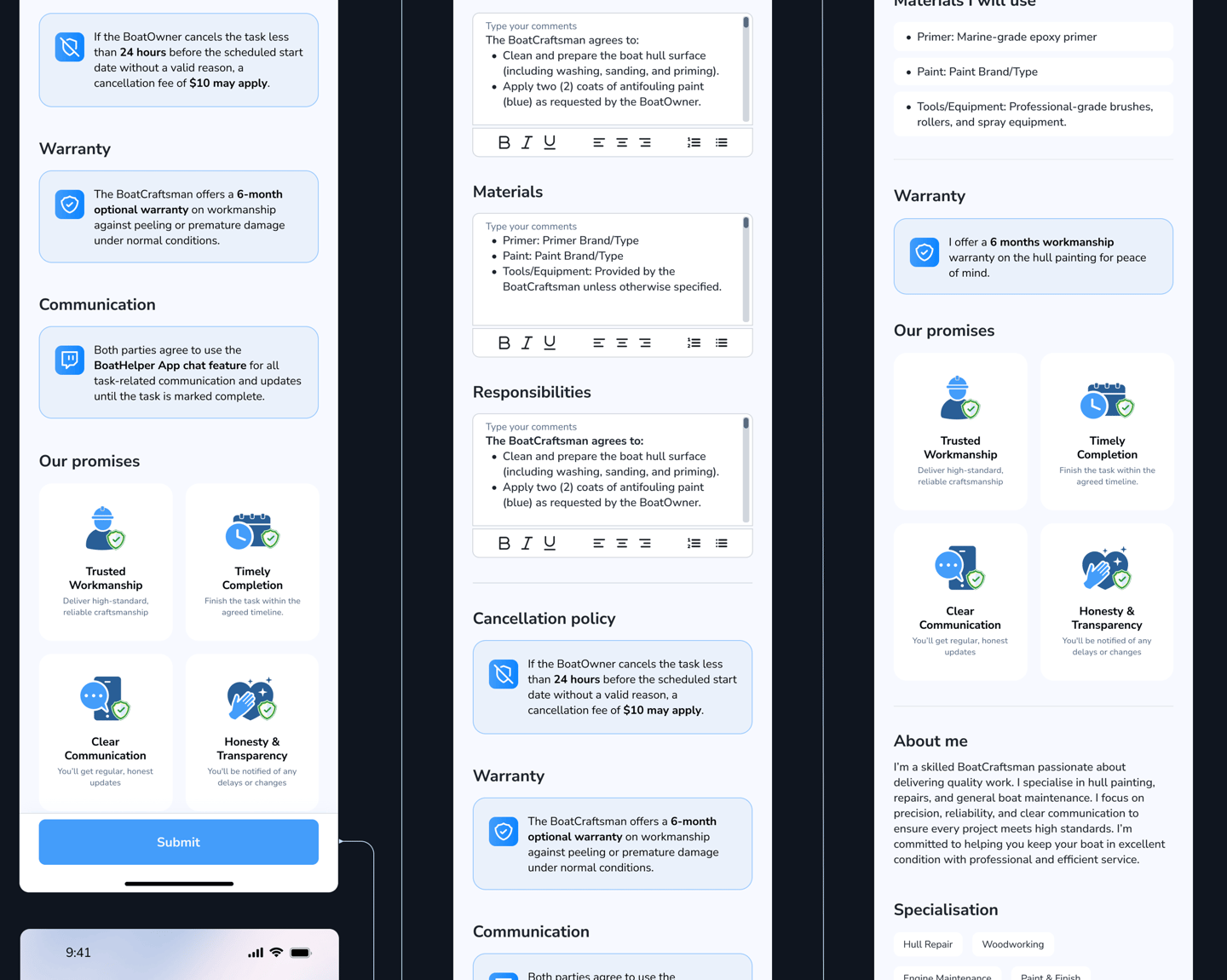
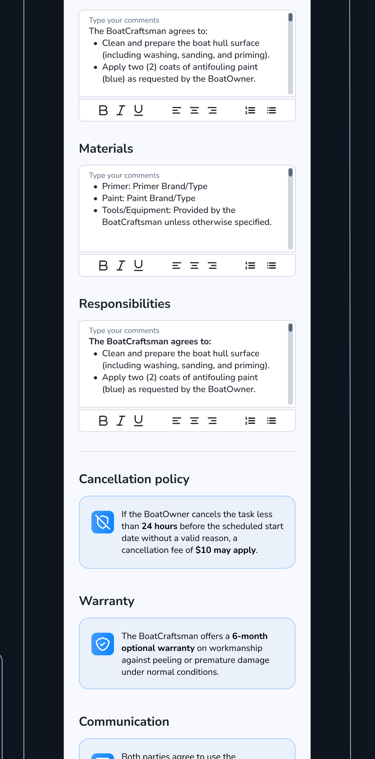
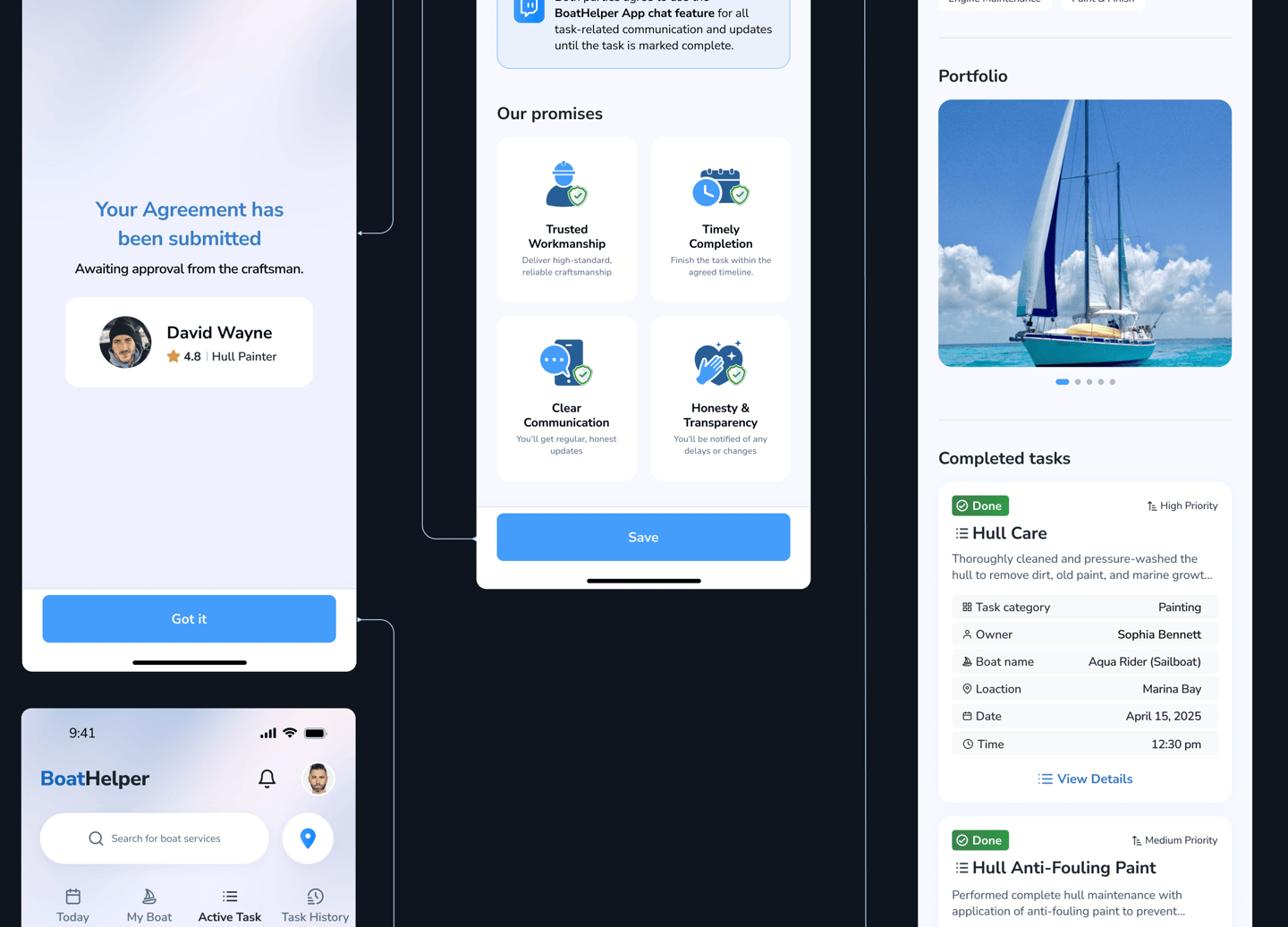
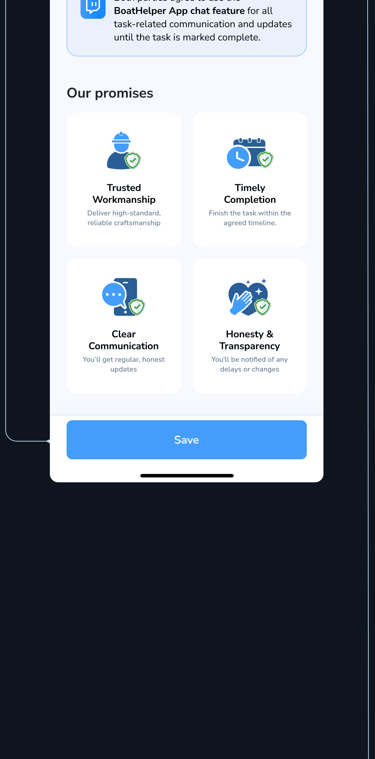
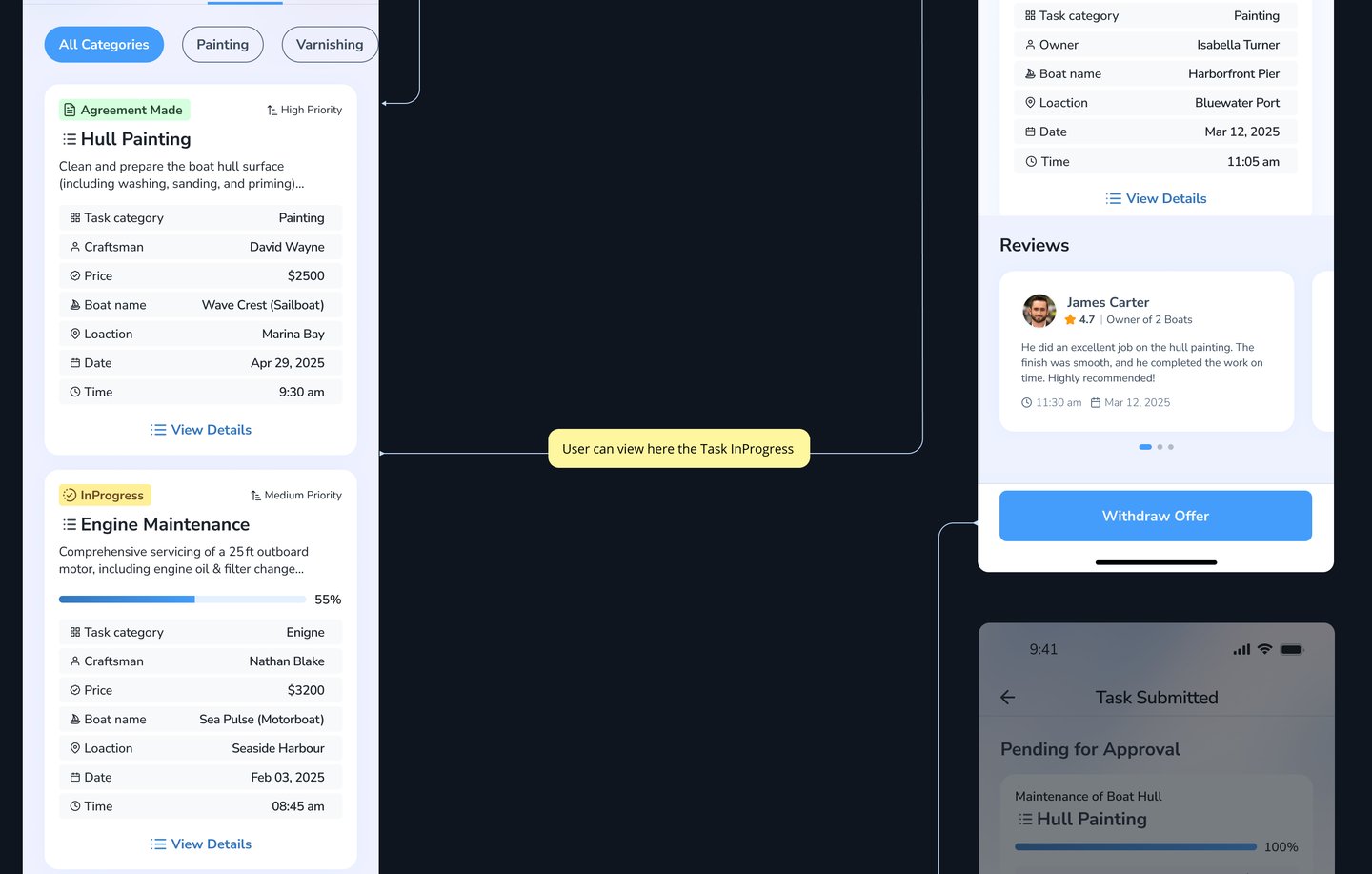
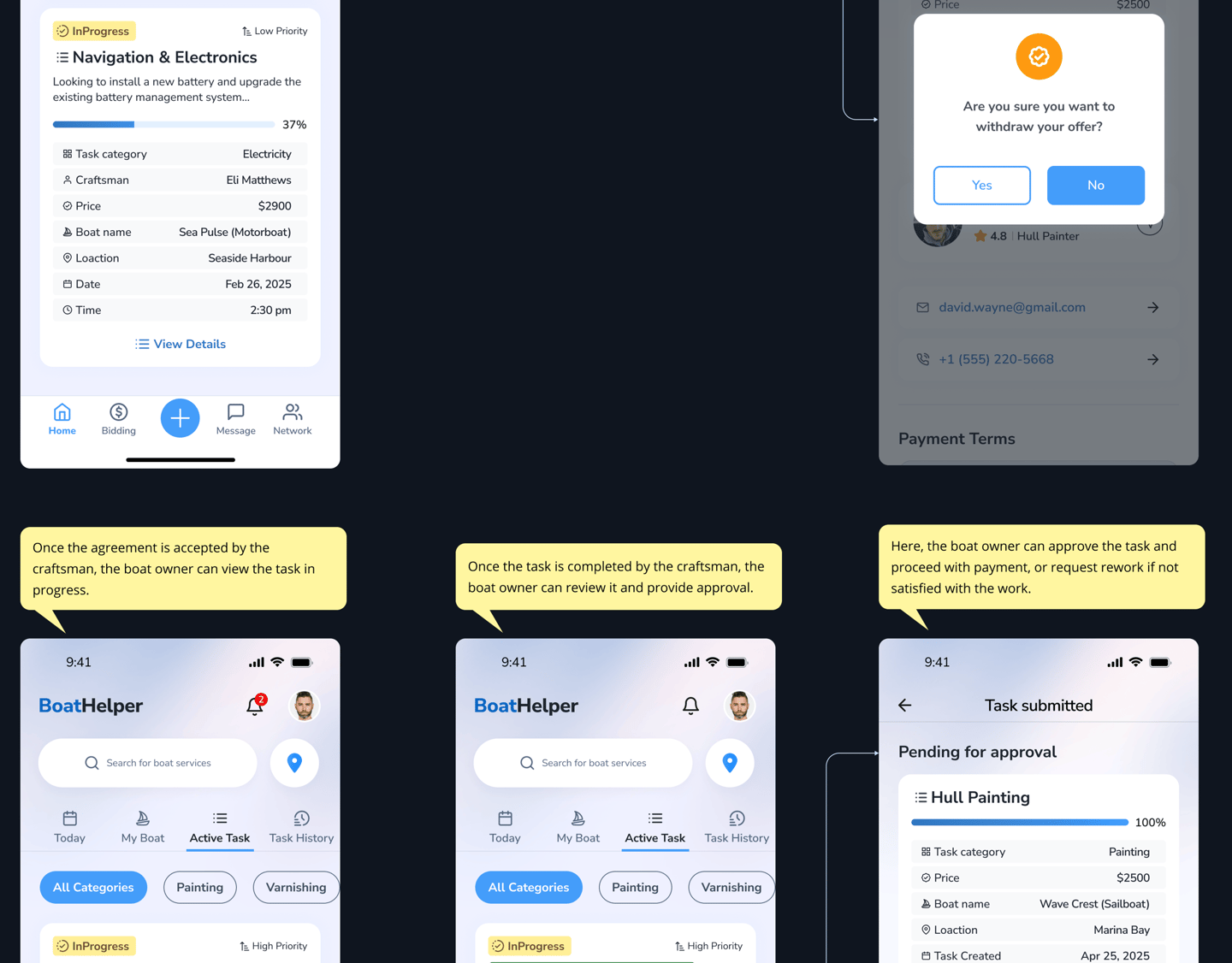
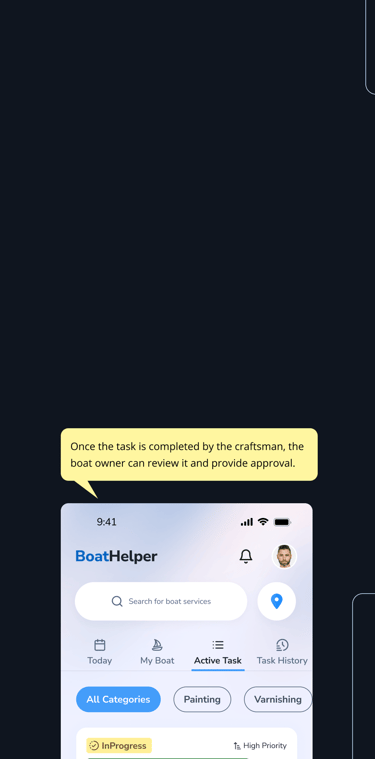
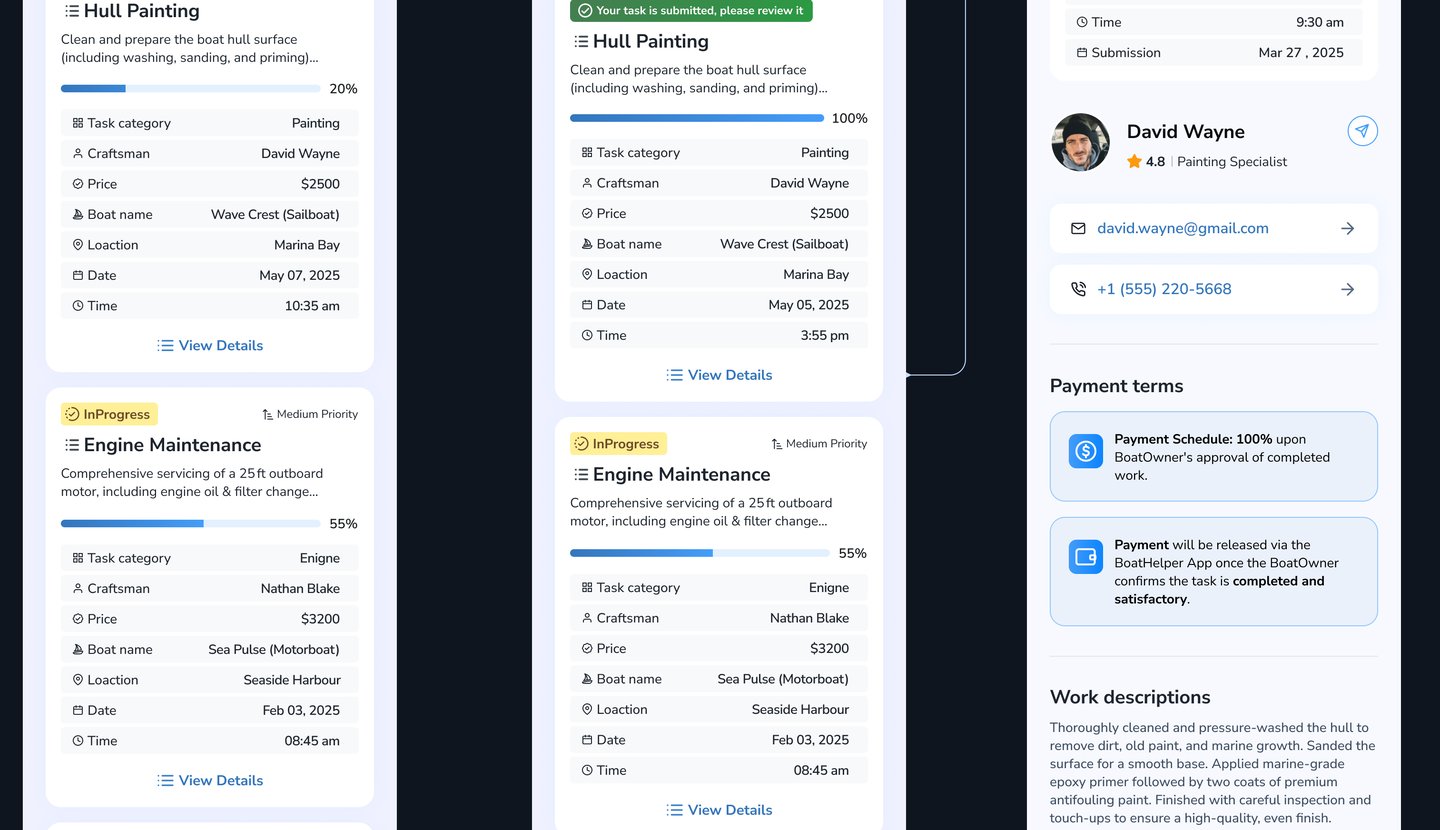
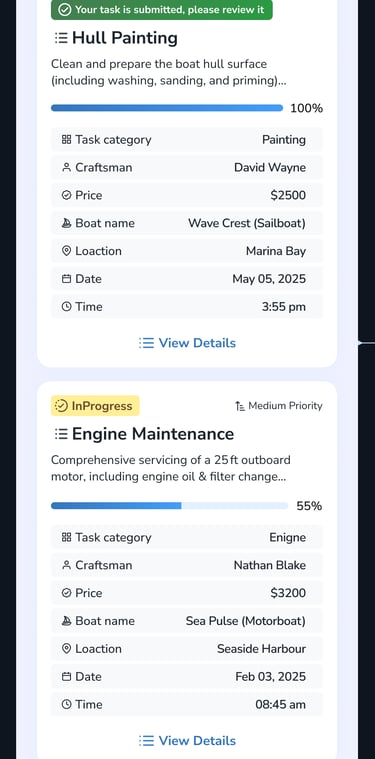
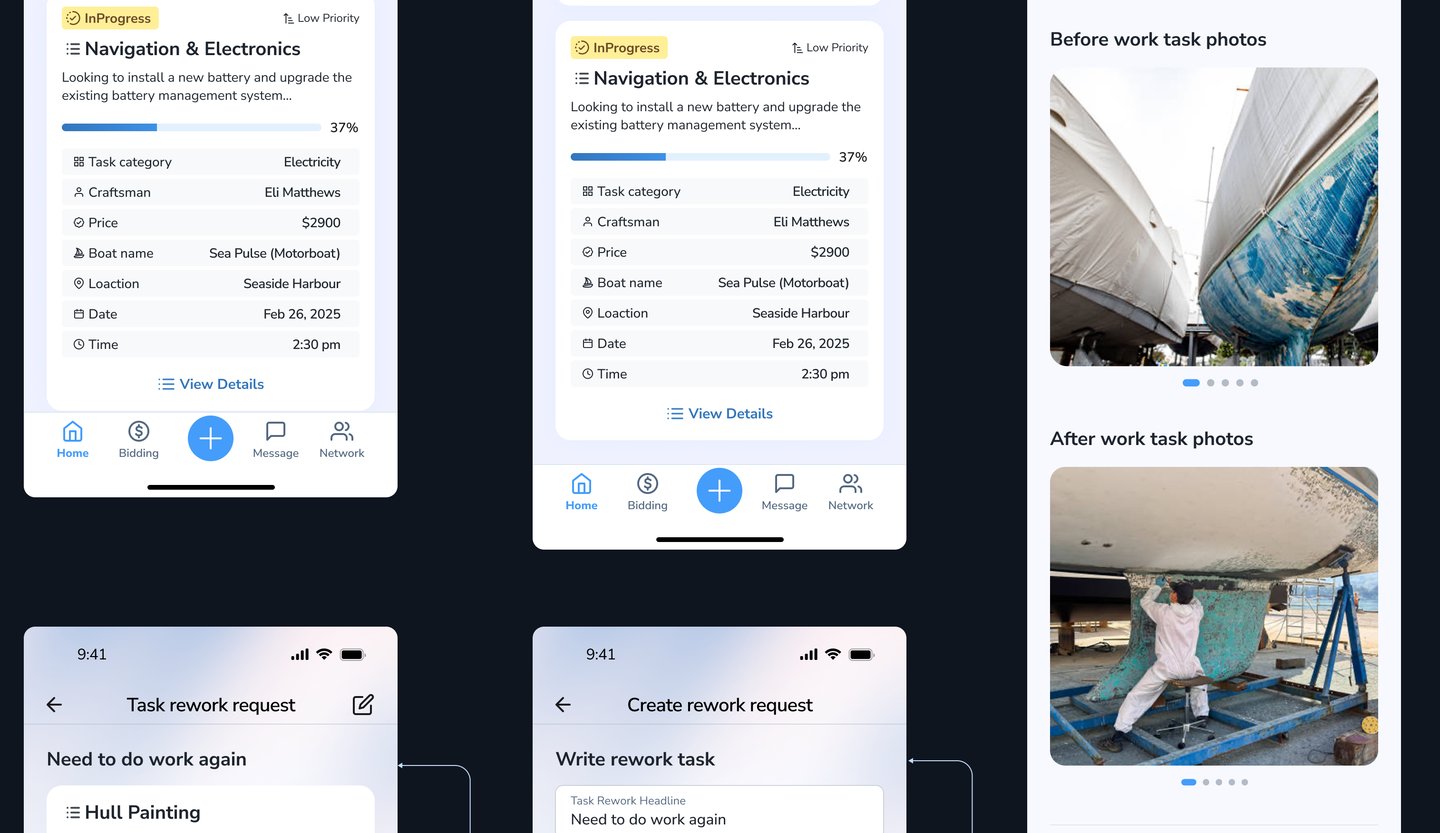
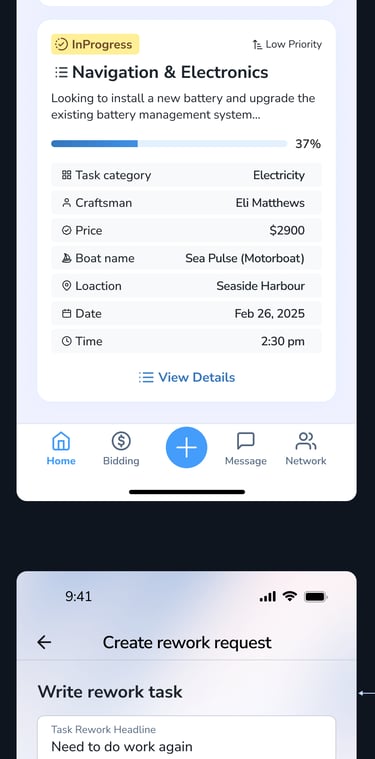
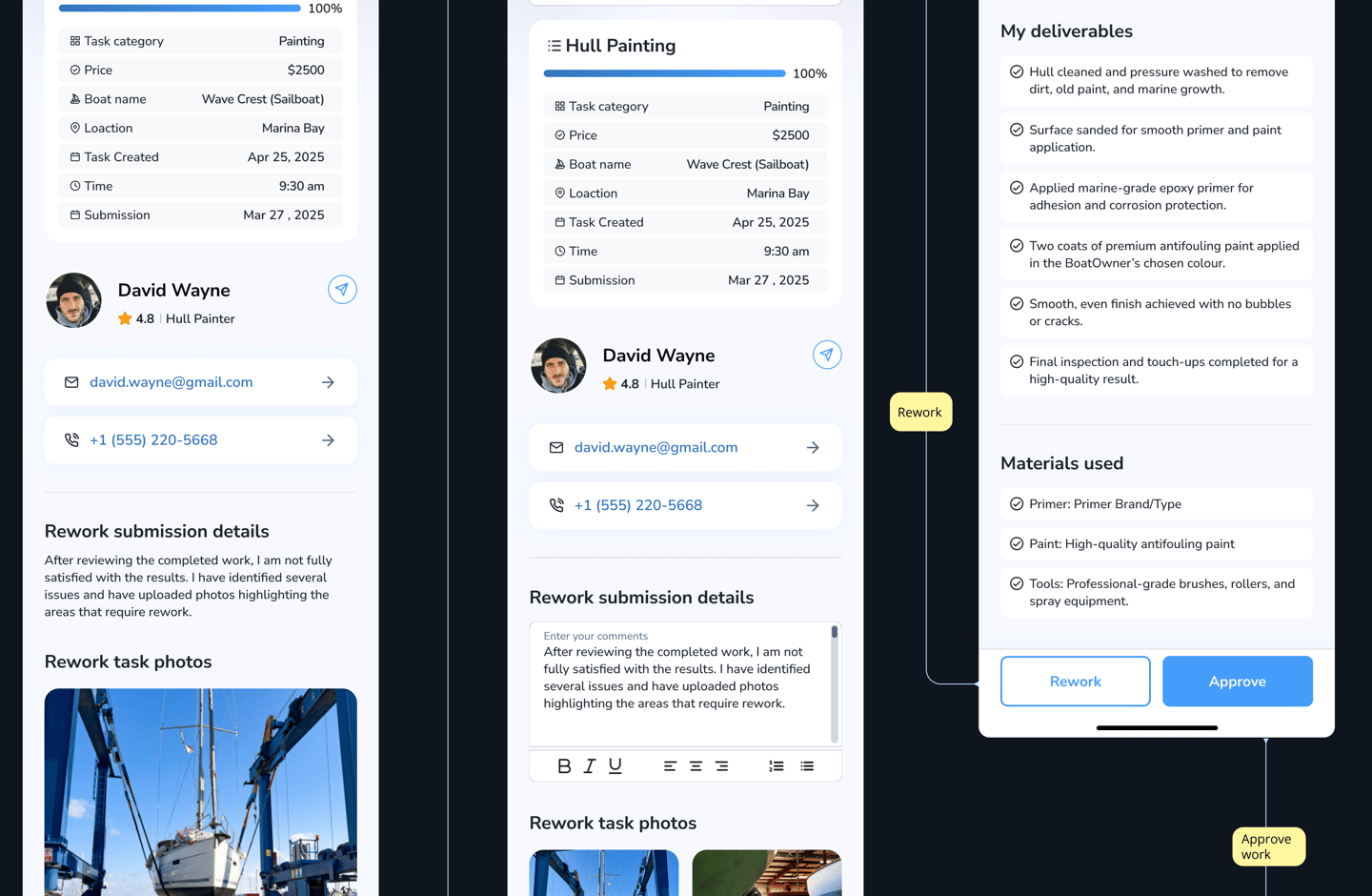
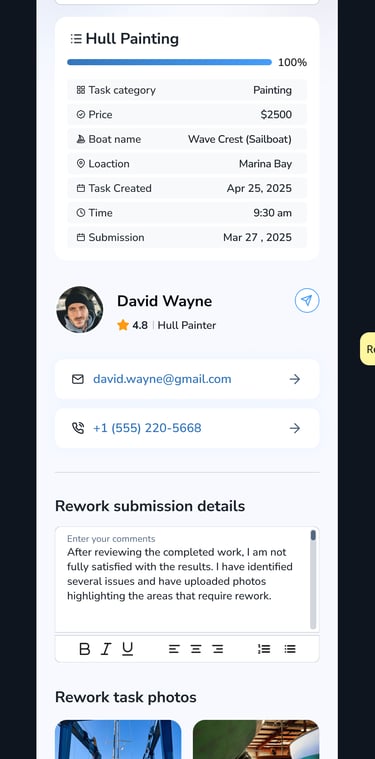
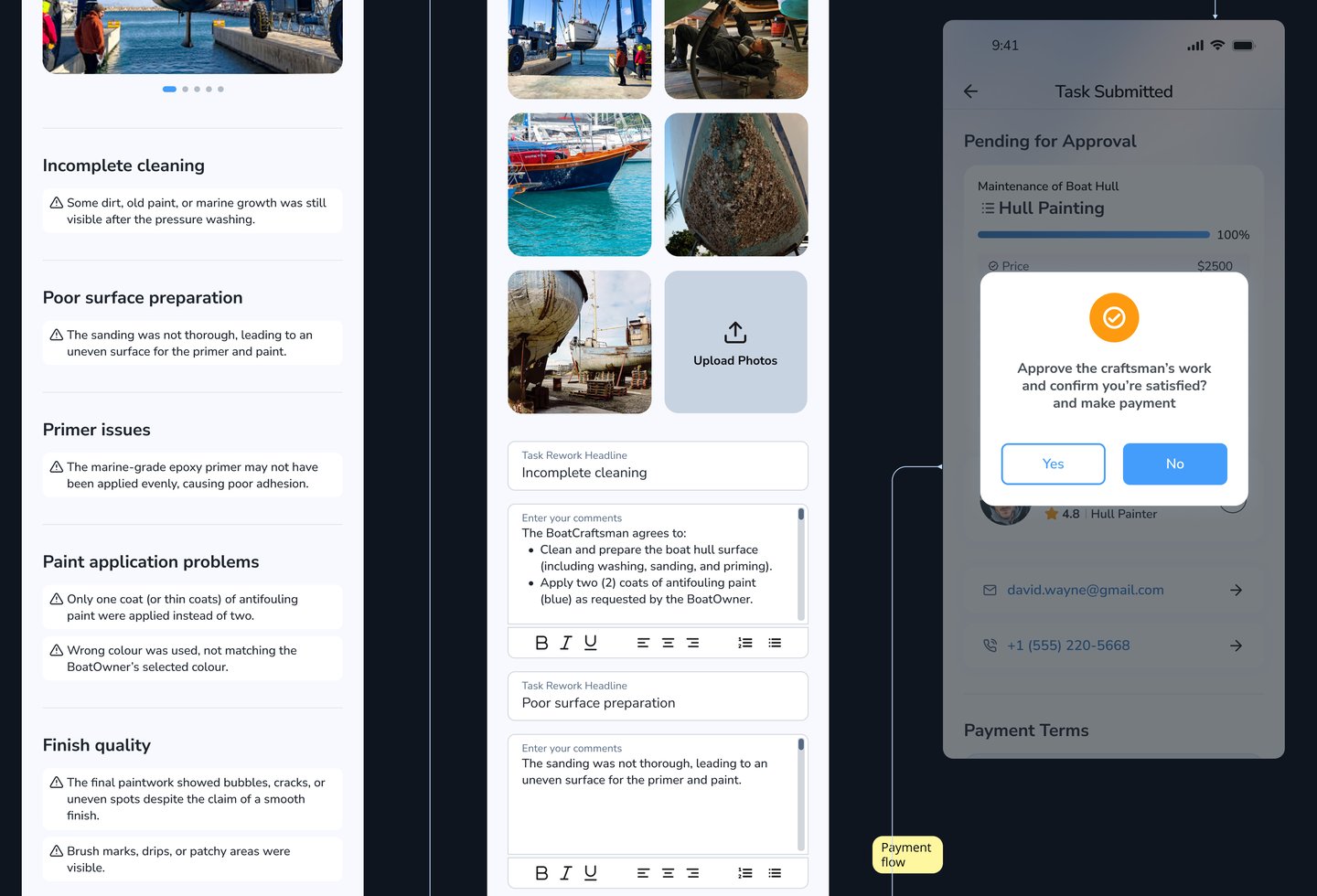
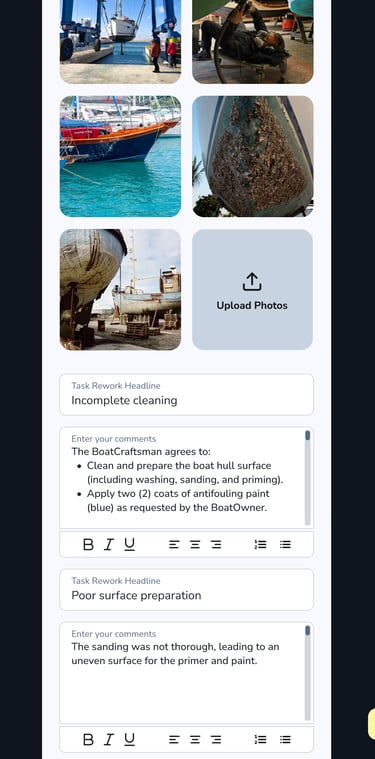
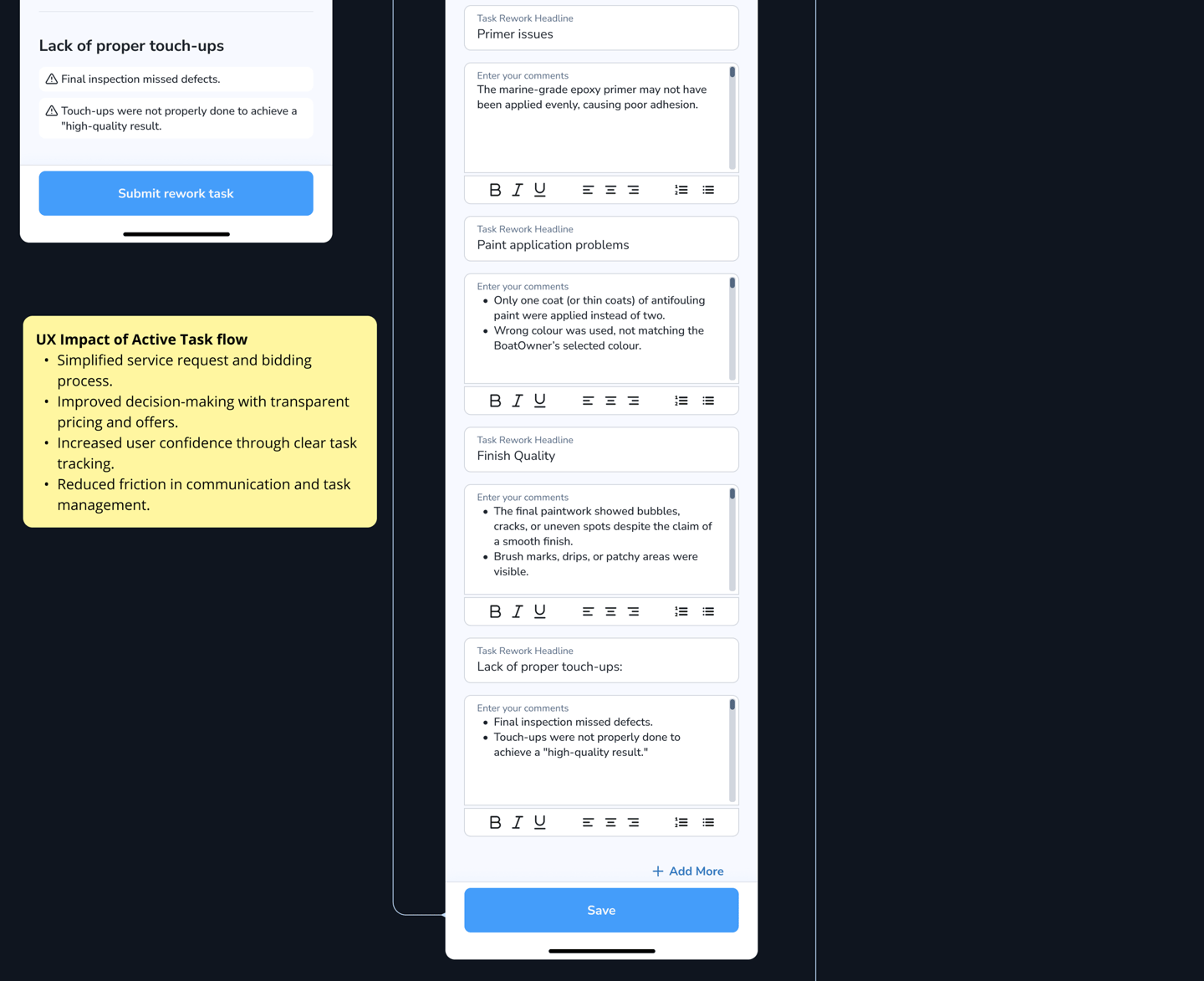
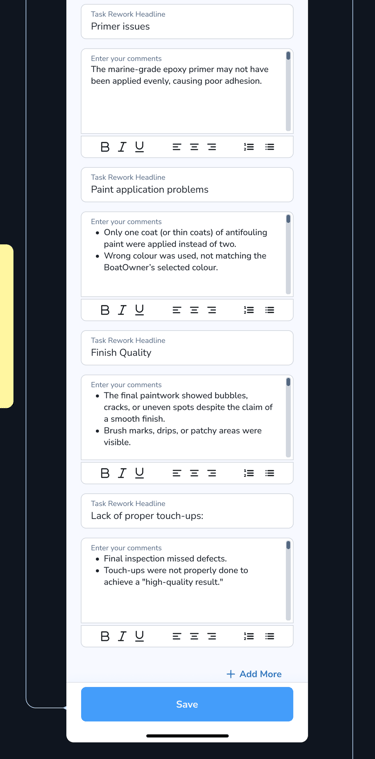
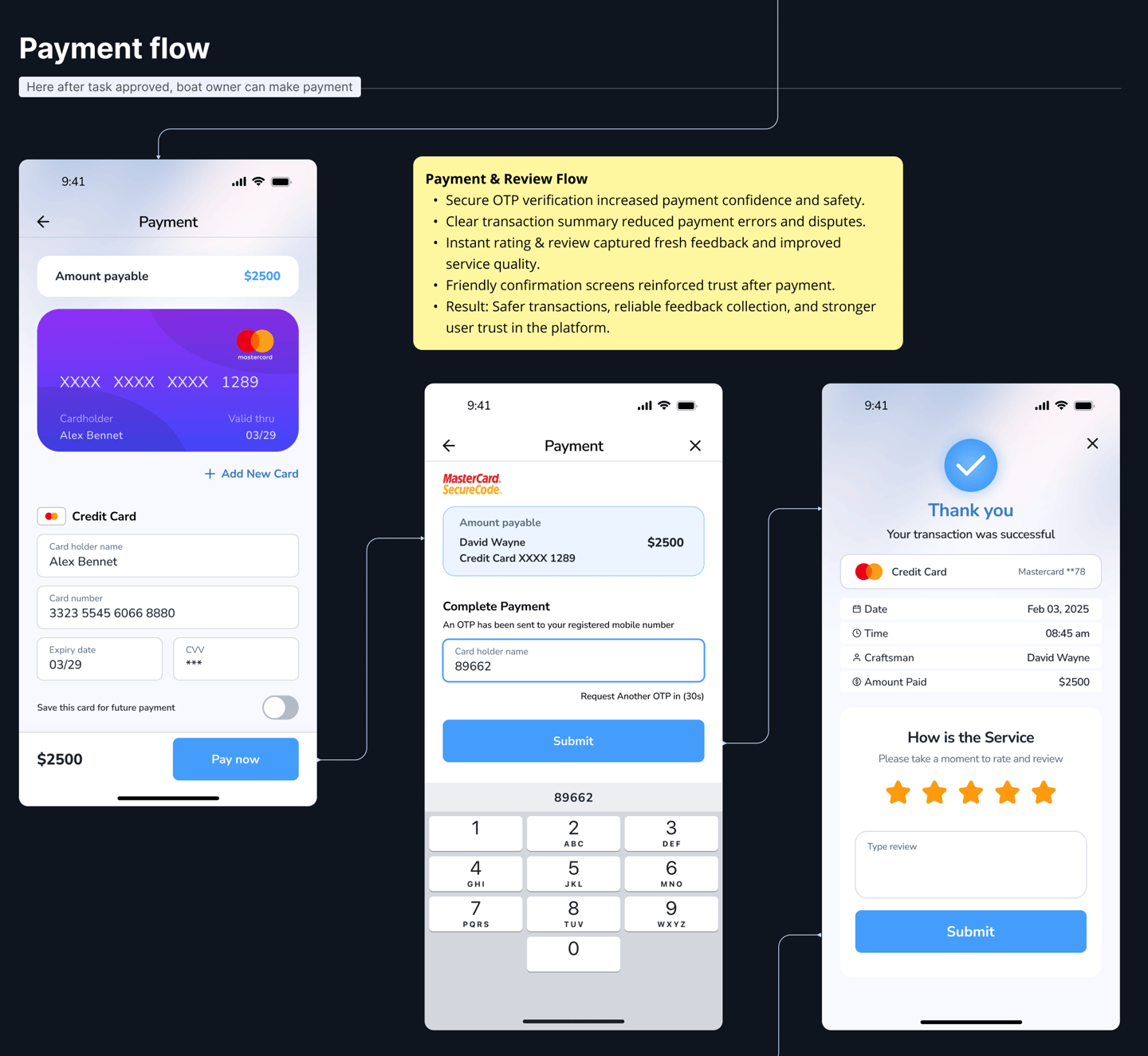
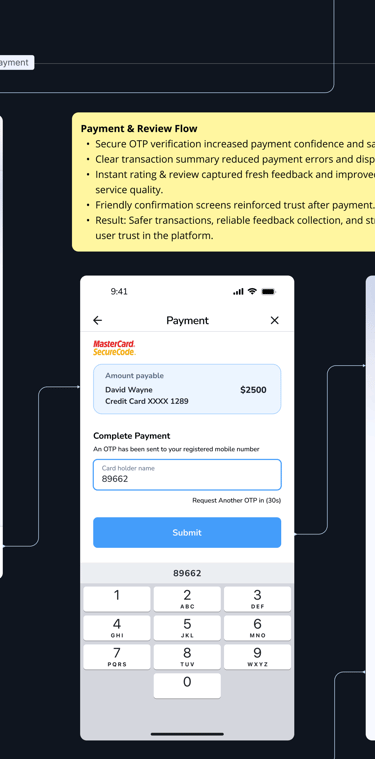
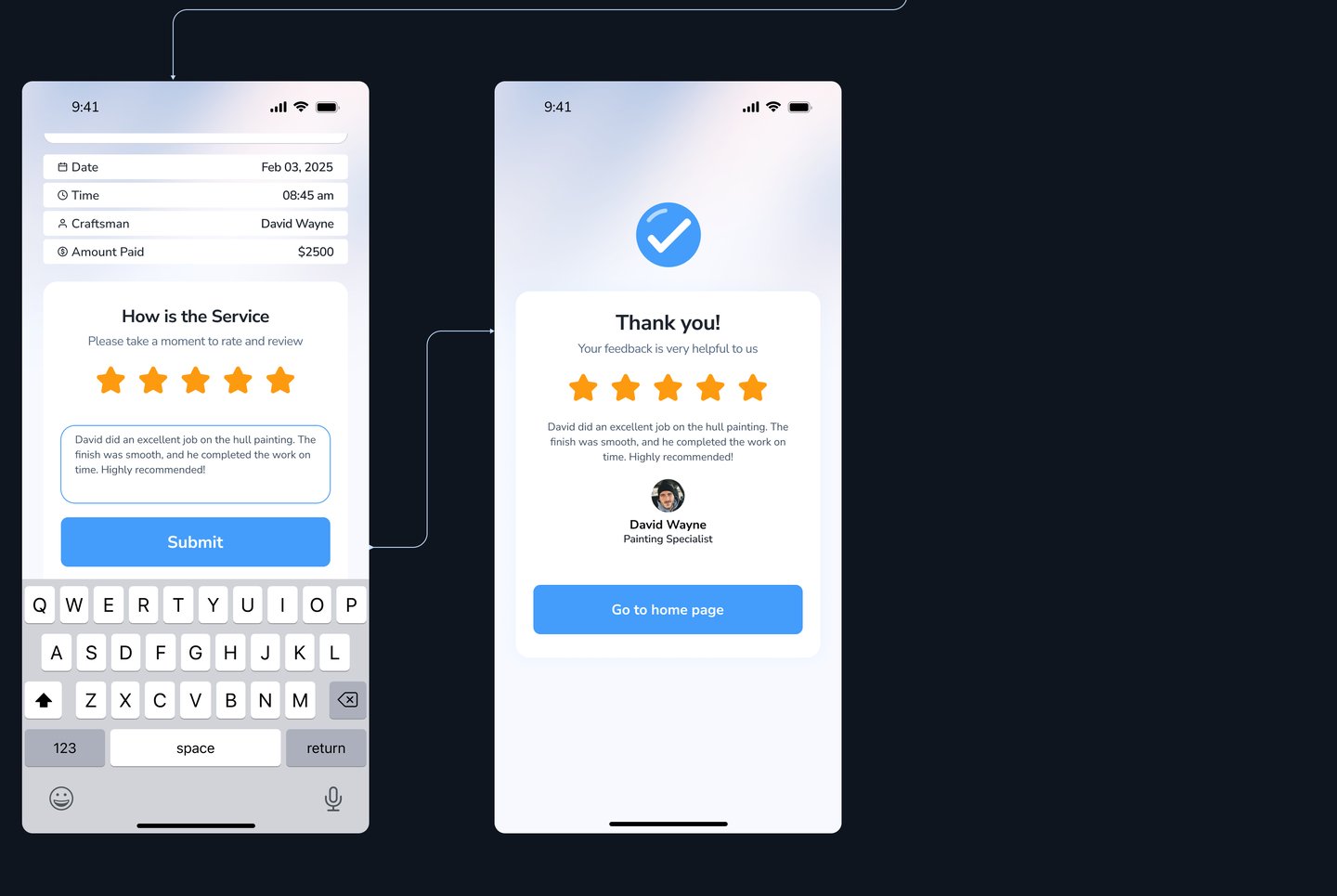
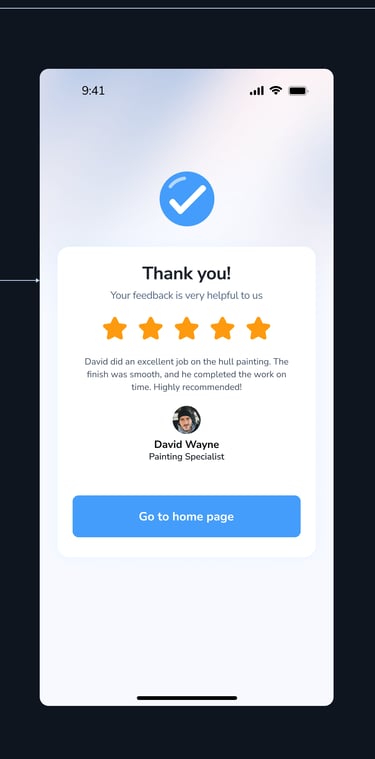
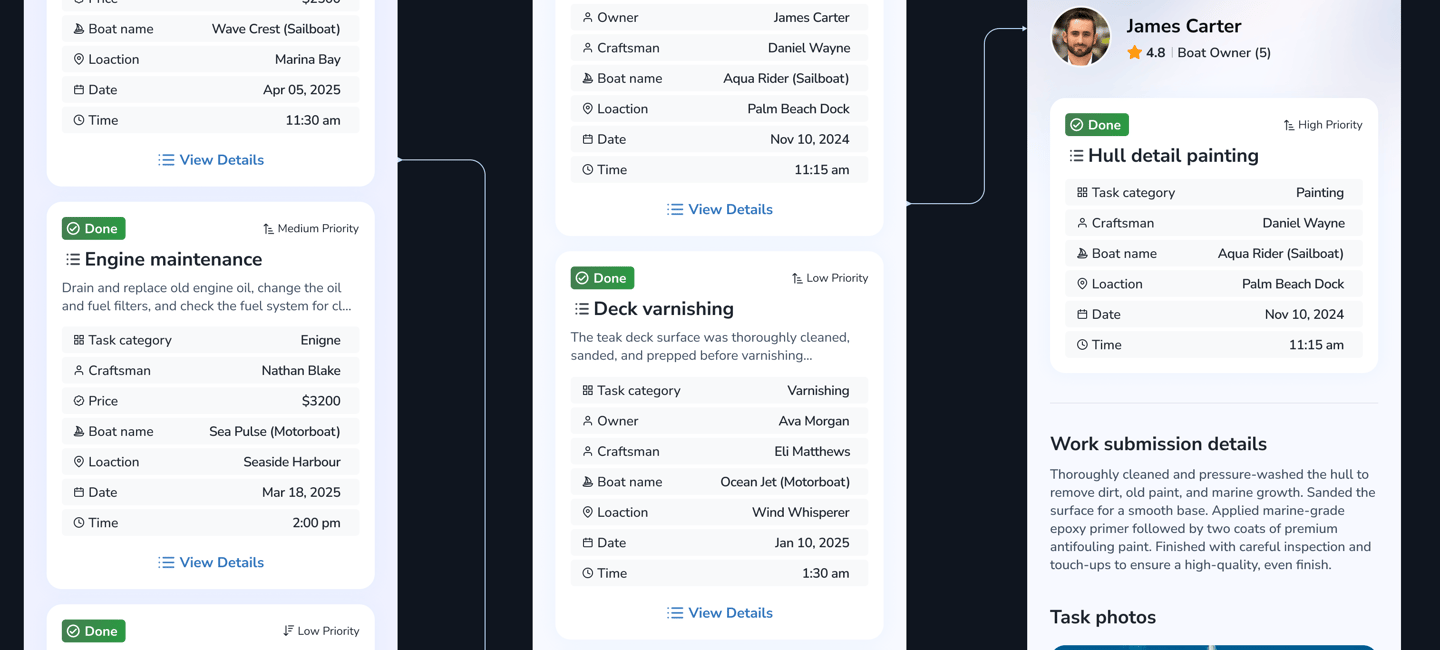
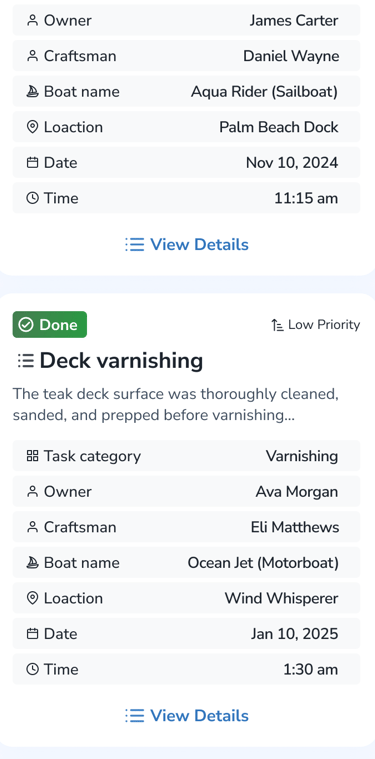
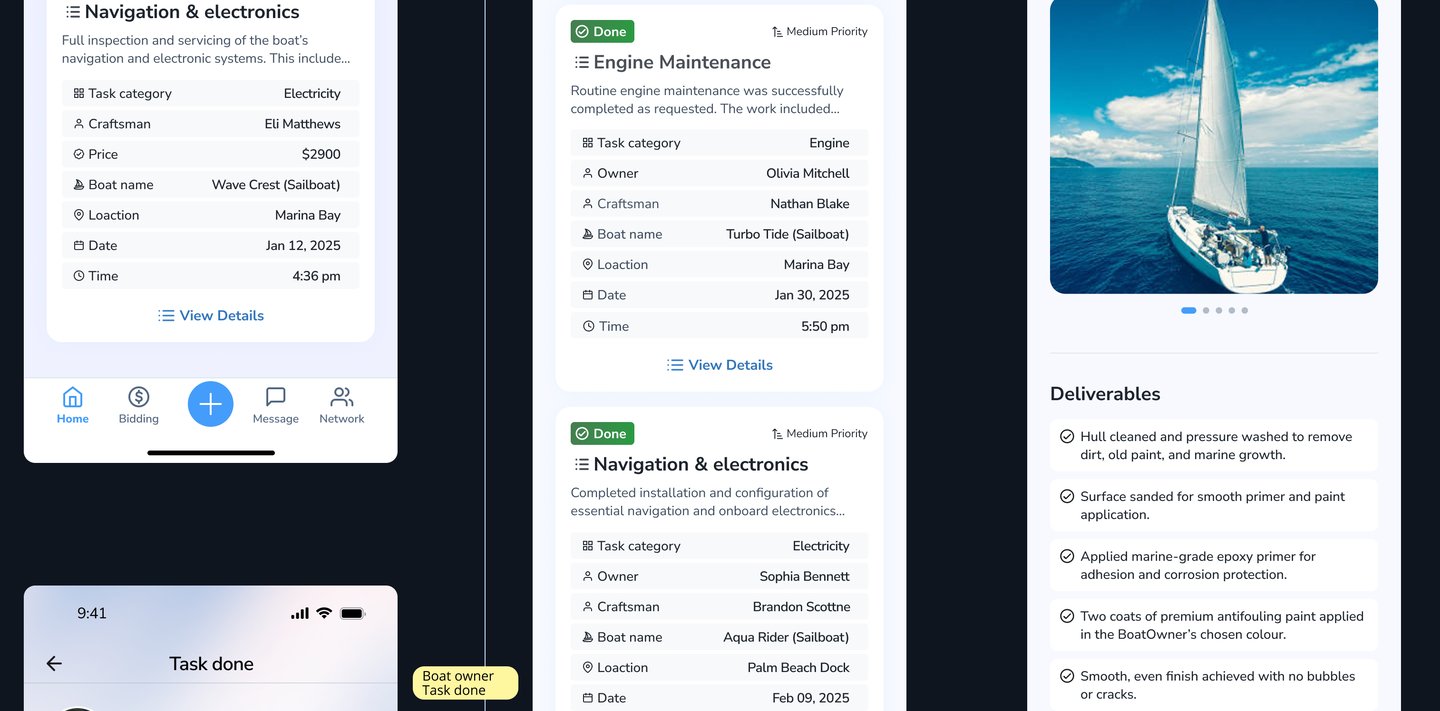
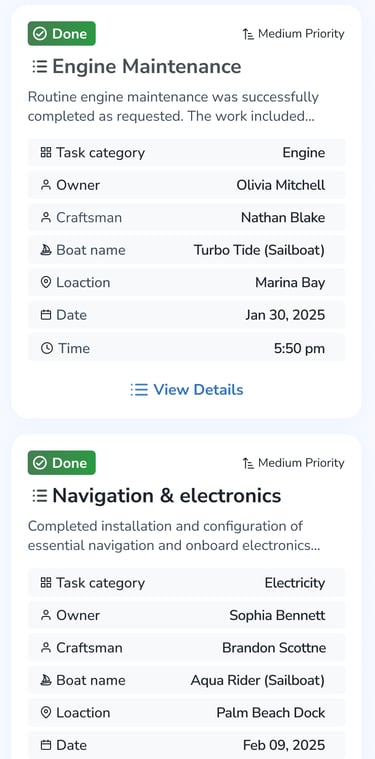
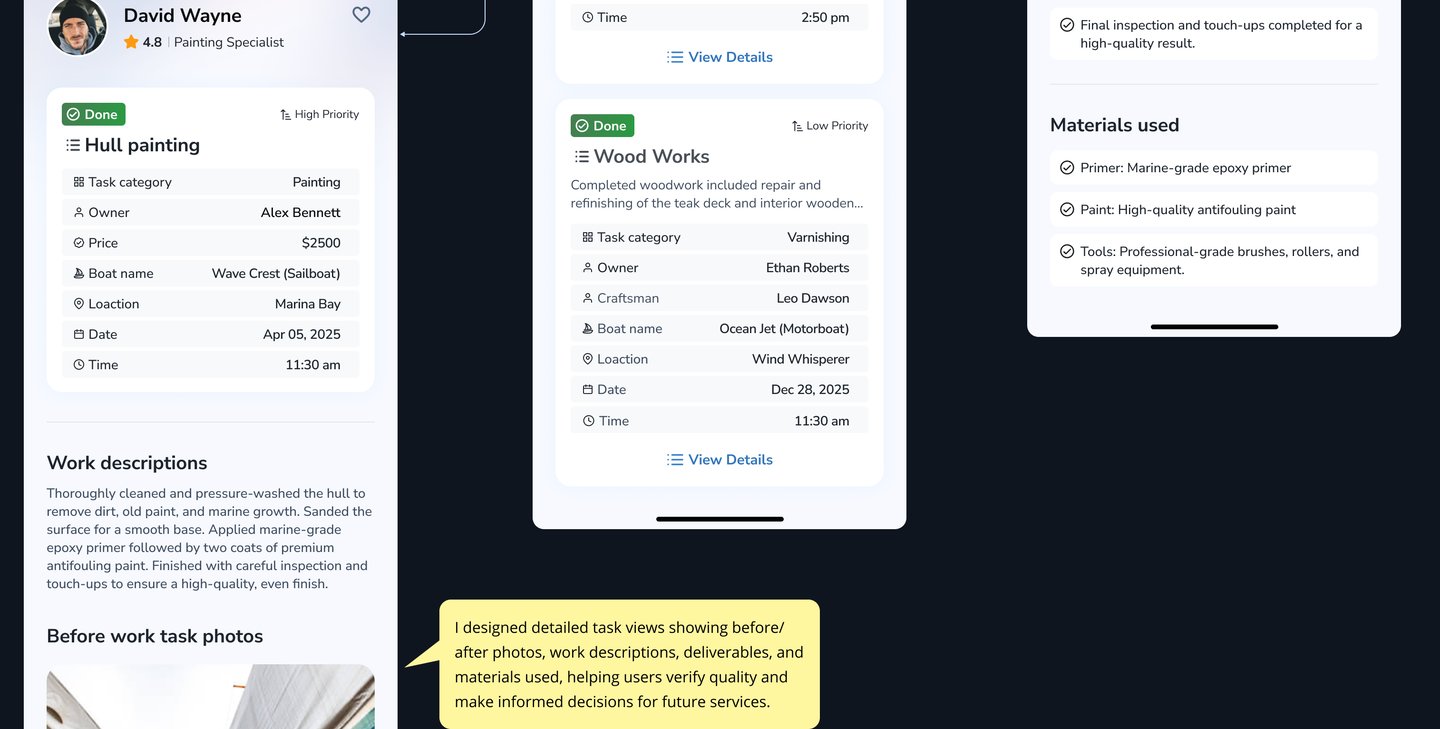
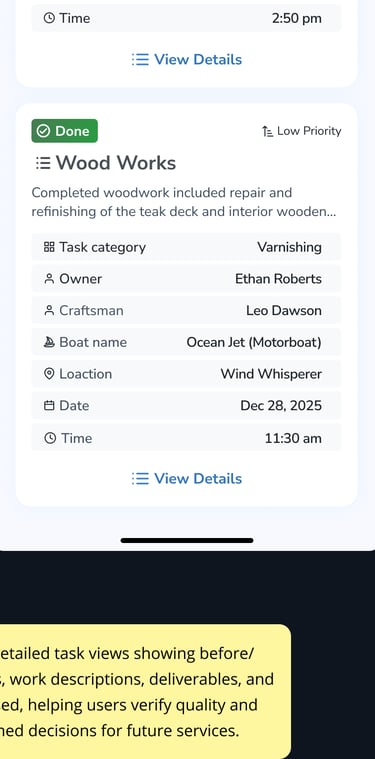
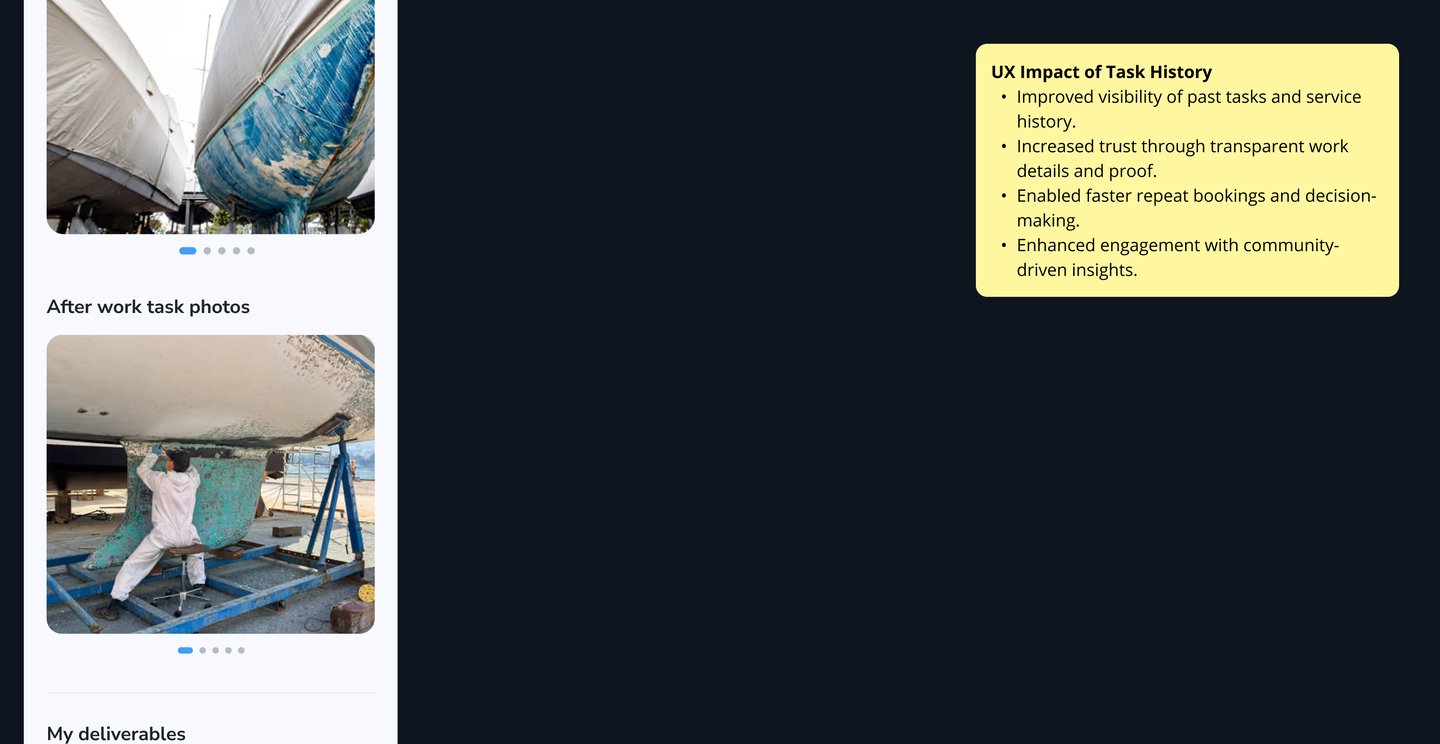

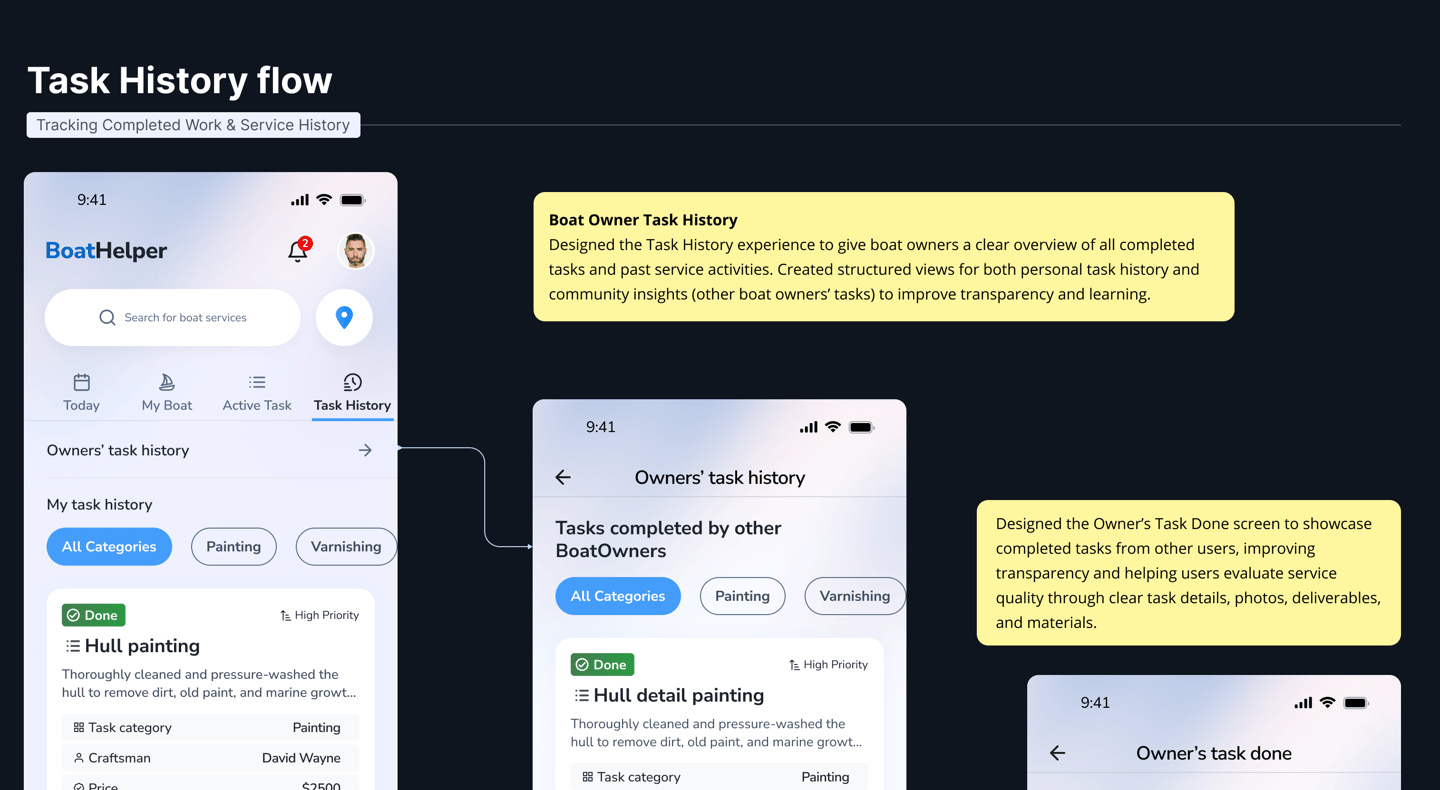
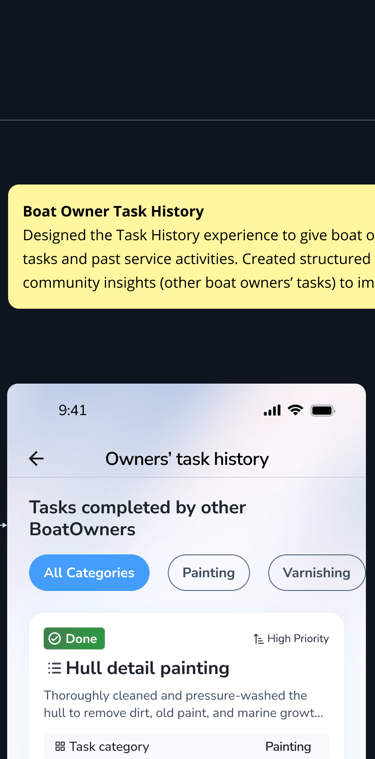
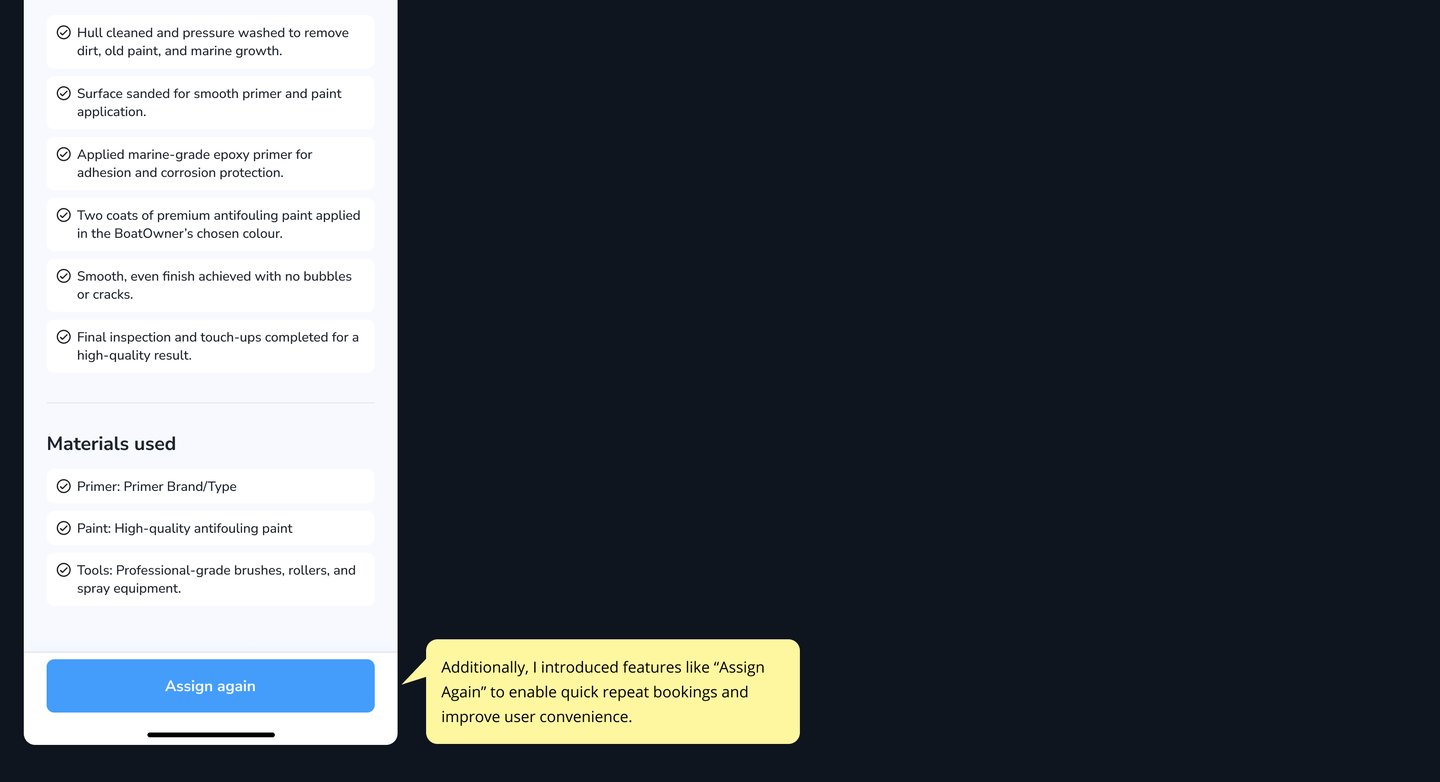
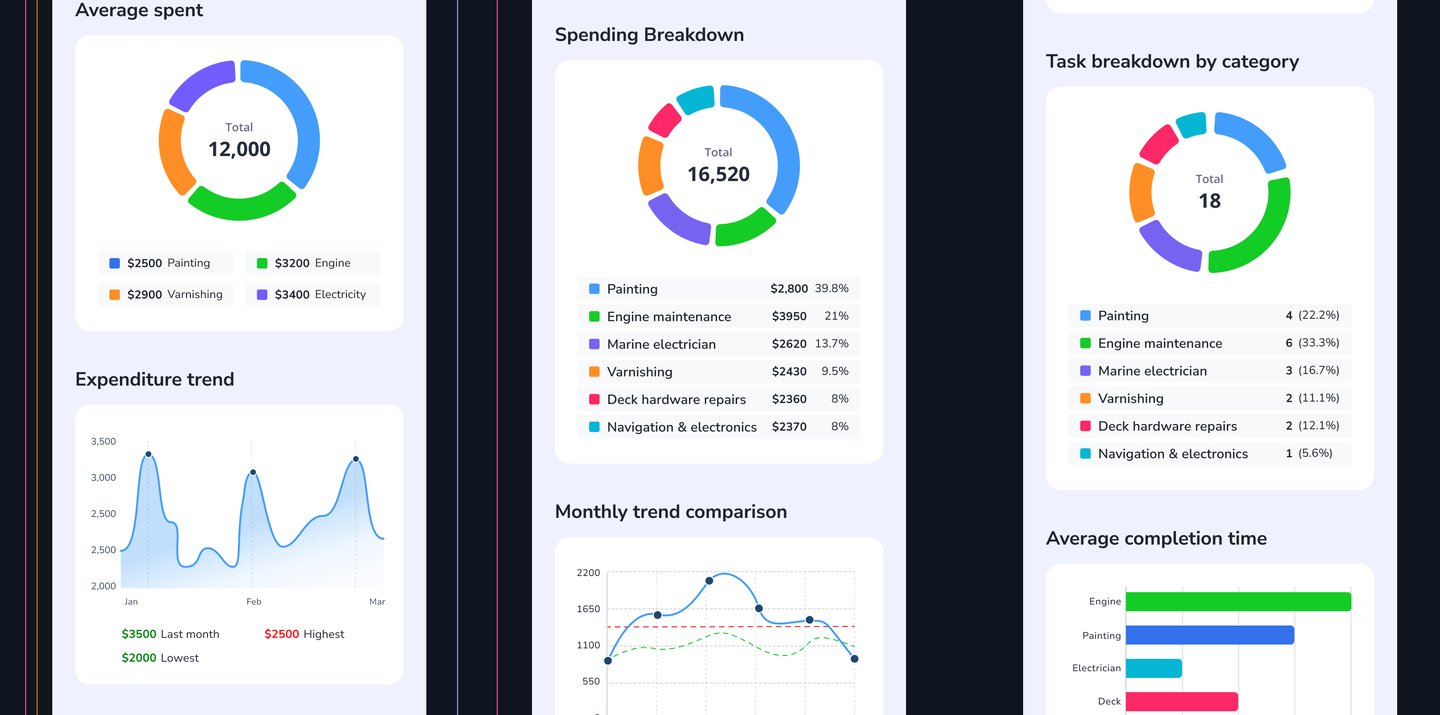
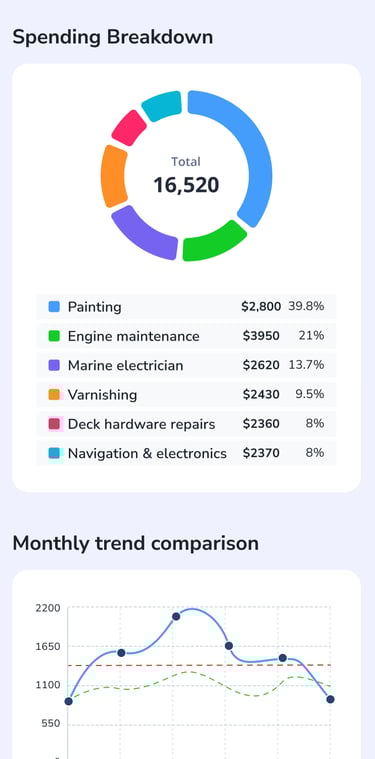
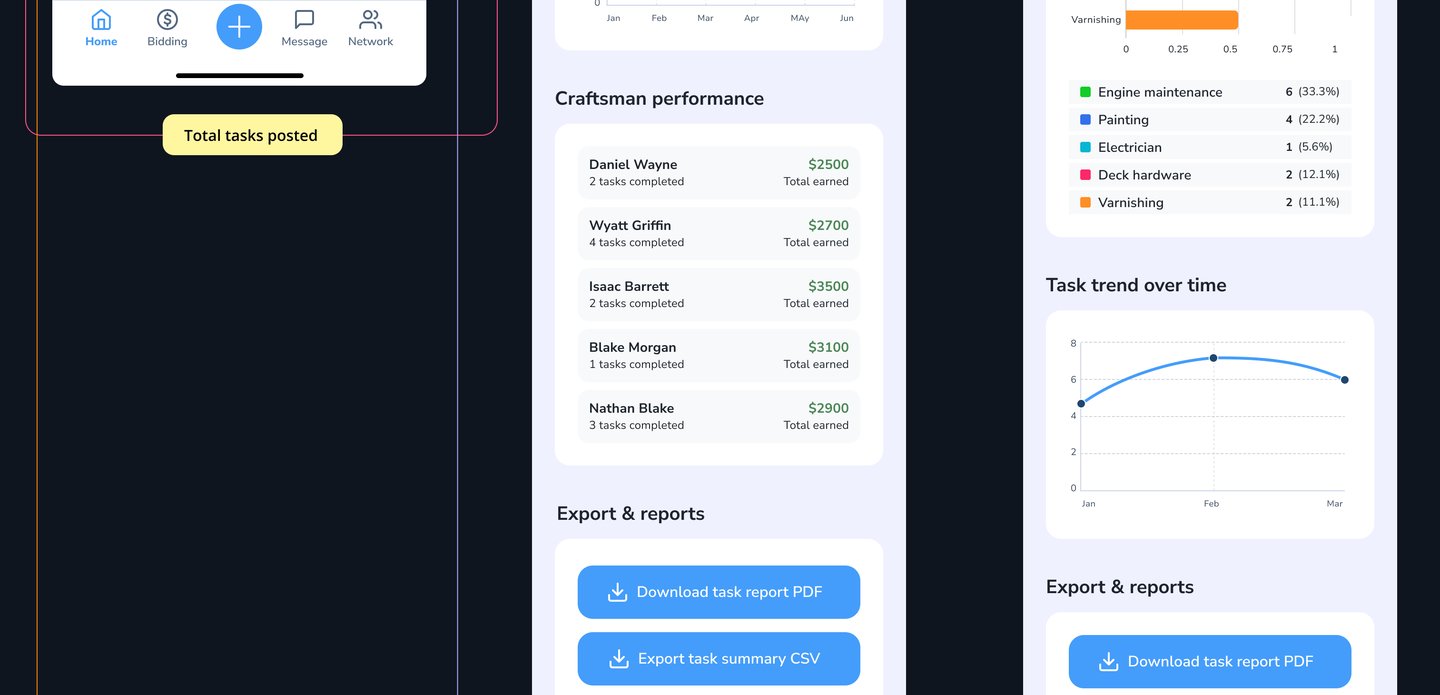
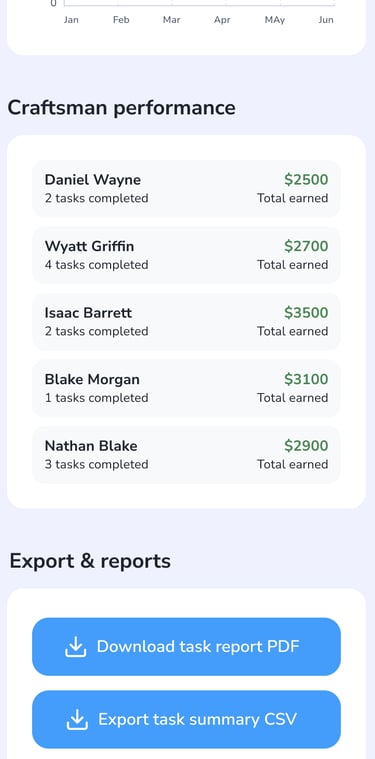
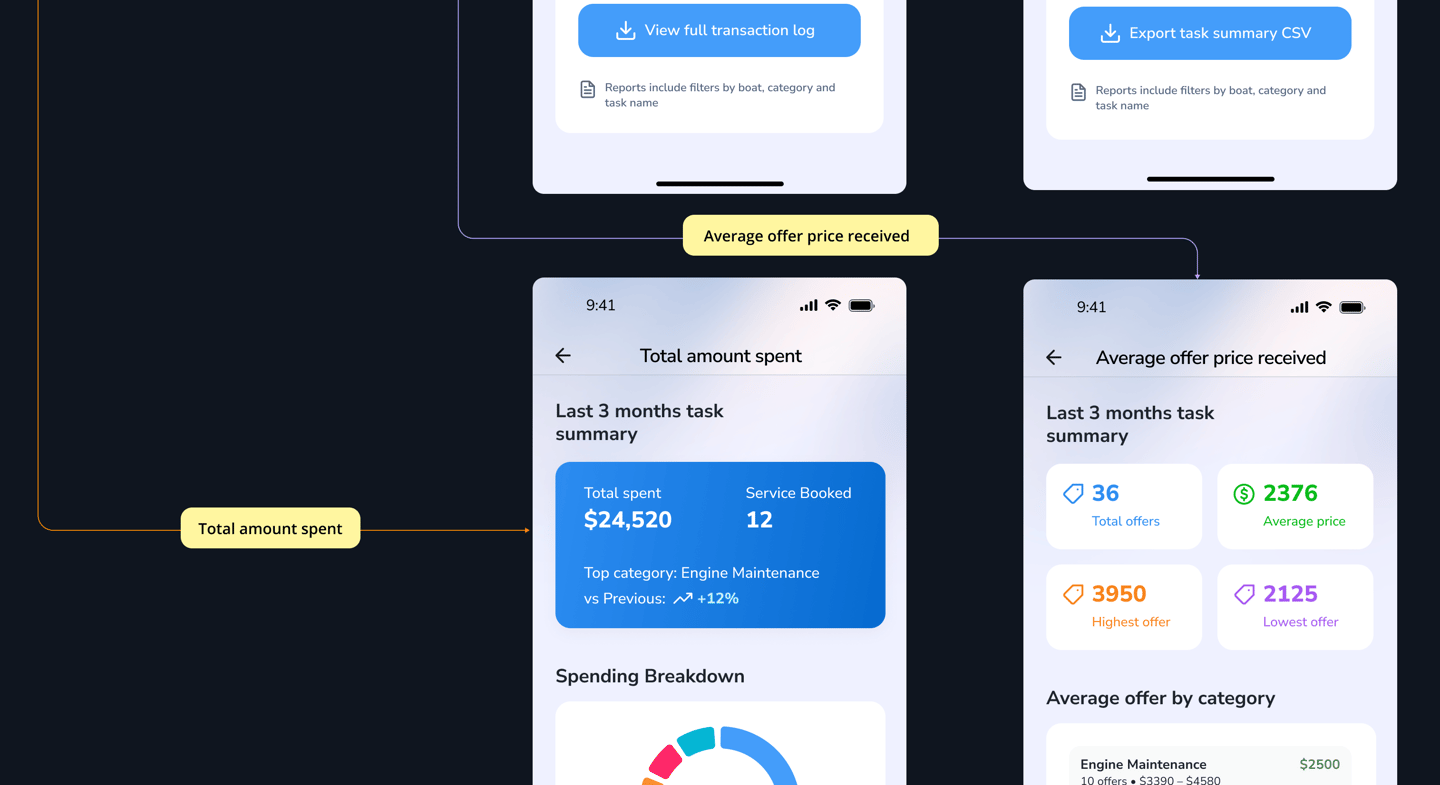
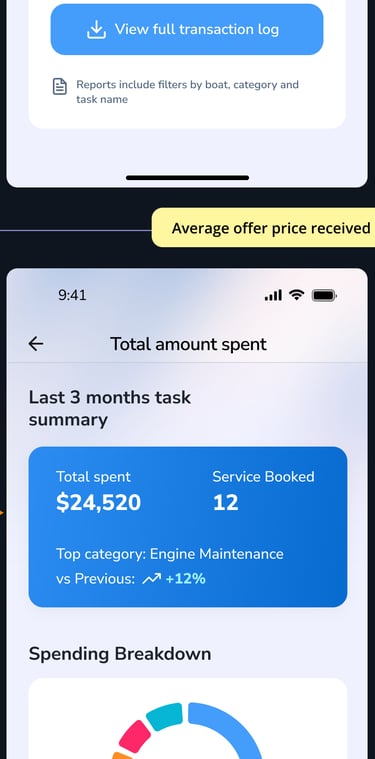
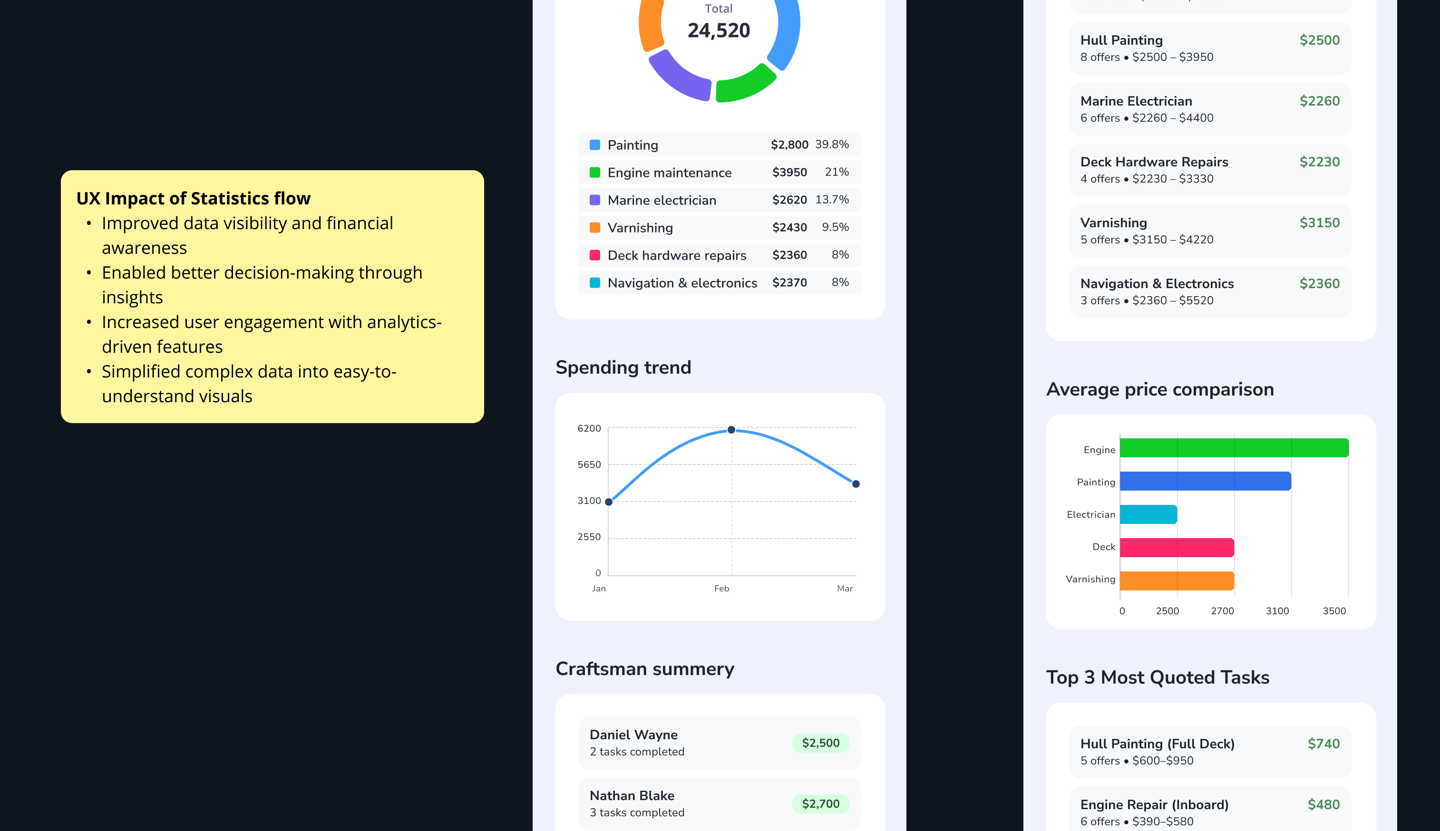
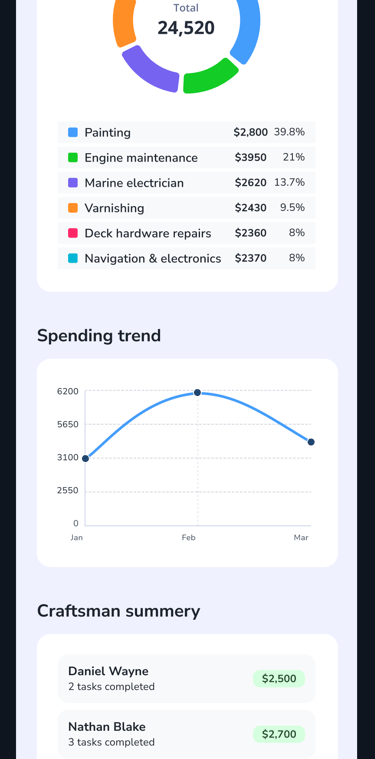
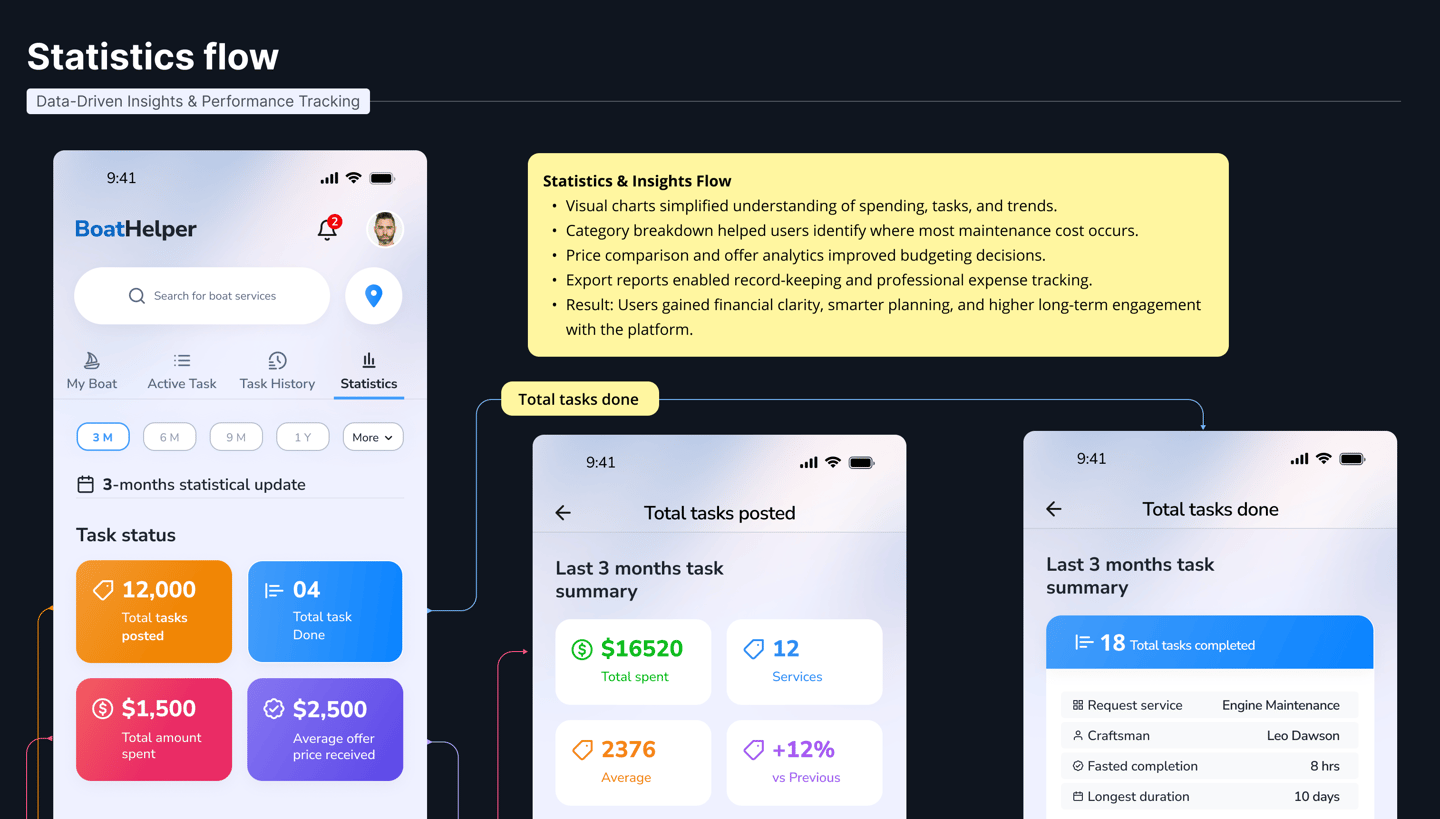
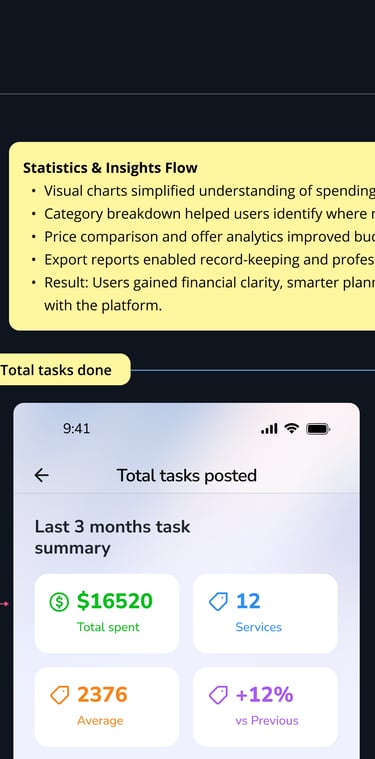
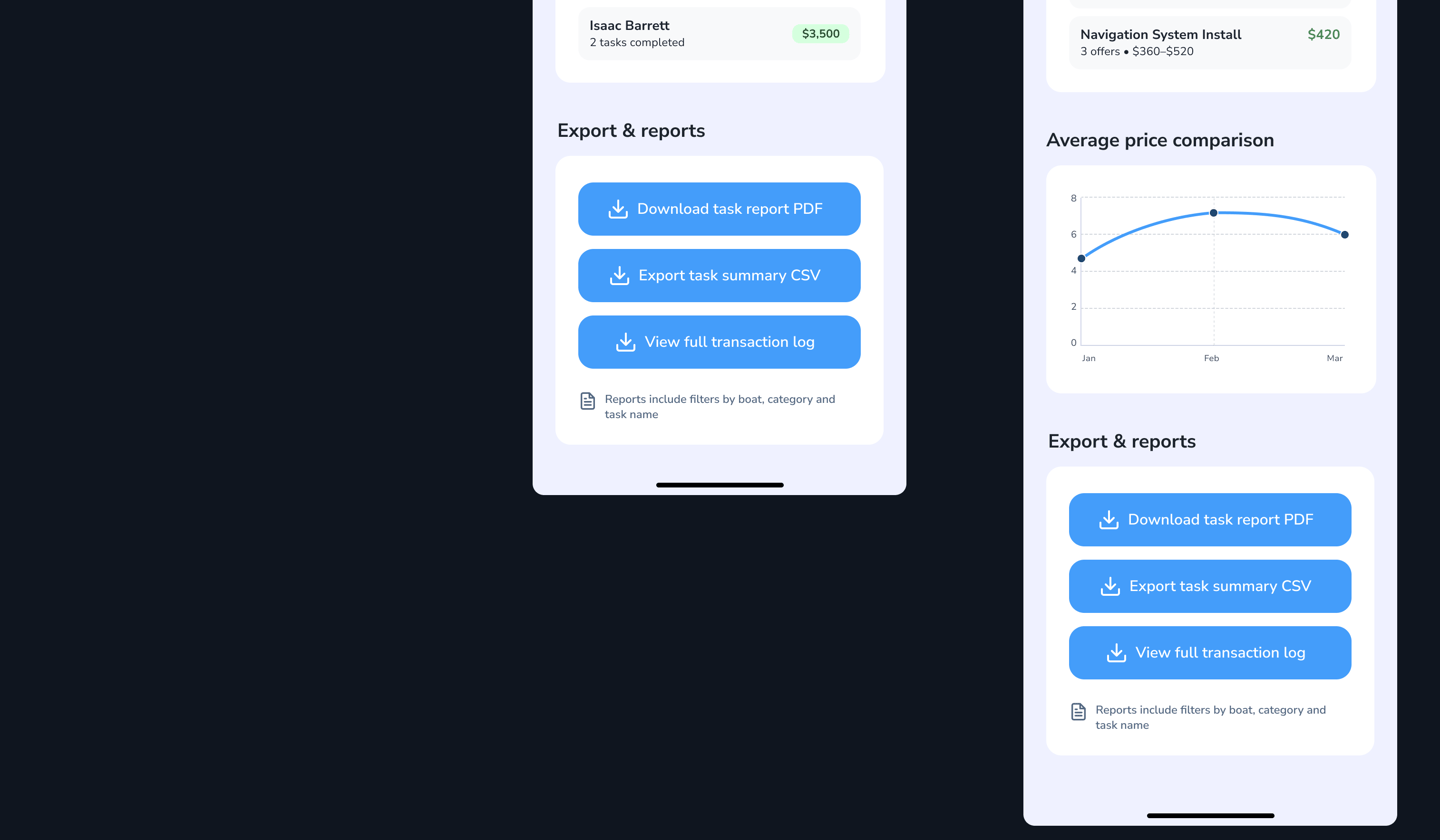
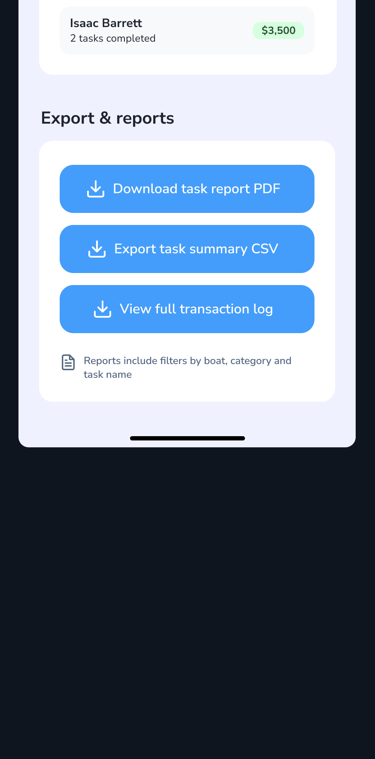
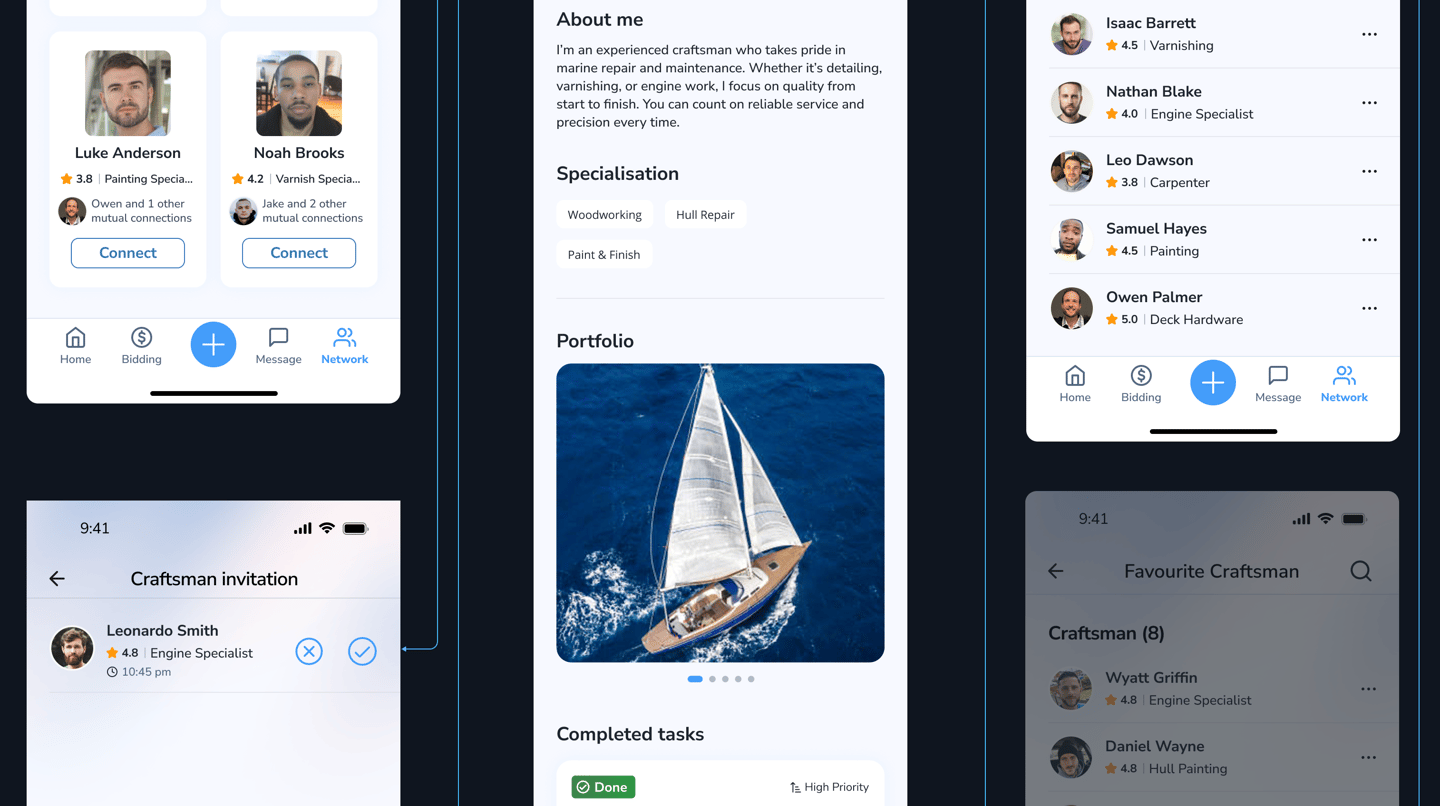
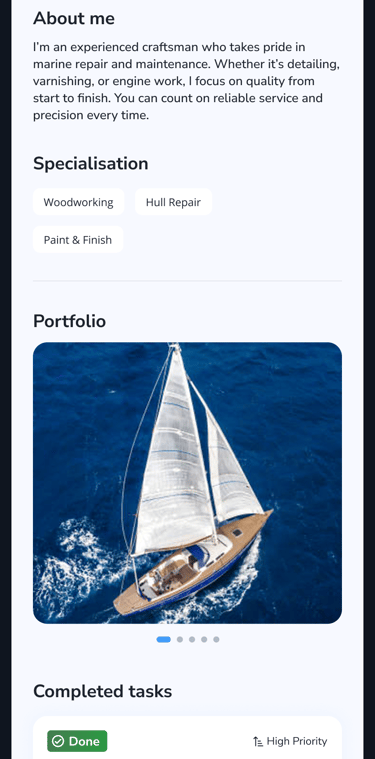
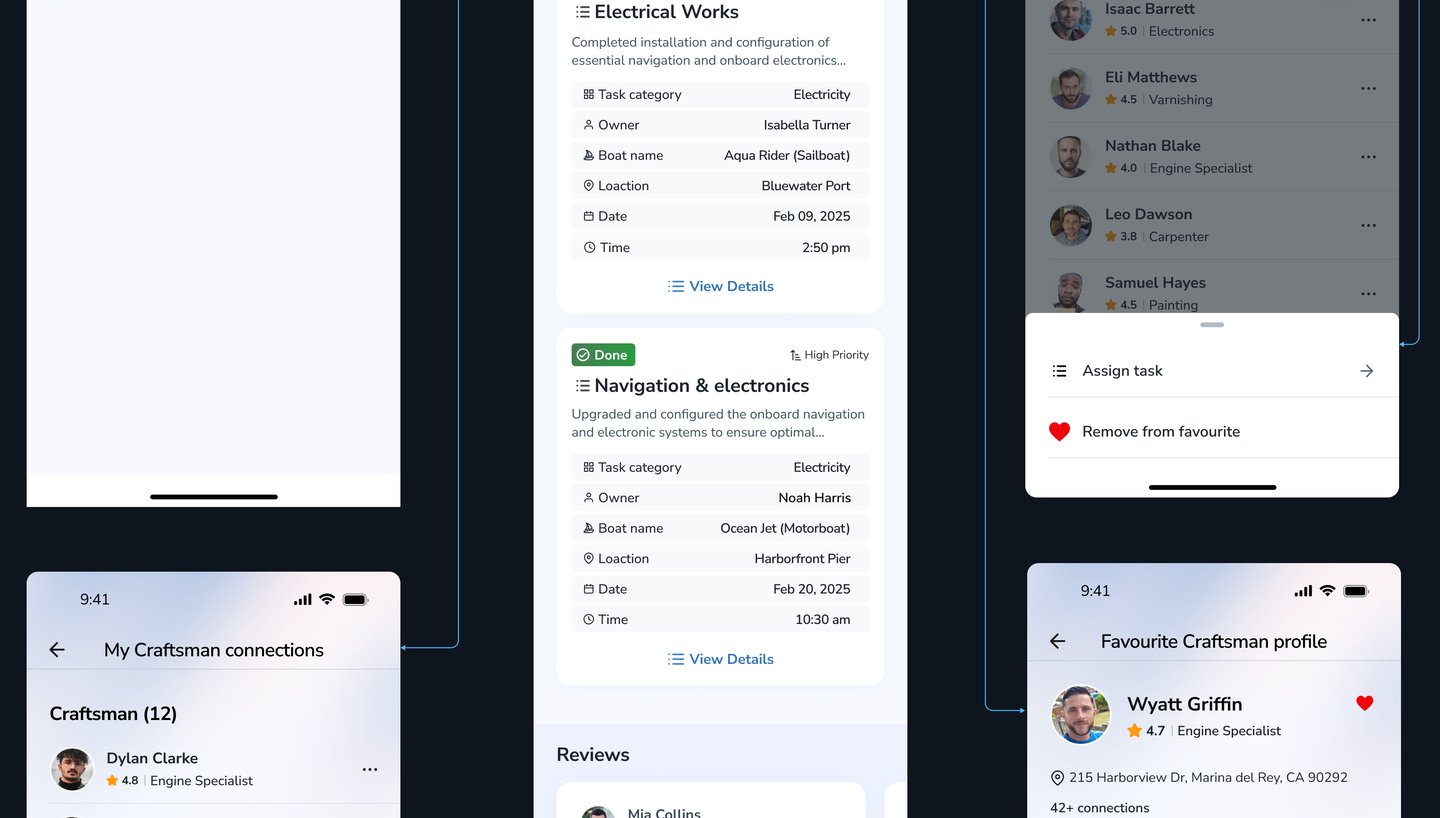
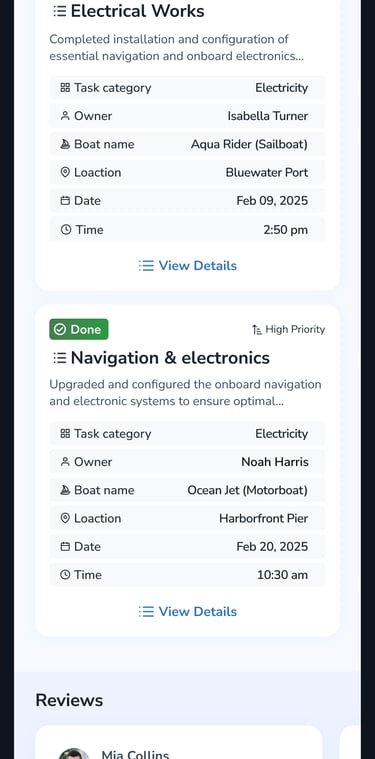
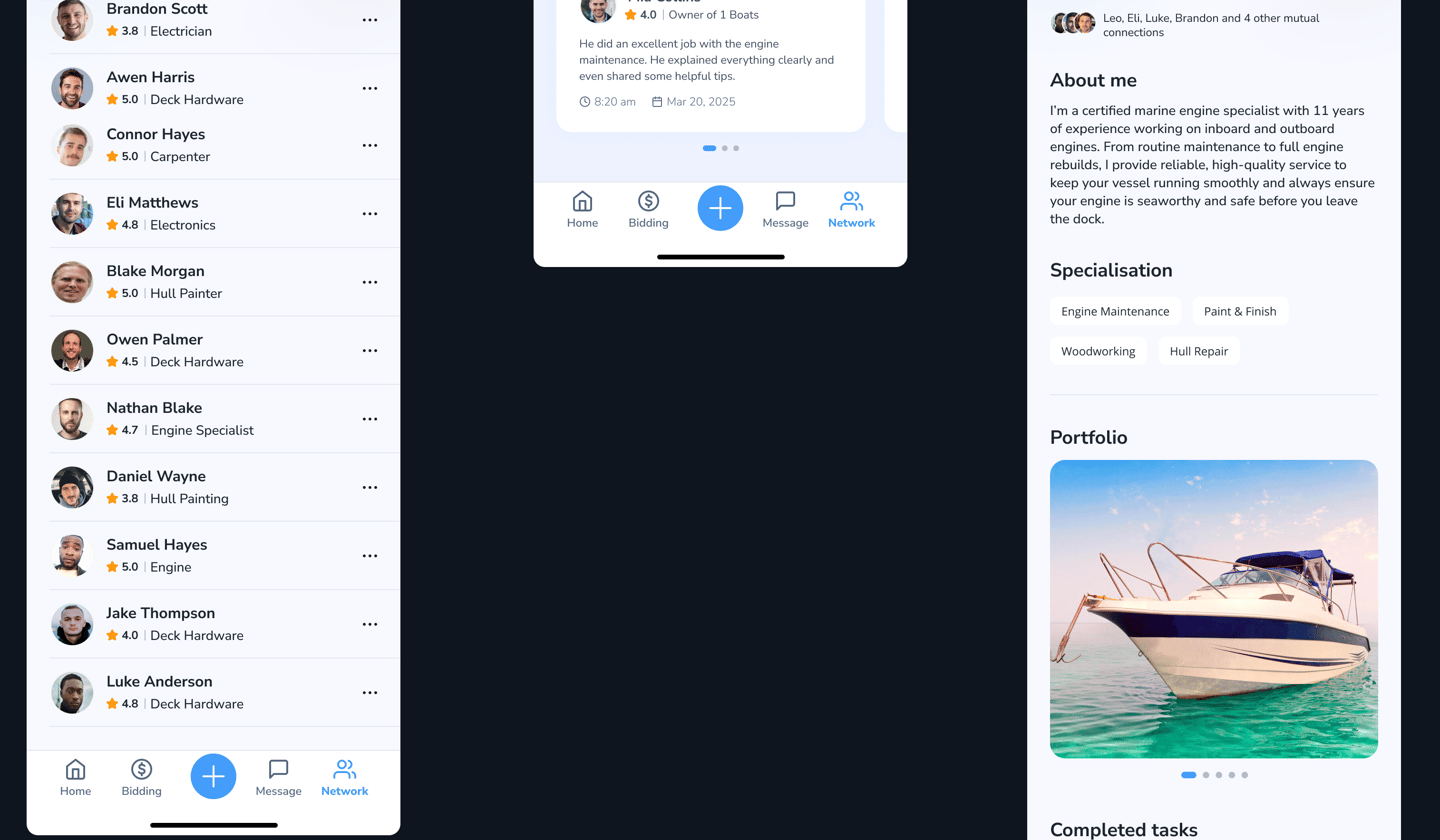
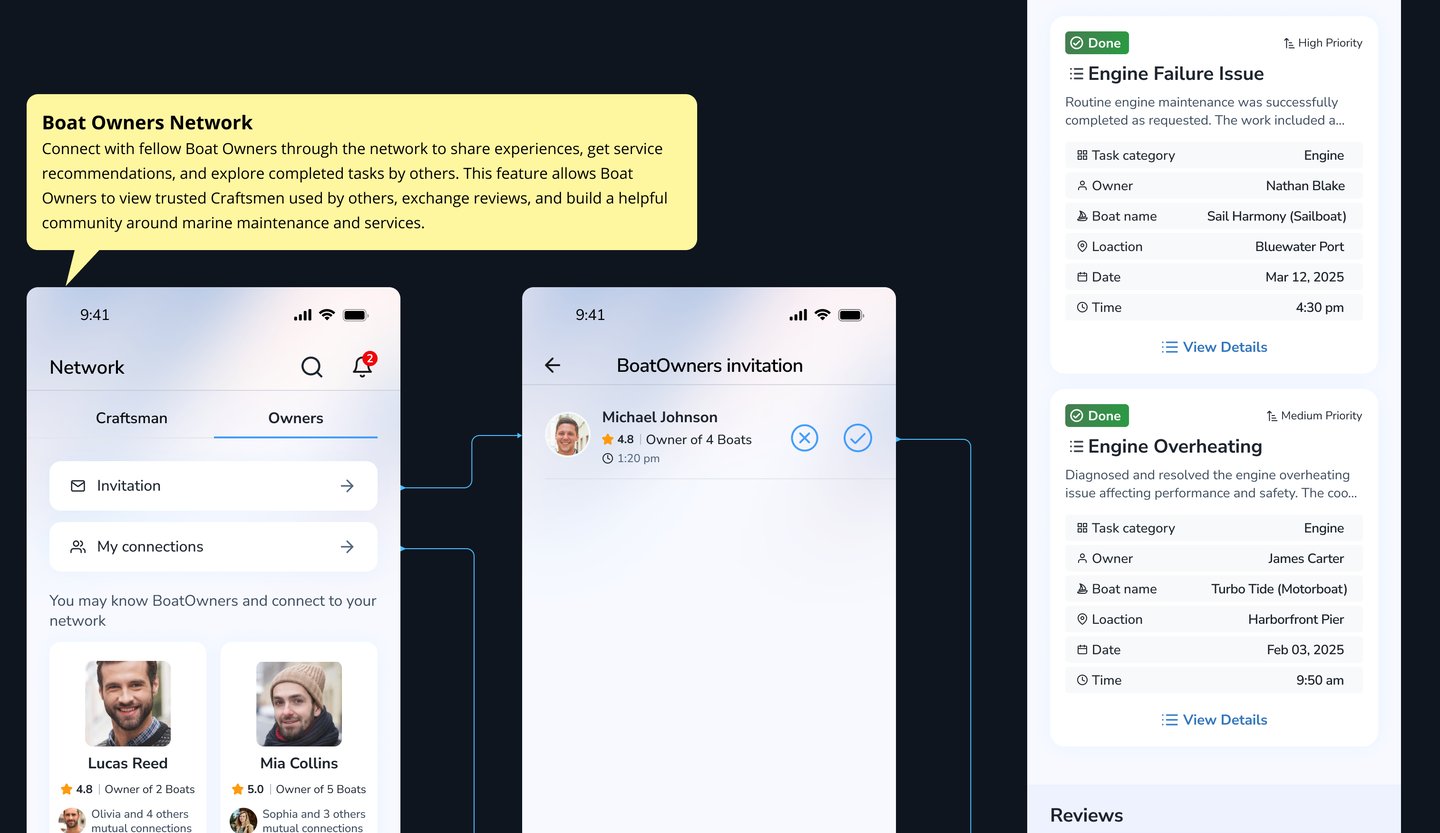
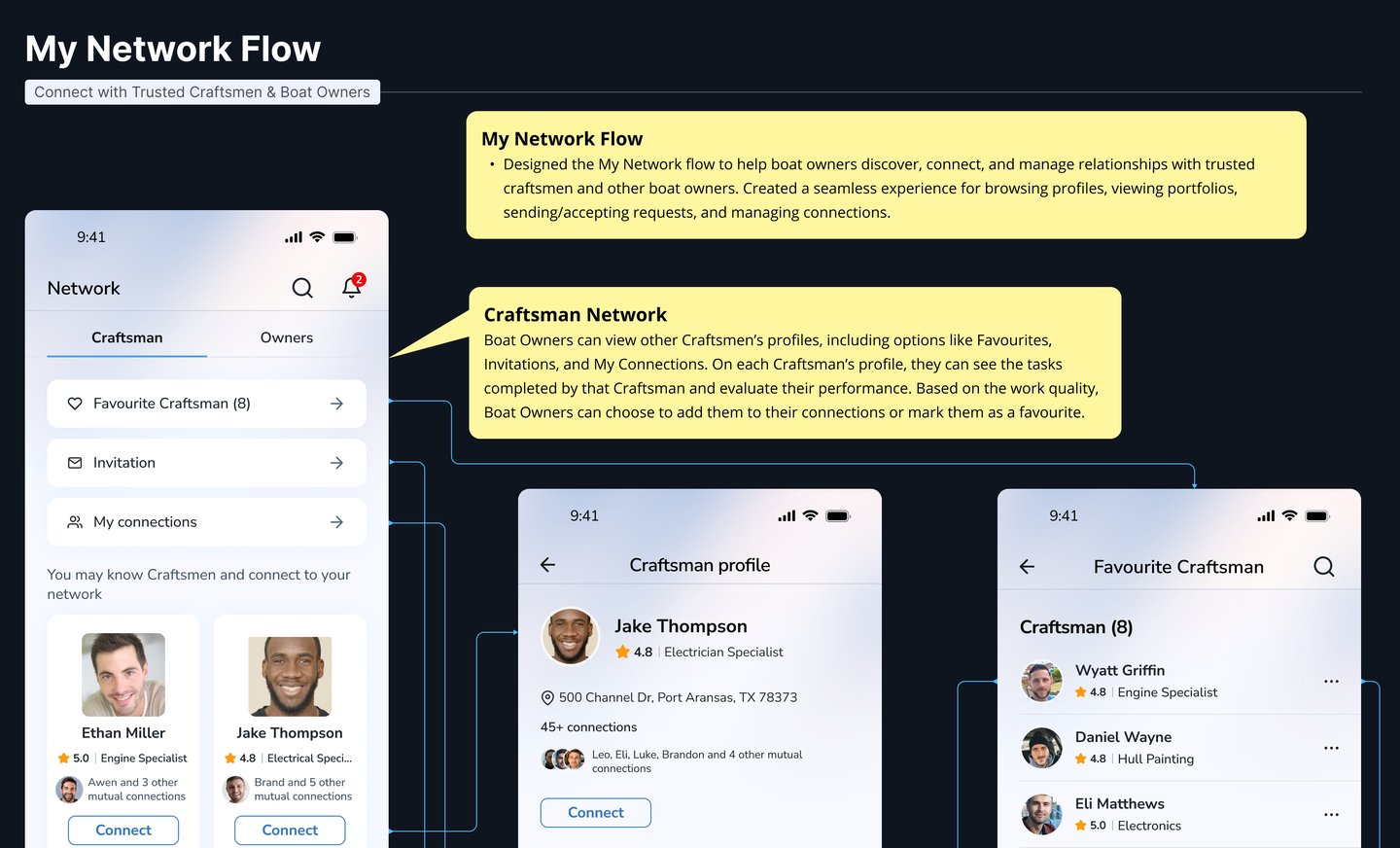
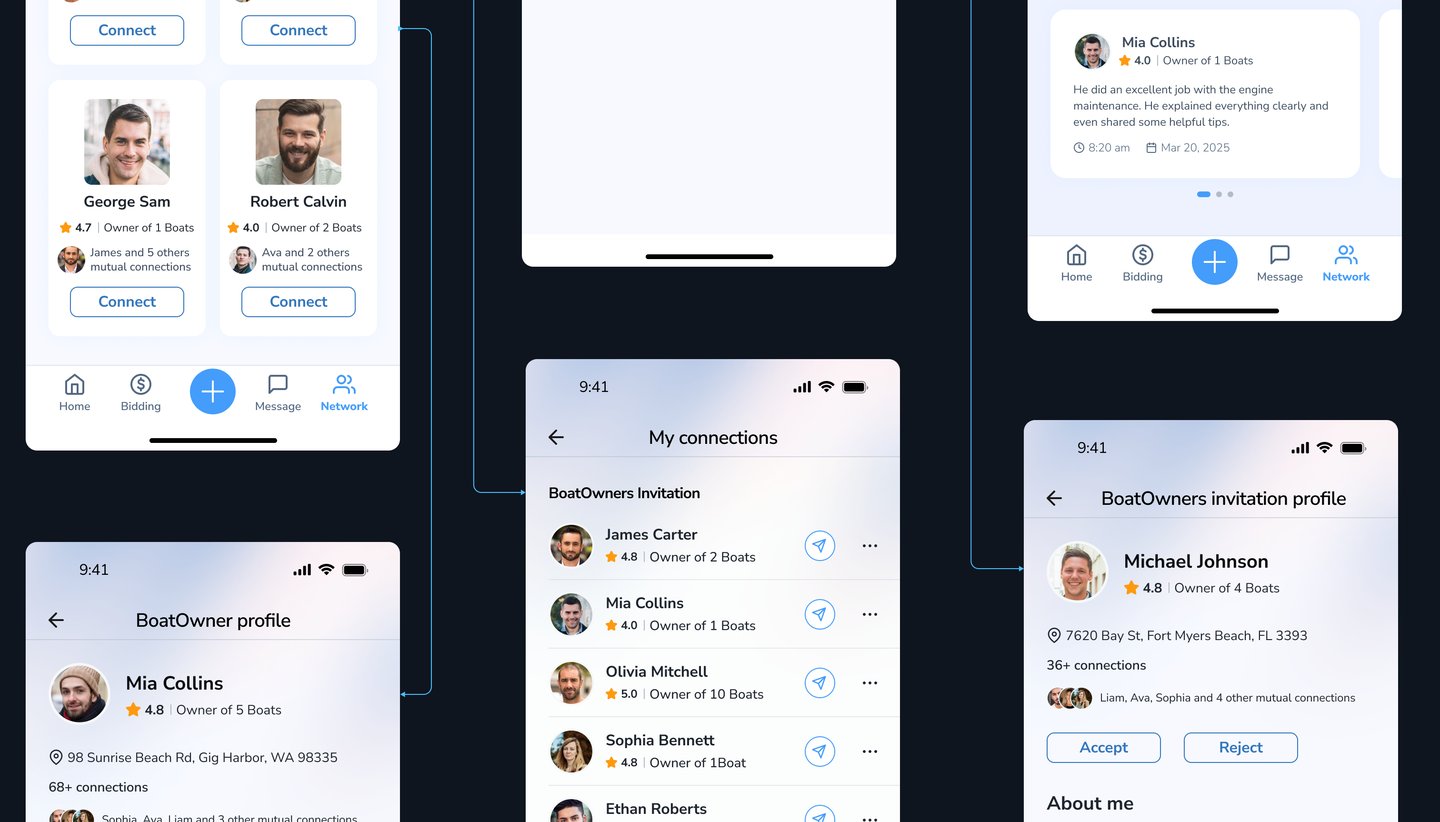
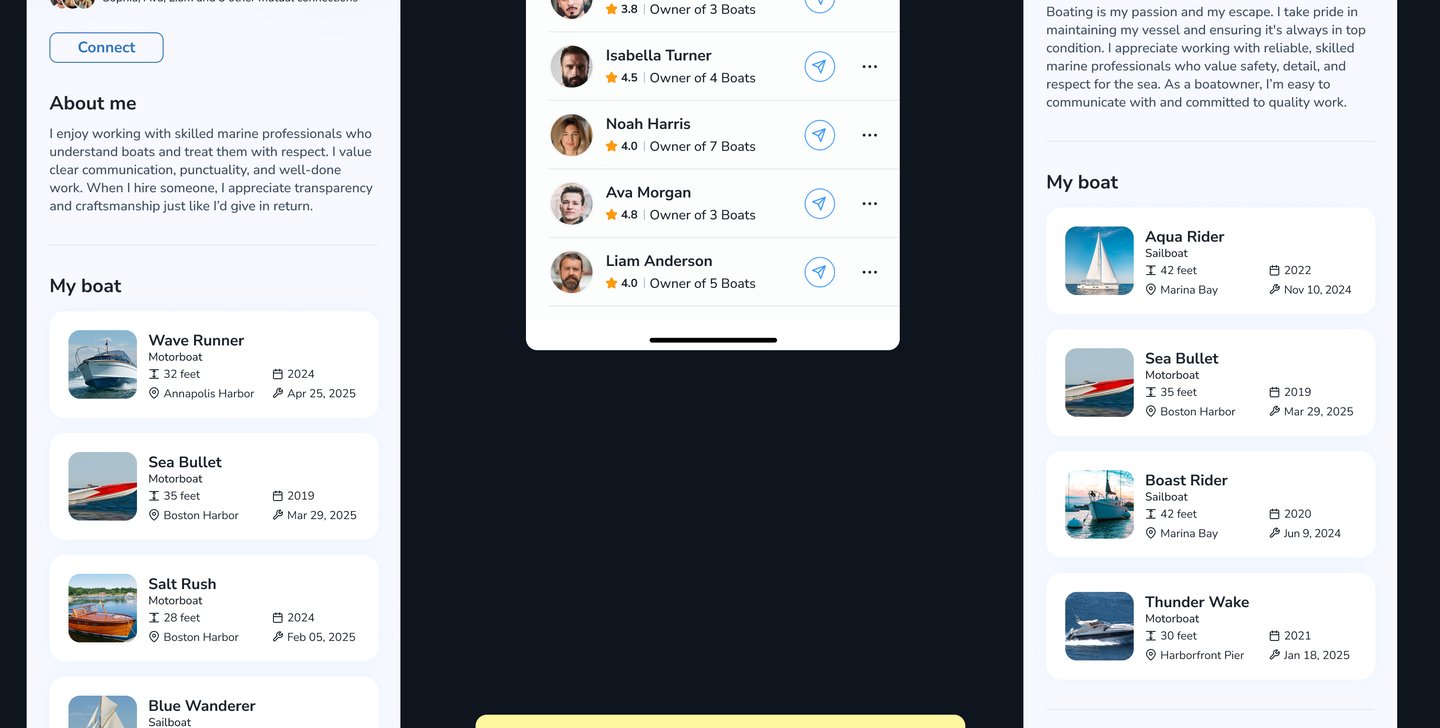
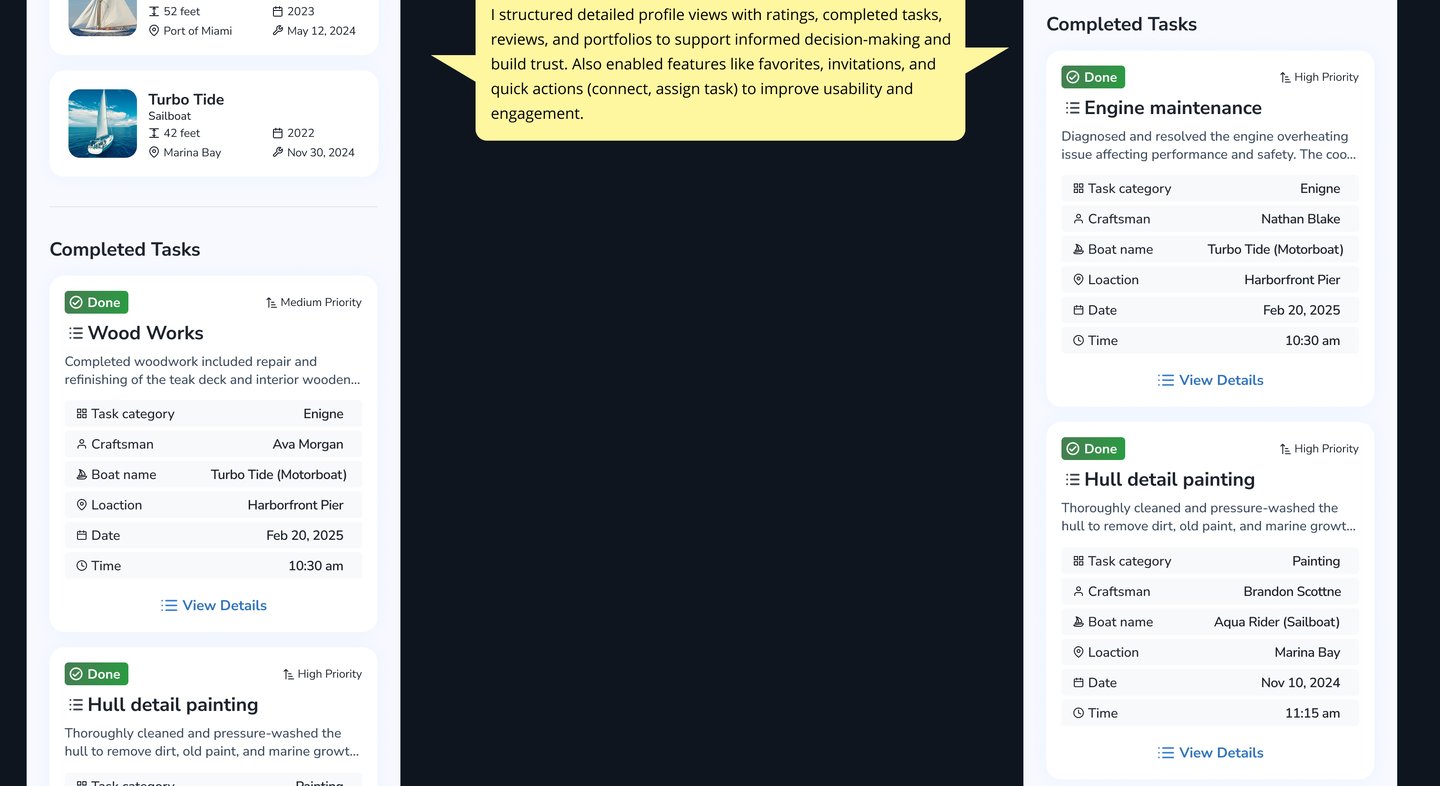
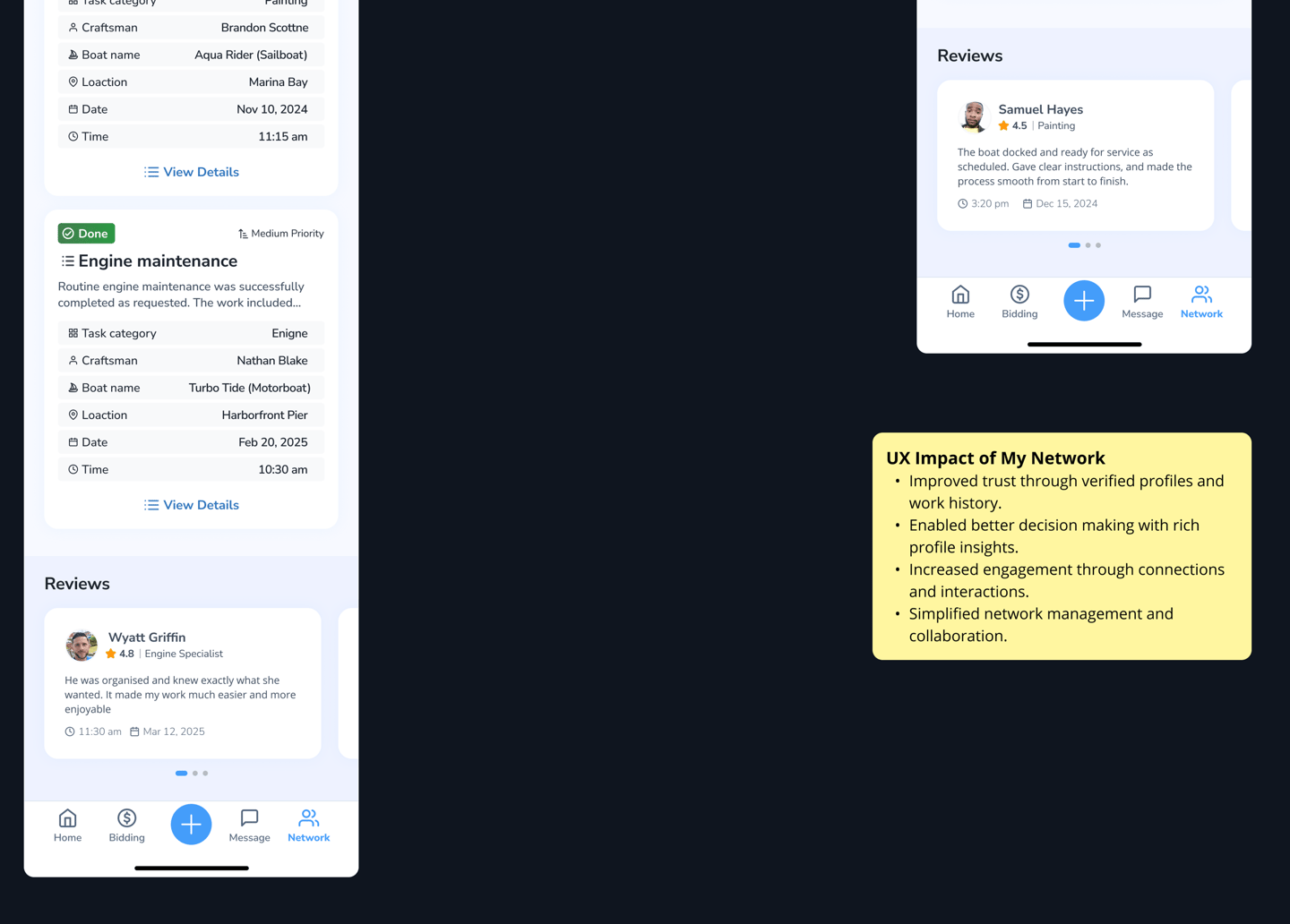

Boat Helper transforms a fragmented and inefficient service process into a seamless, transparent, and user-centered marketplace experience. By simplifying task creation, enabling competitive bidding, and providing end-to-end visibility from discovery to completion the platform empowers boat owners to make informed decisions with confidence.
The design not only improves usability and efficiency but also builds trust between boat owners and craftsmen, creating a reliable ecosystem for marine services. Ultimately, Boat Helper demonstrates how thoughtful UX can drive better user engagement, operational efficiency, and business value.
CONCLUSION
Boat Helper transformed the fragmented boat service experience into a structured, transparent, and efficient marketplace, improving both user experience and business outcomes.
Conversion Rate: Increased by 31% through simplified task creation and bidding flow
User Satisfaction: Reached 92% with improved usability and transparency
Task Completion Rate: Improved to 88% with better task tracking and communication
User Retention: Increased to 73% by enabling a seamless end-to-end experience
METRICS
Overall UX Impact:
Delivered a 70% improvement in usability and engagement, helping boat owners manage services more efficiently while building trust with craftsmen.